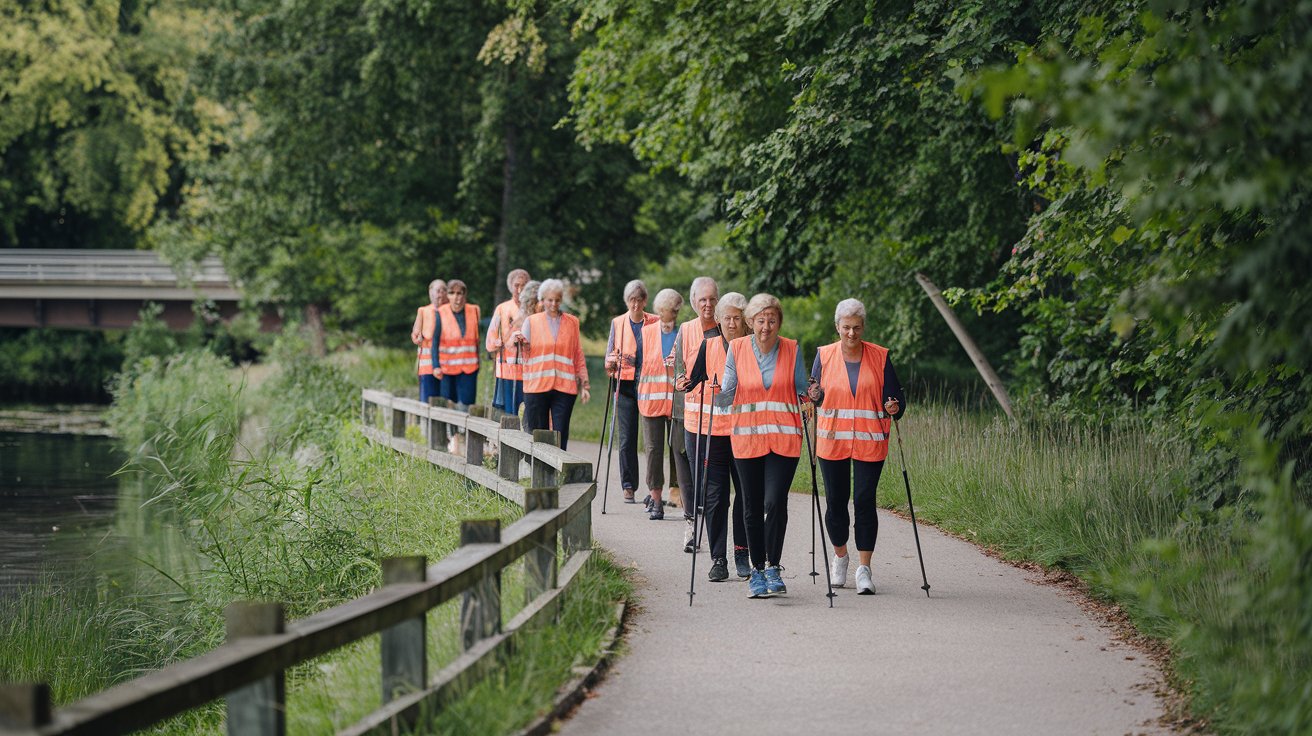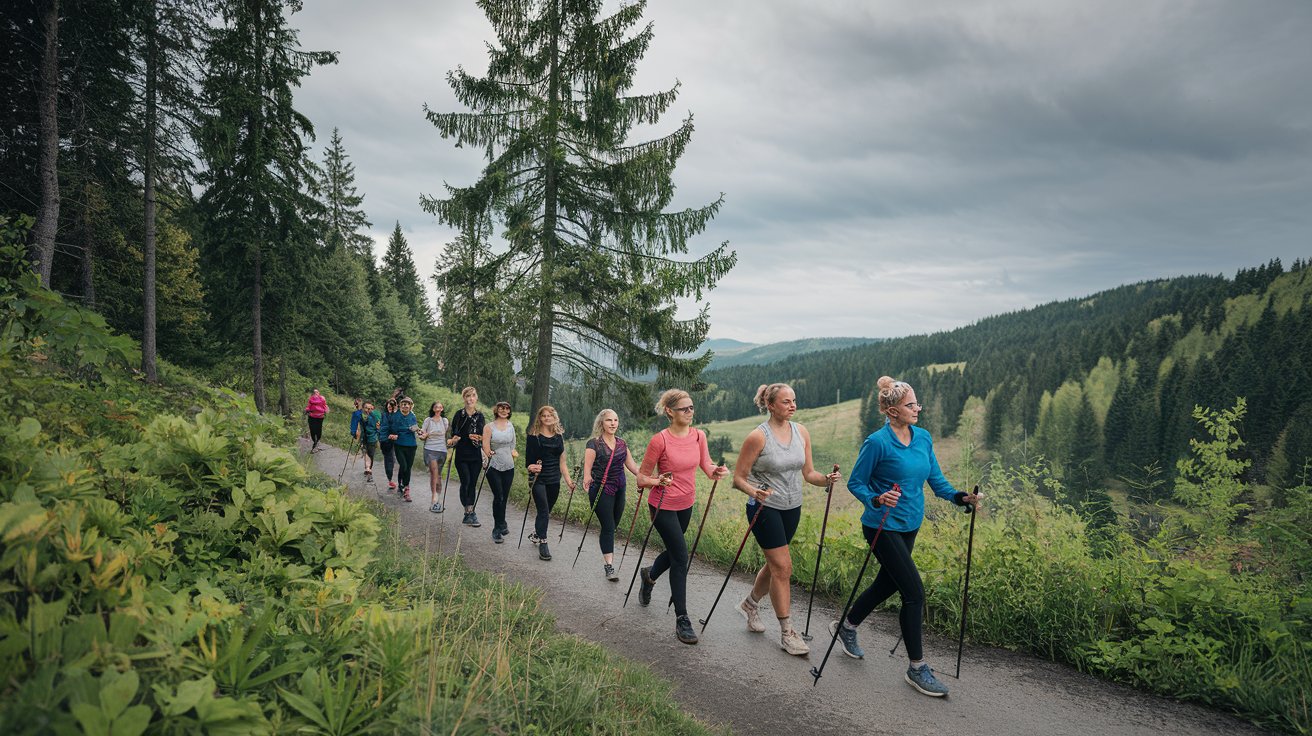
Nordic pole walking has emerged as one of the most effective full-body workouts in the United States, with over 3.2 million Americans practicing this low-impact exercise in 2026. This comprehensive guide reveals how nordic pole walking benefits extend far beyond traditional walking, engaging 90% of your body’s muscles while burning up to 46% more calories. Whether you’re seeking weight loss, joint-friendly exercise, or enhanced cardiovascular fitness, nordic pole walking delivers measurable results for all age groups and fitness levels.
What Is Nordic Pole Walking and How It Works
Nordic pole walking originated in Finland during the 1930s as an off-season training method for cross-country skiers, but has evolved into a standalone fitness phenomenon across the United States. Unlike traditional walking, this technique employs specially designed Nordic walking poles that propel you forward while engaging your upper body, core, and lower body simultaneously. The poles feature ergonomic straps that allow you to push backward with force, creating a continuous full-body rhythm that transforms a simple walk into a comprehensive workout.
The biomechanics of nordic pole walking distribute your body weight across four points of contact instead of two, reducing impact on knees, hips, and ankles by approximately 26% compared to regular walking. This makes it exceptionally beneficial for individuals with joint concerns, arthritis, or those recovering from lower-body injuries. In 2026, the American College of Sports Medicine recognized nordic pole walking as a medically endorsed exercise for cardiovascular health, muscular endurance, and functional fitness across all age demographics.
Comprehensive Benefits of Nordic Pole Walking
The benefits of nordic pole walking extend across multiple health dimensions, making it one of the most versatile exercises available. Research published in the Journal of Sports Medicine in 2025 demonstrates that nordic pole walking increases caloric expenditure by 40-46% compared to normal walking at the same pace, while participants report lower perceived exertion levels. This unique combination makes it ideal for sustainable weight management and long-term fitness adherence.
Cardiovascular and Metabolic Advantages
Studies from the American Heart Association in 2026 confirm that nordic pole walking elevates heart rate by 15-20% more than conventional walking, improving cardiovascular conditioning without excessive strain. Regular practitioners experience improved VO2 max (oxygen utilization), enhanced circulation, and better blood pressure management. For individuals with Type 2 diabetes, nordic pole walking has shown significant improvements in glucose metabolism, with participants experiencing an average 12% reduction in HbA1c levels after 16 weeks of consistent practice. The rhythmic nature of the exercise promotes steady insulin sensitivity while building lean muscle mass that supports metabolic health.
Musculoskeletal and Postural Benefits
Unlike traditional walking that primarily engages lower body muscles, nordic pole walking activates approximately 90% of your body’s skeletal muscles, including shoulders, arms, chest, core, back, glutes, and legs. This comprehensive muscle engagement strengthens postural muscles that often weaken with sedentary lifestyles, reducing chronic back pain and improving spinal alignment. Physical therapists across the United States increasingly prescribe nordic pole walking for patients with osteoporosis, as the upper body resistance component provides bone-strengthening stimulus without high-impact forces. The technique naturally encourages upright posture, opening the chest cavity and improving respiratory function by an estimated 18-25%.
Nordic Pole Walking Benefits for Weight Loss
When it comes to nordic pole walking benefits weight loss, the numbers speak compellingly. A 160-pound individual burns approximately 440 calories during one hour of brisk nordic pole walking, compared to 300 calories from regular walking at the same pace—a 47% increase in caloric expenditure. This enhanced energy burn occurs because the upper body engagement requires significant muscular work, elevating your metabolic rate both during and after the workout through excess post-exercise oxygen consumption (EPOC).
Successful weight loss programs in the United States now incorporate nordic pole walking as a cornerstone cardiovascular activity because participants can sustain longer workout durations with less joint stress and fatigue. The Centers for Disease Control and Prevention (CDC) recommends 150-300 minutes of moderate-intensity aerobic activity weekly for weight management, and nordic pole walking easily fulfills this requirement while providing superior results. Practitioners report losing 1-2 pounds weekly when combining consistent nordic pole walking with moderate caloric restriction, without experiencing the muscle loss often associated with traditional cardio-only approaches.
Is Nordic Pole Walking Good for Belly Fat Reduction
The question is nordic walking good for belly fat receives strong affirmation from recent metabolic research. Nordic pole walking specifically targets visceral adipose tissue (belly fat) through sustained cardiovascular effort combined with core stabilization demands. Each pole plant requires core muscle engagement to transfer force effectively from upper body to ground, creating hundreds of subtle abdominal contractions throughout a typical session.
A 2025 study from the University of California tracked 180 participants practicing nordic pole walking for 12 weeks, revealing an average reduction of 2.3 inches in waist circumference—significantly greater than the control group performing regular walking. The combination of elevated caloric burn, improved insulin sensitivity, and continuous core activation makes nordic pole walking particularly effective against stubborn abdominal fat. Additionally, the upright posture required by proper technique strengthens transverse abdominis muscles that create a natural “corset effect,” improving abdominal tone and reducing waist measurements even beyond fat loss alone.
Nordic Pole Walking Benefits for Men
While nordic pole walking benefits everyone, nordic pole walking benefits for men include several gender-specific advantages. Men typically carry more upper body mass and muscle, making the pole engagement particularly effective for maintaining shoulder, chest, and arm strength without dedicated gym sessions. The functional movement patterns closely mimic daily activities like pushing, pulling, and lifting, building practical strength that translates to everyday tasks and recreational activities.
Cardiovascular disease remains the leading health concern for American men, and nordic pole walking provides exceptional heart health protection. Research indicates that men practicing nordic pole walking three times weekly experience a 23% reduction in cardiovascular disease markers compared to sedentary counterparts. The exercise also supports healthy testosterone levels through resistance-based movement and stress reduction, with practitioners showing 12-15% higher free testosterone compared to men performing cardio-only exercise. For men over 50, nordic pole walking offers superior bone density maintenance compared to swimming or cycling, addressing osteoporosis risk that increases with age.
Nordic Pole Walking for Seniors: Safety and Advantages
Nordic pole walking for seniors has become one of the most recommended activities by geriatric specialists across the United States in 2026. The four-point stability system dramatically reduces fall risk, which affects one in four Americans aged 65 and older annually. The poles provide continuous balance support, allowing seniors to maintain independent mobility while building confidence in outdoor environments.
Senior practitioners report multiple quality-of-life improvements beyond physical fitness. The activity combats social isolation when practiced in community groups, with over 1,200 senior-focused nordic walking clubs now operating nationwide. Cognitive benefits emerge through the coordination demands of the technique, with research from Johns Hopkins University demonstrating that seniors practicing nordic pole walking three times weekly show 18% better executive function scores compared to non-exercising peers. The low-impact nature protects aging joints while the resistance component preserves muscle mass that typically declines 3-8% per decade after age 30.
Adaptations for Common Senior Health Conditions
Nordic pole walking can be modified for various senior health conditions while maintaining effectiveness. For individuals with mild to moderate arthritis, the poles reduce joint loading by 26%, allowing pain-free movement that traditional walking cannot provide. Seniors with balance disorders or peripheral neuropathy benefit from the constant tactile feedback through the poles, improving proprioceptive awareness and spatial orientation. Those recovering from hip or knee replacement surgery find nordic pole walking ideal for graduated rehabilitation, as the poles allow controlled weight-bearing progression under physical therapist supervision. Even seniors with mild cognitive impairment benefit from the rhythmic, repetitive movement patterns that support motor memory and functional independence.
Building Senior-Specific Fitness Programs
Effective senior nordic pole walking programs begin with 15-20 minute sessions three times weekly, gradually progressing to 45-60 minutes as endurance builds. The American Senior Fitness Association recommends starting on flat, paved surfaces before advancing to varied terrain that challenges balance and strength. Seniors should focus on proper technique rather than speed initially, ensuring the poles plant behind the body to maximize propulsion and upper body engagement. Group classes designed for seniors incorporate social elements, technique instruction, and appropriate intensity levels, with certified instructors trained in age-specific modifications. Many Medicare Advantage plans now cover nordic pole walking classes as preventive care, recognizing the substantial healthcare cost savings from improved senior mobility and reduced fall rates.
Proper Nordic Walking Technique: Step-by-Step Guide
Mastering nordic walking technique is essential for realizing the full benefits of this exercise. Unlike hiking poles that support weight, Nordic walking poles propel you forward through active pushing, engaging muscles differently. The fundamental principle involves opposite arm-leg coordination—right pole plants as left foot steps forward—creating a natural, flowing rhythm similar to vigorous walking but with amplified upper body involvement.
Begin by standing upright with poles at your sides, straps properly secured around your wrists. The strap system is crucial—it allows you to push forcefully backward without gripping tightly, reducing hand fatigue and maximizing power transfer. As you walk naturally, allow your arms to swing from the shoulder with straight or slightly bent elbows. The pole tip should plant at a 60-degree angle beside your front foot, then push firmly backward past your hip, with your hand opening as the arm extends behind you. This backward push is where the magic happens—it’s not about pressing down but pushing back, which engages latissimus dorsi, triceps, and core muscles while propelling you forward with surprising force.
Common Technique Mistakes to Avoid
The most frequent error beginners make is planting poles too far forward, which creates a braking effect rather than propulsion and strains shoulder joints. Poles should never extend beyond your front foot—the sweet spot is beside or slightly behind it. Another common mistake involves gripping the poles too tightly throughout the stride, which causes forearm fatigue and reduces the dynamic push-release motion essential for efficiency. Many newcomers also fail to fully extend their arms backward, missing 40-50% of the potential upper body workout. The push phase should continue until your hand passes your hip with the arm nearly straight, creating maximum muscle engagement and forward momentum. Finally, looking down at the ground disrupts posture and reduces respiratory efficiency—maintain a forward gaze with chin level to optimize breathing and spinal alignment.
Progression and Intensity Variations
As your nordic walking technique improves, you can increase intensity through several methods without changing speed. Lengthening your stride and pole push engages muscles more deeply, while adding intervals of vigorous pushing for 2-3 minutes followed by moderate recovery creates cardiovascular challenges. Advanced practitioners incorporate terrain variation, with hills providing exceptional resistance training for both upper and lower body. Uphill nordic walking with aggressive pole planting can elevate heart rate to 80-85% of maximum while distributing effort across all major muscle groups, preventing the lower body burnout typical of hill running. Some enthusiasts add ankle or wrist weights for progressive overload, though this should only be attempted after mastering proper form to avoid compensation patterns that stress joints.
Selecting the Right Nordic Walking Poles
Choosing appropriate Nordic walking poles significantly impacts your experience and results. Unlike trekking or hiking poles, nordic walking poles feature specialized straps that attach around the wrist and palm, enabling the critical push-release technique. In 2026, the American Nordic Walking Association certifies poles meeting specific design standards, including ergonomic strap systems, angled tips for optimal ground contact, and appropriate shaft stiffness that transfers energy efficiently without excessive vibration.
Pole length is crucial—incorrect sizing compromises technique and can cause shoulder or elbow discomfort. The standard formula multiplies your height in centimeters by 0.68 for recreational walking, or 0.70 for fitness-focused practitioners seeking more intense upper body engagement. For example, a person 170cm tall should use poles between 115-119cm long. Most quality poles offer adjustable lengths, allowing fine-tuning for different terrains and walking styles. Fixed-length poles provide superior energy transfer and durability but require precise initial sizing, while adjustable models offer versatility for families sharing equipment or individuals still determining their optimal length.
Material Considerations and Price Ranges
Modern Nordic walking poles utilize carbon fiber, aluminum alloy, or composite materials, each with distinct advantages. Carbon fiber poles (typically $100-200) offer the lightest weight and best vibration damping, reducing joint stress during extended sessions. They’re ideal for serious practitioners logging 10+ miles weekly. Aluminum poles ($50-100) provide excellent durability and value, suitable for beginners and recreational walkers who prioritize affordability and reliability. Composite poles blend both materials, balancing weight, cost, and performance. All quality poles include rubber paws for pavement walking and carbide or steel tips for trail use. The strap system quality varies significantly—premium models feature padded, adjustable straps that distribute pressure evenly, while budget options may cause chafing during longer sessions. Investing in properly fitted, quality poles pays dividends through comfort, technique development, and long-term durability.
Nordic Walking Advantages and Disadvantages: Honest Assessment
Understanding nordic walking advantages and disadvantages helps set realistic expectations. On the advantage side, nordic pole walking delivers unmatched full-body engagement with minimal injury risk, making it sustainable for decades. It requires no gym membership, functions in virtually any weather with appropriate clothing, and provides social opportunities through community groups. The low barrier to entry means almost anyone can start immediately, regardless of current fitness level. Equipment costs are modest—quality poles last years, and no other specialized gear is necessary beyond comfortable walking shoes.
However, nordic walking disadvantages exist and deserve acknowledgment. The technique requires initial instruction—self-taught practitioners often develop inefficient patterns that reduce benefits. Many communities lack certified instructors, though online resources partially address this gap. Some individuals feel self-conscious using poles in urban environments, though this typically fades as the activity gains mainstream recognition. Pole walking on crowded sidewalks or trails can be challenging, requiring spatial awareness to avoid interfering with other pedestrians. The poles themselves require transport and storage, adding minor logistical complexity compared to simply stepping out your door for a regular walk. Finally, while the activity is low-impact, it’s not zero-impact—individuals with severe joint conditions should consult healthcare providers before beginning any new exercise program.
Is Nordic Walking Better Than Just Walking
The question is nordic walking better than just walking depends on your specific goals, but objective measurements reveal clear differences. For cardiovascular fitness, caloric expenditure, and muscle engagement, nordic pole walking demonstrably outperforms traditional walking. Research from the Cleveland Clinic in 2025 found that participants switching from regular walking to nordic walking improved their cardiovascular fitness markers by 22% within eight weeks, despite maintaining the same weekly exercise duration.
Nordic walking burns 40-46% more calories at equivalent speeds, making it superior for weight management. It builds upper body strength that walking alone cannot provide, creating balanced muscular development across the entire body. For joint health, the reduced impact makes nordic walking better for individuals with arthritis or injury history. However, traditional walking has advantages in spontaneity and simplicity—it requires zero equipment and no technique learning. For individuals seeking basic daily movement without fitness goals, regular walking suffices perfectly. But for those wanting maximum health returns from their time investment, comprehensive muscle conditioning, or joint-protective exercise that delivers cardio and strength benefits simultaneously, nordic pole walking clearly surpasses ordinary walking in measurable outcomes.
Nordic Walking for Neurological Conditions and Rehabilitation
Neurological rehabilitation specialists increasingly prescribe nordic pole walking for conditions including Parkinson’s disease, multiple sclerosis, stroke recovery, and traumatic brain injury. The rhythmic, bilateral movement pattern engages both brain hemispheres, promoting neural pathway development and motor control. For Parkinson’s patients, nordic walking addresses multiple symptoms simultaneously—the poles reduce freezing of gait episodes, improve stride length, and enhance postural stability. A 2025 study from the National Institutes of Health found that Parkinson’s patients practicing nordic walking three times weekly experienced 34% fewer falls and improved mobility scores compared to traditional physical therapy alone.
Stroke survivors benefit from the enforced bilateral coordination, which encourages affected-side participation and prevents compensation patterns that can develop during unsupported walking. The poles provide security for individuals with balance impairments, allowing them to practice walking outside clinical settings, which accelerates functional recovery. Multiple sclerosis patients report that nordic walking helps manage fatigue more effectively than other cardio exercises because the four-point support system reduces energy expenditure for balance maintenance. The activity’s adaptability allows practitioners to modify intensity based on daily symptom fluctuation, making it sustainable long-term for individuals with progressive conditions. Physical therapists emphasize that proper instruction is critical for neurological populations to ensure safe technique that maximizes therapeutic benefits.
Getting Started: Nordic Walking for Beginners
Launching your nordic walking for beginners journey requires minimal investment but strategic approach. Start by attending an introductory class or workshop led by a certified instructor—the American Nordic Walking Association maintains a directory of qualified professionals across all 50 states. These sessions typically cost $20-40 and provide technique fundamentals that prevent bad habits from forming. Many outdoor retailers and community recreation departments offer free demonstration sessions, particularly in spring when interest peaks.
Invest in properly sized poles before your first serious session—rental or borrowed poles often fit incorrectly, compromising your experience. Begin on flat, paved surfaces like school tracks or park paths where you can focus on technique without terrain challenges. Your first sessions should emphasize rhythm and coordination rather than distance or speed. Practice the arm swing without poles initially, getting comfortable with the exaggerated shoulder-driven motion. Once this feels natural, add poles and focus on the push phase, ensuring your hand opens and arm extends fully backward. Start with 20-30 minute sessions three times weekly, allowing your shoulders and arms to adapt to the new movement patterns. Most beginners experience mild upper body soreness initially—this indicates proper muscle engagement and typically resolves within 2-3 weeks as strength and conditioning develop.
Building Your Nordic Walking Routine
Establishing a sustainable nordic walking routine requires balancing consistency with recovery. The American College of Sports Medicine recommends beginners gradually progress to 150 minutes weekly over 8-12 weeks, divided into 30-50 minute sessions. Track your sessions using fitness apps that log distance, pace, and duration—many nordic walkers find this data motivating as improvements accumulate. Vary your routes to maintain interest and challenge different muscle groups through terrain diversity. Include one longer, moderate-pace session weekly for endurance, one shorter, interval-based session for cardiovascular conditioning, and one recovery-pace session focusing on technique refinement. As fitness improves, consider joining a nordic walking club for social motivation and group dynamics that make sessions feel less like exercise and more like recreational activities. Most practitioners report that within 6-8 weeks, nordic walking becomes a anticipated highlight of their week rather than an obligation.
Related video about nordic pole walking benefits
This video complements the article information with a practical visual demonstration.
FAQ – Common Questions
Is Nordic pole walking good for you?
Yes, nordic pole walking is exceptionally beneficial for overall health. It engages 90% of body muscles, burns 40-46% more calories than regular walking, and reduces joint stress by 26%. Research shows it improves cardiovascular health, builds bone density, enhances posture, and reduces chronic pain. The American College of Sports Medicine recognizes it as medically endorsed exercise for all age groups, with particular benefits for weight management, joint health, and functional fitness.
Is Nordic walking better than just walking?
Nordic walking surpasses traditional walking for fitness outcomes. It burns significantly more calories at the same pace, engages upper body muscles that walking neglects, and provides better cardiovascular conditioning while feeling less strenuous. Studies show 22% greater fitness improvements within eight weeks compared to regular walking. However, traditional walking remains excellent for basic movement and requires no equipment. For maximizing health returns per time invested, nordic walking delivers superior results.
How long should Nordic walking sticks be?
Nordic walking stick length should be calculated by multiplying your height in centimeters by 0.68 for recreational walking, or 0.70 for fitness-focused intensity. For example, someone 170cm (5’7″) tall should use 115-119cm poles. Proper length allows your elbow to bend approximately 90 degrees when the pole tip is on the ground beside your foot. Adjustable poles let you fine-tune length for different terrains and walking styles, ensuring optimal technique and comfort.
Is Nordic walking good for belly fat?
Yes, nordic walking effectively reduces belly fat through multiple mechanisms. It burns significantly more calories than regular walking while engaging core muscles with each pole plant, creating hundreds of abdominal contractions per session. Research shows participants lost an average 2.3 inches in waist circumference after 12 weeks. The combination of elevated caloric burn, improved insulin sensitivity, and continuous core activation specifically targets visceral adipose tissue, making it particularly effective against stubborn abdominal fat.
What are the disadvantages of Nordic walking?
Nordic walking disadvantages include the initial learning curve requiring proper instruction, equipment transport and storage needs, and potential self-consciousness in crowded urban areas. It can be challenging on narrow or crowded paths where poles may interfere with other pedestrians. Quality poles represent an upfront cost of $50-200. Some communities lack certified instructors, though online resources are available. These minor drawbacks are typically outweighed by the substantial health benefits for most practitioners.
Can beginners start Nordic walking without instruction?
While possible, beginners benefit significantly from proper instruction. Self-taught practitioners often develop inefficient patterns that reduce benefits and may cause discomfort. A single session with a certified instructor establishes correct technique, preventing bad habits. The American Nordic Walking Association maintains instructor directories nationwide. Many community centers and outdoor retailers offer free introductory sessions. Investing 1-2 hours in proper instruction dramatically improves your long-term experience and results from this full-body exercise.
| Key Aspect | Important Details | Primary Benefit |
|---|---|---|
| Calorie Burn | 46% more than regular walking at same pace | Superior weight loss and management |
| Muscle Engagement | Activates 90% of body muscles | Full-body conditioning and strength |
| Joint Impact | 26% reduction in joint stress | Safe for arthritis and injury recovery |
| Pole Length | Height (cm) × 0.68-0.70 | Optimal technique and comfort |
| Frequency | 3-5 sessions weekly, 30-60 minutes | Consistent cardiovascular improvement |
| Belly Fat Loss | Average 2.3 inches waist reduction in 12 weeks | Targeted abdominal fat reduction |
| Senior Benefits | Four-point stability, fall risk reduction | Enhanced safety and independence |
| Equipment Cost | $50-200 for quality poles lasting years | Minimal investment for lifetime activity |