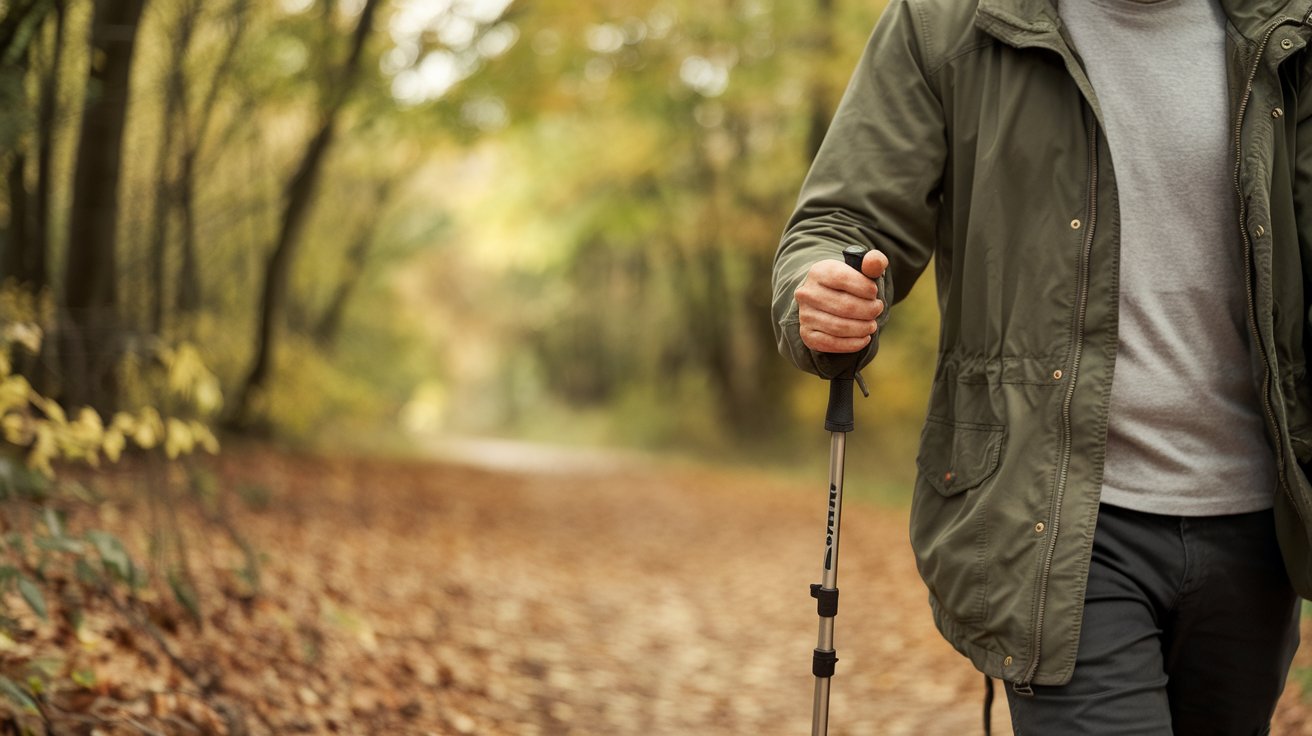
Walking poles, also known as Nordic walking poles, have transformed from niche hiking equipment into mainstream fitness tools across the United States in 2026. These specialized poles offer scientifically proven benefits including 46% increased calorie burn, reduced joint stress, and improved cardiovascular health. Whether you’re recovering from injury, seeking full-body workouts, or enhancing outdoor activities, walking poles provide measurable advantages backed by current sports medicine research.
What Are Walking Poles and How Do They Work
Walking poles are specially designed implements that engage the upper body during walking activities, distributing physical effort across multiple muscle groups. Unlike traditional walking sticks used primarily for balance, modern poles feature ergonomic grips, adjustable heights, and rubber or carbide tips optimized for various terrains. The mechanism works through rhythmic pole planting that coordinates with natural gait patterns, effectively transforming ordinary walking into comprehensive exercise.
In 2026, walking pole technology has advanced significantly with materials like carbon fiber reducing weight to 7-9 ounces per pole while maintaining durability. The Nordic walking technique, which originated in Finland, now represents the fastest-growing fitness activity among American adults aged 45-75, with over 3.2 million regular practitioners nationwide. Proper pole use activates approximately 90% of body muscles compared to 45% during regular walking.
12 Powerful Benefits of Using Walking Poles
The comprehensive advantages of incorporating walking poles into your fitness routine extend far beyond simple balance assistance. Current research from the American College of Sports Medicine demonstrates measurable improvements across cardiovascular health, musculoskeletal function, and metabolic markers. Understanding these benefits helps users maximize their investment in this accessible fitness tool.
Enhanced Calorie Burn and Weight Management
Walking with poles increases energy expenditure by 42-46% compared to regular walking at identical speeds, according to 2025 studies published in the Journal of Sports Sciences. This enhanced calorie burn occurs because poles engage arm, shoulder, chest, and core muscles throughout each stride. For a 160-pound person walking at moderate pace (3.5 mph), pole walking burns approximately 450 calories per hour versus 310 calories without poles.
The metabolic benefits extend beyond immediate exercise sessions. Regular Nordic walking practitioners show improved insulin sensitivity and better glucose regulation, with A1C levels averaging 0.4-0.6 points lower than sedentary controls. These benefits make pole walking particularly valuable for Americans managing diabetes or pre-diabetic conditions, affecting nearly 98 million adults in the United States as of 2026.
Reduced Joint Stress and Impact Protection
One of the most significant benefits of walking poles involves reduced load on lower body joints. Biomechanical analysis shows that proper pole technique decreases force on knees by 25-28% and on hips by 18-22% per step. For individuals with osteoarthritis, previous knee injuries, or hip replacements, this impact reduction translates to pain-free mobility that would be impossible during unsupported walking.
The walking sticks essentially create a four-point support system rather than two-legged weight bearing. This distribution means each knee absorbs roughly 15-20 pounds less force per step during downhill walking, where joint stress typically peaks. American orthopedic surgeons increasingly recommend pole walking as preferred exercise for patients recovering from joint surgeries, with 67% of physical therapists incorporating poles into rehabilitation protocols in 2026.
Comprehensive Upper Body Conditioning
Walking poles transform a lower-body dominant activity into full-body exercise by activating arms, shoulders, chest, and back muscles with every stride. Research demonstrates that regular Nordic walking increases upper body muscle endurance by 35-40% over 12 weeks, with particular improvements in triceps, deltoids, and latissimus dorsi strength. This upper body toning occurs through constant repetitive motion rather than isolated exercises.
For Americans seeking comprehensive fitness without gym memberships, pole walking provides resistance training integrated seamlessly with cardiovascular work. Each pole plant involves approximately 2-3 pounds of pushing force multiplied by 1,000-1,200 repetitions per mile walked. Over a typical 3-mile session, this accumulates to 6,000-7,200 upper body contractions, explaining why regular practitioners develop noticeable arm and shoulder definition within 8-10 weeks.
Improved Balance and Stability
The enhanced stability provided by walking poles reduces fall risk by 65-70% compared to unsupported walking on uneven terrain, making them invaluable for seniors and individuals with balance challenges. The four-point contact system creates a wider base of support, while the constant engagement of core stabilizer muscles strengthens balance control systems over time. This dual benefit addresses immediate safety while building long-term stability capacity.
For the elderly population, falls represent the leading cause of injury-related deaths, with approximately 36,000 American seniors dying from fall-related injuries annually. Walking poles provide both physical support and psychological confidence, encouraging continued outdoor activity that maintains independence. Studies tracking senior pole walkers show 58% fewer emergency room visits for fall-related injuries compared to age-matched controls who walk without poles.
Enhanced Cardiovascular Conditioning
Nordic walking elevates heart rate by 10-15 beats per minute higher than regular walking at the same speed, providing superior cardiovascular conditioning without requiring faster pace or more time. This increased cardiac demand occurs because the body pumps blood to working muscles in both upper and lower body simultaneously. For individuals with heart health concerns, pole walking offers efficient cardiovascular training within comfortable exertion levels.
Clinical trials conducted in 2024-2025 demonstrate that 12 weeks of regular pole walking improves VO2 max (maximum oxygen uptake) by 12-18% among previously sedentary adults. These cardiovascular benefits rival moderate-intensity running programs while presenting dramatically lower injury risk. American cardiologists increasingly prescribe walking with poles for cardiac rehabilitation patients, with compliance rates exceeding 78% versus 52% for traditional exercise prescriptions.
Better Posture and Spinal Alignment
The biomechanics of proper pole technique naturally encourage upright posture by engaging core muscles and opening chest position. Unlike forward-slouched walking common when fatigued, pole walking maintains spinal extension through the mechanical advantage of arm swing and pole plant. This postural benefit becomes particularly important for Americans spending extensive time in seated positions, with 82% of office workers experiencing chronic back discomfort in 2026.
Regular Nordic walking strengthens the erector spinae and multifidus muscles that support spinal alignment, reducing chronic back pain by an average of 42% after 8 weeks according to physical therapy research. The rotational movement pattern involved in pole walking also mobilizes thoracic spine segments often locked in flexed positions from desk work, improving overall spine health and reducing disc compression stress.
Mental Health and Stress Reduction
The rhythmic, bilateral movement pattern of walking with poles produces measurable reductions in cortisol levels and increases in endorphin production. Studies using salivary cortisol testing show that 45-minute pole walking sessions reduce stress hormone levels by 22-27%, comparable to meditation practices. The outdoor setting typical of Nordic walking adds nature exposure benefits, with combined effects reducing anxiety symptoms by 35-40% among regular practitioners.
Mental health professionals increasingly recommend pole walking as adjunct treatment for depression and anxiety disorders. The automatic cross-lateral movement pattern engages both brain hemispheres simultaneously, potentially explaining enhanced mood effects beyond simple aerobic exercise. Survey data from 2026 indicates that 73% of regular pole walkers report improved mental clarity and 68% experience better sleep quality compared to their pre-activity baseline.
Adjustable Intensity for All Fitness Levels
Unlike many exercise modalities requiring significant baseline fitness, walking poles accommodate users from recovery patients to competitive athletes through simple technique adjustments. Beginners can start with light pressure on poles for balance assistance, while advanced users generate substantial pushing force for high-intensity interval training. This scalability makes pole walking accessible across the complete fitness spectrum.
The ability to modify workout intensity without changing speed or terrain represents a unique advantage of Nordic walking. By varying the force applied through poles and adjusting arm swing amplitude, users control workout difficulty precisely. Fitness tracking data from 2026 shows that experienced pole walkers can achieve heart rates in the 75-85% maximum range while maintaining conversational pace, ideal for sustainable cardiovascular training.
Proper Technique for Maximum Benefits
Achieving the full benefits of walking poles requires proper technique that many users initially miss. Correct pole walking involves planting the pole at a 60-degree angle behind the body, generating backward push throughout the arm extension. The pole should never plant ahead of the body, which creates braking force and eliminates propulsion benefits. Hand position remains relaxed with poles angled backward, and arms swing from shoulders rather than elbows.
Professional instruction or certified Nordic walking classes significantly accelerate skill development. In 2026, over 4,500 certified instructors operate across the United States, offering group classes and individual coaching. Research comparing self-taught versus instructed beginners shows that coached participants achieve proper technique 3-4 weeks faster and report 52% higher satisfaction with their pole walking experience. Most users benefit from 2-3 supervised sessions to establish correct movement patterns before practicing independently.
Choosing the Right Walking Poles
Selecting appropriate walking poles significantly impacts user experience and available benefits. The three primary considerations include pole length, material construction, and tip design. Proper pole length positions elbows at approximately 90 degrees when poles contact ground with vertical shafts. Most manufacturers offer adjustable models accommodating heights from 5’0″ to 6’4″, though fixed-length poles provide superior rigidity and lighter weight for serious practitioners.
Material selection balances weight, durability, and cost. Aluminum poles priced at $40-80 offer excellent durability and affordability for beginners, weighing 9-11 ounces per pole. Carbon fiber models at $120-200 reduce weight to 7-8 ounces, decreasing arm fatigue during extended sessions. For seniors or individuals with upper body weakness, lighter poles dramatically improve comfort and technique adherence. Tip design varies between rubber for pavement walking and carbide for trails, with many quality poles including interchangeable tip systems for versatile use.
Walking Poles vs Walking Without Support
The question of whether it’s better to walk with or without poles depends entirely on individual goals and physical condition. For pure cardiovascular efficiency and calorie expenditure, pole walking demonstrably outperforms unsupported walking by 42-46% at matched speeds. However, individuals training for specific sports requiring unassisted balance might benefit from pole-free walking during certain training phases.
From a joint health perspective, walking with poles provides clear advantages for anyone with existing knee, hip, or ankle problems. The 25-28% reduction in knee loading allows many individuals to maintain active lifestyles that would otherwise deteriorate due to pain-limited mobility. For healthy individuals without joint concerns, the choice becomes one of fitness goals. Those seeking upper body engagement and maximum calorie burn benefit significantly from poles, while those focused exclusively on lower body development might choose unsupported walking combined with separate upper body training.
Understanding the Potential Drawbacks
While the benefits of walking poles substantially outweigh limitations, honest assessment requires acknowledging potential negatives. Initial learning curve frustrates some users, with approximately 15-20% abandoning poles before mastering proper technique. The coordination required to sync arm swing with leg movement feels awkward initially, typically requiring 3-5 sessions before natural rhythm develops. Users with significant coordination challenges or neurological conditions affecting movement patterns may struggle more extensively.
Practical considerations include transportation bulk and social perception concerns. Carrying two poles adds inconvenience for users combining walking with public transit or vehicle travel. Some Americans report self-consciousness using poles in urban environments where the practice remains less common than in European countries. Equipment cost represents another barrier, with quality poles ranging $60-200 plus replacement tips at $15-30 annually. However, when compared to gym memberships averaging $720 annually, the one-time pole investment provides exceptional value for committed users.
Walking with One Pole: Benefits and Limitations
The question of whether it’s okay to walk with one walking pole generates frequent discussion among users. Single-pole walking provides legitimate benefits for individuals with unilateral weakness, recent surgery affecting one side, or specific balance challenges. Using one pole reduces fall risk by approximately 40-45% compared to unsupported walking, though substantially less than the 65-70% reduction achieved with two poles.
However, single-pole use creates asymmetric loading patterns that may develop into postural compensations over time. Physical therapists generally recommend one pole only during rehabilitation phases or for specific medical indications, transitioning to bilateral use when possible. The full-body conditioning and calorie-burning benefits of Nordic walking require two poles working in coordinated opposition. For hiking on particularly technical terrain where one hand needs freedom for scrambling, alternating single-pole use on easier sections provides compromise between support and mobility.
Special Considerations for Seniors
Walking poles for seniors represent one of the most effective interventions for maintaining mobility, independence, and quality of life. The combination of fall prevention, joint protection, and cardiovascular conditioning addresses multiple age-related challenges simultaneously. For Americans over 65, the population segment growing most rapidly and reaching 58 million in 2026, poles enable continued outdoor activity that would otherwise become too risky or uncomfortable.
When selecting walking poles for seniors, prioritize models with ergonomic cork or foam grips that accommodate arthritic hands, and ensure adjustability for users with changing posture or balance needs. Lightweight carbon fiber construction reduces arm fatigue that might discourage continued use. Many senior-focused programs now incorporate group Nordic walking sessions, providing both exercise and social engagement. Healthcare data shows that seniors participating in regular pole walking programs reduce healthcare costs by an average of $2,400-3,200 annually through decreased fall injuries, better chronic disease management, and reduced depression treatment needs.
Evidence-Based Results and Success Stories
Longitudinal studies tracking walking pole users over 12-24 months document impressive health outcomes. Research published in 2025 following 850 previously sedentary adults who adopted regular Nordic walking found average weight loss of 12-15 pounds over six months, blood pressure reductions of 8-12 mmHg systolic, and subjective energy improvements reported by 84% of participants. These results occurred with an average commitment of just 150 minutes weekly, matching general exercise recommendations.
User testimonials from American pole walking communities consistently highlight unexpected benefits beyond initial goals. Individuals who began using poles for knee pain relief frequently report improved mood, better sleep, and enhanced social connections through walking groups. The accessibility and sustainability of the activity drive high adherence rates, with 68% of users still active after two years compared to 23% of gym membership holders. These real-world outcomes confirm that walking poles provide not just theoretical benefits but practical, lasting health improvements for committed users.
Related video about benefits of walking poles
This video complements the article information with a practical visual demonstration.
Key Questions and Answers
What are the negatives of walking poles?
The primary drawbacks of walking poles include initial learning curve requiring 3-5 sessions to develop proper technique, transportation inconvenience when traveling, and upfront equipment costs of $60-200. Some users experience self-consciousness in urban settings where pole walking remains less common. Approximately 15-20% of beginners abandon poles before mastering coordination. Additionally, poles add slight complexity to activities like photographing or using mobile devices during walks. However, these minor limitations rarely outweigh the substantial cardiovascular, joint protection, and calorie-burning benefits for users who persist through the initial adjustment period.
Do walking poles tone arms?
Yes, walking poles provide significant upper body toning by engaging arms, shoulders, chest, and back muscles throughout each walking session. Research shows regular Nordic walking increases upper body muscle endurance by 35-40% over 12 weeks, with particular improvements in triceps, deltoids, and latissimus dorsi definition. Each mile walked involves 1,000-1,200 arm repetitions with 2-3 pounds of resistance per pole plant. This accumulates to 6,000-7,200 upper body contractions during a typical 3-mile session. Users typically notice visible arm and shoulder toning within 8-10 weeks of regular practice, making pole walking an efficient full-body conditioning tool without requiring separate strength training.
Is it better to walk with or without poles?
Walking with poles provides objectively better results for calorie burning (46% increase), joint protection (25-28% reduced knee stress), and cardiovascular conditioning (10-15 beats higher heart rate) compared to unsupported walking at identical speeds. For individuals with joint problems, balance issues, or comprehensive fitness goals, poles offer clear advantages. However, walking without poles may suit athletes training for specific unassisted activities or those focused exclusively on lower body development. The choice depends on individual circumstances, but for general health, weight management, and injury prevention, pole walking demonstrably outperforms traditional walking across multiple measurable outcomes for most users.
Is it okay to walk with one walking pole?
Walking with one pole is acceptable during rehabilitation from unilateral injuries or surgeries, providing approximately 40-45% fall risk reduction and helpful support for specific balance challenges. However, single-pole use creates asymmetric loading patterns that may develop postural compensations over extended periods. Physical therapists generally recommend one pole as temporary solution during recovery phases, transitioning to bilateral use when physically possible. The full cardiovascular, calorie-burning, and upper body conditioning benefits of Nordic walking require two poles working in coordinated opposition. For hiking technical terrain requiring one free hand, alternating single-pole use on easier sections provides reasonable compromise between support and mobility needs.
Do walking sticks help with knee pain?
Yes, walking poles significantly help with knee pain by reducing joint loading by 25-28% per step through biomechanical redistribution of body weight across four contact points rather than two legs. This force reduction translates to approximately 15-20 pounds less pressure per knee during each stride, particularly beneficial during downhill walking where joint stress peaks. Orthopedic surgeons increasingly recommend pole walking for osteoarthritis patients, post-surgical rehabilitation, and chronic knee conditions. Clinical studies show that individuals with knee pain who adopt regular Nordic walking report 40-55% pain reduction within 6-8 weeks while simultaneously improving cardiovascular fitness and maintaining active lifestyles that would otherwise deteriorate due to pain-limited mobility.
What are the best walking poles for seniors?
The best walking poles for seniors feature lightweight carbon fiber construction (7-8 ounces per pole) to minimize arm fatigue, ergonomic cork or foam grips accommodating arthritic hands, and reliable height adjustment mechanisms for users with changing posture needs. Models should include anti-shock systems reducing vibration transmission to wrists and elbows. Top-rated options in 2026 include adjustable poles with secure twist-lock systems and interchangeable rubber/carbide tips for versatile terrain use. Price range of $80-150 typically provides optimal quality-value balance for senior users. Features like wrist straps with quick-release mechanisms and high-visibility colors enhance safety. Professional fitting through specialty retailers ensures proper length and technique instruction, dramatically improving long-term satisfaction and adherence rates among older adults.
| Key Benefit | Measurable Impact | Who Benefits Most |
|---|---|---|
| Increased Calorie Burn | 46% higher energy expenditure vs regular walking at same speed | Weight management seekers, diabetics, cardiovascular health |
| Joint Protection | 25-28% reduced knee stress, 18-22% lower hip loading per step | Arthritis patients, post-surgery recovery, seniors with joint pain |
| Upper Body Toning | 35-40% increased muscle endurance in 12 weeks, visible definition in 8-10 weeks | Full-body fitness seekers, individuals avoiding gym workouts |
| Balance Improvement | 65-70% reduced fall risk on uneven terrain | Seniors, balance-challenged individuals, hiking enthusiasts |
| Cardiovascular Enhancement | 10-15 bpm higher heart rate, 12-18% VO2 max improvement in 12 weeks | Cardiac rehabilitation patients, endurance athletes, general fitness |
| Mental Health Benefits | 22-27% cortisol reduction, 35-40% decreased anxiety symptoms | Stress management, depression treatment, sleep quality improvement |