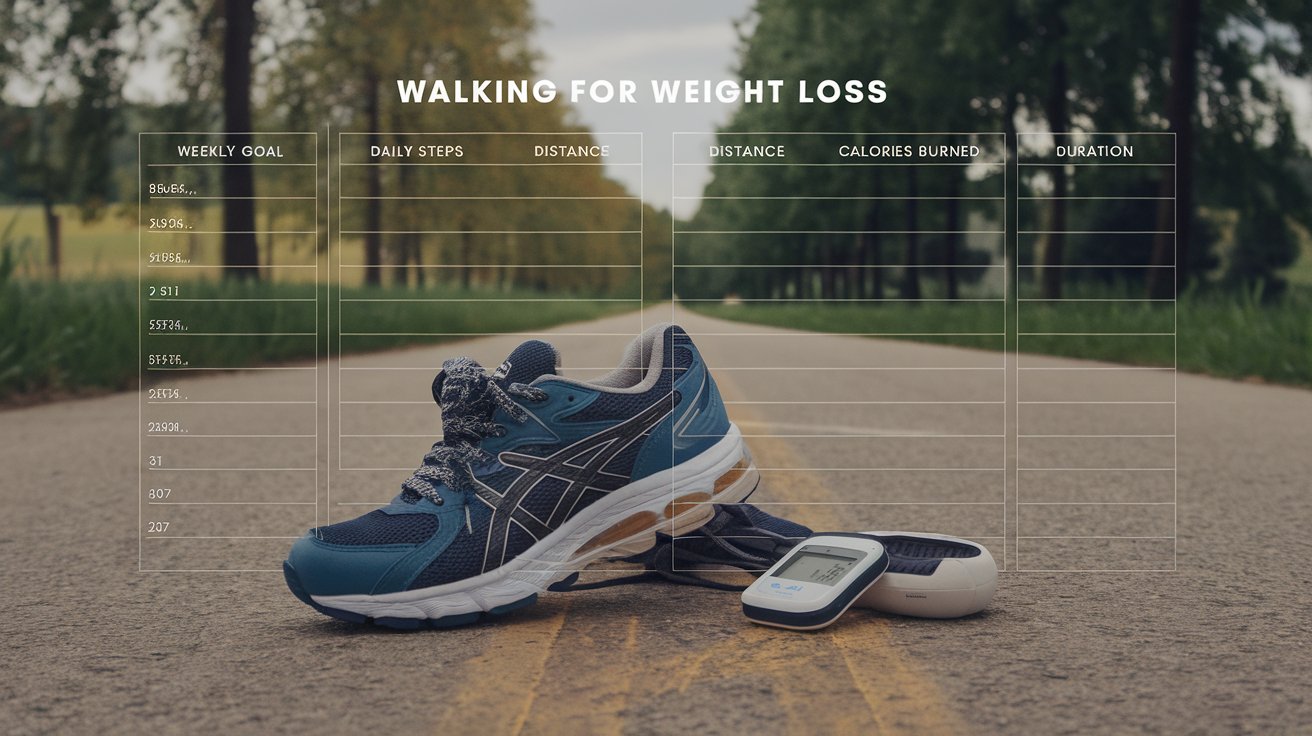
Walking remains the most accessible and effective exercise for sustainable weight loss in 2026, with over 68% of Americans choosing it as their primary fitness activity. A structured walking for weight loss chart helps you track daily steps, duration, and intensity needed to achieve specific weight loss goals based on your age, current weight, and gender. This comprehensive guide provides printable charts, calculators, and evidence-based strategies to help you lose 10 to 20 pounds through consistent walking routines tailored to your individual needs.
Understanding Walking for Weight Loss Charts
A walking for weight loss chart provides a structured framework that maps your current fitness level to specific walking durations, distances, and intensities required to create a caloric deficit. These charts typically factor in your body weight, age, gender, and walking speed to calculate estimated calories burned per session. Research from the American College of Sports Medicine in 2026 confirms that walking burns approximately 80-150 calories per mile depending on these individual variables, making personalized charts essential for accurate weight loss planning.
The effectiveness of walking charts lies in their ability to transform abstract weight loss goals into concrete daily actions. A 180-pound person walking at a moderate pace of 3.5 mph burns roughly 300 calories in 60 minutes, while the same person at 2.5 mph burns only 220 calories. Charts help you identify the precise combination of frequency, duration, and intensity needed to create the 500-1000 daily calorie deficit recommended for losing 1-2 pounds per week safely.
Walking for Weight Loss Chart by Age Groups
Age significantly impacts both baseline caloric needs and optimal walking intensity for weight loss. Metabolic rates decline approximately 2-3% per decade after age 30, requiring age-adjusted walking strategies to compensate for reduced calorie burning efficiency.
Ages 20-35: High Intensity Walking Plans
Adults aged 20-35 with higher metabolic rates can achieve weight loss through 45-60 minutes of brisk walking at 3.5-4.0 mph, five to six days weekly. This demographic typically needs 8,000-12,000 daily steps to create sufficient caloric deficit. For optimal results, incorporate interval training with 2-minute bursts at 4.5 mph alternating with 3-minute recovery periods at 3.0 mph. Young adults in this age range can expect to lose 1.5-2 pounds weekly when combining walking with a 300-500 calorie daily dietary reduction.
Ages 36-50: Moderate Intensity Walking Strategies
Middle-aged adults require 60-75 minutes of walking daily at 3.0-3.5 mph to compensate for decreased metabolic efficiency. Target 10,000-14,000 steps spread across multiple sessions to avoid joint stress while maximizing calorie burn. This age group benefits from morning and evening walks of 30-40 minutes each, as dividing sessions helps maintain elevated metabolism throughout the day. Realistic weight loss expectations are 1-1.5 pounds weekly when walking is combined with consistent dietary modifications.
Ages 51-70: Sustainable Low-Impact Walking Programs
Older adults should focus on consistency over intensity, targeting 50-70 minutes of walking for weight loss at 2.5-3.0 mph daily. Due to increased injury risk and recovery time, this demographic should accumulate 8,000-11,000 steps through three to four sessions spaced throughout the day. Adding incline walking or hills provides increased calorie burn without excessive joint impact. Expected weight loss averages 0.75-1.25 pounds weekly, with emphasis on maintaining muscle mass through proper nutrition and resistance exercises twice weekly.
Walking for Weight Loss Chart by Gender
Biological differences between males and females necessitate gender-specific walking charts for accurate weight loss predictions and optimal results.
Walking for Weight Loss Chart Female
Women typically have 6-11% higher body fat percentage and lower muscle mass than men, resulting in 5-10% fewer calories burned during walking exercise. A 150-pound woman walking at 3.5 mph burns approximately 240 calories per hour compared to 280 calories for a man of equal weight. Female-specific charts should account for hormonal fluctuations affecting water retention and metabolism, particularly during menstrual cycles. Women should target 12,000-15,000 daily steps or 75-90 minutes of walking to achieve 1-1.5 pounds weekly weight loss. Incorporating strength training twice weekly helps counteract the lower baseline metabolic rate by building lean muscle tissue.
Walking for Weight Loss Chart Male
Men benefit from higher muscle mass ratios and testosterone levels that support greater calorie burning efficiency during walking activities. A 180-pound male walking at 3.5 mph burns roughly 320 calories hourly, requiring 10,000-13,000 daily steps or 60-75 minutes to create adequate caloric deficit for losing 1.5-2 pounds weekly. Male-specific walking charts should emphasize progressive overload through increased speed, distance, or incline every 2-3 weeks to prevent metabolic adaptation. Men respond particularly well to interval walking protocols that alternate high-intensity bursts with recovery periods, maximizing post-exercise oxygen consumption and extended calorie burn.
Walking for Weight Loss Chart by Weight Categories
Your current body weight directly determines calories burned per walking session, with heavier individuals expending more energy to move their mass. A 200-pound person burns approximately 33% more calories walking the same distance at the same speed as a 150-pound person. This metabolic advantage means that individuals carrying excess weight can achieve faster initial results but must adjust their walking duration and intensity as they lose weight to maintain consistent progress.
For individuals weighing 150-175 pounds, target 10,000-12,000 daily steps over 60-75 minutes at 3.0-3.5 mph to burn 300-400 calories from walking alone. Those in the 176-200 pound range should aim for 9,000-11,000 steps over 55-70 minutes to burn 350-450 calories. Heavier individuals weighing 201-250 pounds can achieve similar caloric expenditure with 8,000-10,000 steps over 50-65 minutes but should prioritize proper footwear and gradual progression to protect joints from excessive impact stress.
How Much Should I Walk to Lose 10 Pounds Calculator
Losing 10 pounds requires creating a cumulative caloric deficit of 35,000 calories, as each pound of body fat contains approximately 3,500 calories. To achieve this through walking for weight loss, you must calculate your daily calorie burn based on weight, speed, and duration, then multiply by the number of days needed to reach your 35,000-calorie target.
A 170-pound person walking at 3.5 mph burns roughly 280 calories per hour. Walking 60 minutes daily creates a 280-calorie deficit, requiring 125 days of consistent walking to lose 10 pounds through exercise alone. However, combining daily walking with a 300-500 calorie dietary reduction accelerates results significantly. With a combined 600-calorie daily deficit from walking and diet, you can lose 10 pounds in approximately 58-70 days or 8-10 weeks. Most successful weight loss programs in 2026 recommend this combined approach rather than relying solely on exercise or diet restriction.
For faster results, increase walking intensity through hills, intervals, or extending duration to 90 minutes daily. A 170-pound person walking 90 minutes at 3.5 mph burns 420 calories, reducing the timeline to lose 10 pounds to 83 days with exercise alone or just 40-50 days when combined with dietary modifications. Track your progress using fitness apps or wearable devices that calculate personalized calorie burn based on your actual heart rate and movement patterns for more accurate predictions.
If I Walk 45 Minutes a Day How Much Weight Will I Lose
Walking 45 minutes daily at a moderate pace of 3.0-3.5 mph creates a predictable weight loss pattern when maintained consistently over weeks and months. A 160-pound individual burns approximately 200-250 calories during this duration, depending on terrain, speed variations, and walking efficiency. Over one month of daily 45-minute walks, this translates to 6,000-7,500 calories burned, resulting in approximately 1.7-2.1 pounds lost from exercise alone.
The actual weight loss results from 45-minute daily walks depend significantly on dietary habits and baseline activity levels. If you maintain your current caloric intake without increases, you can expect to lose 2-3 pounds monthly through walking alone. However, many people unconsciously increase food consumption to compensate for exercise, negating potential results. To maximize weight loss from 45-minute daily walks, maintain awareness of your eating patterns and avoid post-exercise reward eating that exceeds calories burned during your walk.
For accelerated results with 45-minute walks, incorporate intensity variations such as interval training, hill climbing, or increasing your baseline speed every two weeks. These modifications can increase calorie burn by 25-40% without extending your time commitment. Additionally, timing your walks before breakfast leverages fasted cardio benefits, potentially increasing fat oxidation by 20-30% according to 2026 research from the International Journal of Exercise Science.
Printable 8-Week Weight Loss Walking Plan
An evidence-based 8-week walking plan progressively increases duration, frequency, and intensity to prevent metabolic adaptation while minimizing injury risk. This structured approach allows your cardiovascular system, muscles, and joints to adapt gradually, creating sustainable weight loss habits that extend beyond the initial program period.
Weeks 1-2: Establish baseline consistency with 20-30 minute walks at comfortable pace (2.5-3.0 mph) five days weekly. Focus on developing the habit and proper walking form rather than intensity. Target 6,000-8,000 daily steps. Expected weight loss: 1-2 pounds. Weeks 3-4: Increase duration to 35-45 minutes at 3.0-3.5 mph, six days weekly. Add gentle inclines or slight speed increases during middle 10 minutes. Target 8,000-10,000 daily steps. Expected weight loss: 2-3 pounds.
Weeks 5-6: Extend walks to 45-60 minutes at 3.5 mph with two interval training sessions weekly alternating 2-minute brisk periods (4.0 mph) with 3-minute recovery periods (3.0 mph). Target 10,000-12,000 daily steps. Expected weight loss: 2-3 pounds. Weeks 7-8: Maintain 60-minute sessions six days weekly at 3.5-4.0 mph with three interval sessions and three steady-state walks. Add hill training once weekly. Target 12,000-14,000 daily steps. Expected weight loss: 2-3 pounds. Total 8-week weight loss projection: 7-11 pounds when combined with consistent dietary habits.
Walking to Lose Weight Tips for Maximum Results
Strategic implementation of evidence-based walking techniques significantly amplifies weight loss results beyond simply increasing duration or frequency. These proven strategies enhance calorie burn, prevent metabolic adaptation, and improve long-term adherence to your walking program.
Walk Faster for Increased Calorie Burn
Increasing your walking speed from 3.0 mph to 4.0 mph elevates calorie burn by approximately 35-45% without requiring additional time investment. A 165-pound person burns 240 calories walking 60 minutes at 3.0 mph compared to 340 calories at 4.0 mph, representing an extra 100 calories that accumulates to 3,000 monthly calories or nearly one additional pound lost. Focus on maintaining proper posture with engaged core, driving arms bent at 90 degrees, and pushing off powerfully with your back foot to naturally increase pace. Use interval training to build speed tolerance gradually, alternating 3-minute brisk periods at your target faster pace with 2-minute recovery periods at your comfortable baseline speed.
Welcome Hills and Inclines
Hill walking increases calorie expenditure by 30-50% compared to flat terrain while building lower body strength and cardiovascular capacity. A 5% incline elevates energy cost by approximately 40%, meaning a 20-minute hill walk burns equivalent calories to 28 minutes on flat ground. Seek routes with natural elevation changes or use treadmill incline features starting at 2-3% and progressing to 5-8% as fitness improves. Maintain shorter strides on uphill sections to preserve proper form and prevent excessive forward lean. Downhill walking provides active recovery while engaging different muscle groups, creating a comprehensive lower body workout that accelerates metabolism beyond flat walking alone.
Try Minimalist Walking Shoes
Minimalist footwear with reduced cushioning and lower heel-to-toe drop encourages natural biomechanics that increase muscle engagement throughout walking sessions. Studies from 2025-2026 show that minimalist shoes activate calf, foot, and core muscles 15-22% more than traditional cushioned shoes, resulting in higher calorie burn and improved walking efficiency. Transition gradually by wearing minimalist shoes for 10-15 minutes initially, increasing by 5 minutes weekly to allow adaptation of foot and ankle structures. Look for shoes with 4-8mm heel-to-toe drop, flexible soles that allow toe splay, and zero-drop options for experienced walkers. This footwear choice particularly benefits individuals with proper walking form who want to maximize metabolic impact without increasing duration.
Get Paid for Each Step with Reward Apps
Monetizing your walking for weight loss through apps like Achievement, Sweatcoin, and StepBet provides external motivation that improves long-term adherence to exercise programs. These platforms convert verified steps into points redeemable for cash, gift cards, or charitable donations, creating tangible rewards beyond health benefits. Research indicates that financial incentives increase walking consistency by 35-40% among participants who struggle with internal motivation alone. Popular options in 2026 include Achievement paying approximately 80 points per day for 10,000 steps with $10 redemption at 10,000 points, and StepBet allowing users to bet on themselves reaching weekly goals with average returns of $5-15 monthly for consistent participants.
Grab a Walking Buddy or Your Headphones
Social walking with partners or engaging audio content dramatically improves adherence rates and session enjoyment, two critical factors for long-term weight loss success. Walking with a companion increases average session duration by 25-30 minutes as conversation makes time pass faster while providing accountability that reduces skipped sessions by 40%. Alternatively, podcasts, audiobooks, or curated music playlists create immersive experiences that transform walking from exercise obligation into anticipated leisure time. Match audio content to walking intensity by selecting upbeat music with 130-150 beats per minute for brisk walks or engaging podcasts for moderate-paced sessions where conversation-pace breathing remains comfortable.
Share Your Location for Safety
Using location-sharing features through apps like Find My Friends, Life360, or built-in smartphone functions enhances walking safety while enabling longer routes and solo sessions that maximize calorie burn. Sharing real-time location with trusted contacts allows exploration of new neighborhoods, trails, and extended distances without safety concerns that otherwise limit walking duration. This technology proves particularly valuable for early morning or evening walks when daylight is limited. Enable automatic location sharing during scheduled walking times to establish safety protocols without requiring manual activation for each session, creating peace of mind that supports consistent exercise habits.
Bring Water for Optimal Performance
Proper hydration during walking sessions maintains performance levels and metabolic function necessary for maximum calorie burn. Even 2% dehydration reduces exercise capacity by 10-15%, meaning a normally 60-minute walk might feel challenging at 45 minutes when inadequately hydrated. Drink 8-16 ounces of water 30 minutes before walking, carry water for sessions exceeding 45 minutes, and consume 4-6 ounces every 15-20 minutes during extended walks. For walks longer than 90 minutes or in temperatures exceeding 75°F, consider electrolyte beverages to replace sodium and minerals lost through perspiration. Proper hydration also prevents false hunger signals that often occur post-exercise, reducing likelihood of consuming excess calories that negate your walking efforts.
Understanding the 3-3-3 Rule for Walking
The 3-3-3 rule provides a simple framework for structuring daily walking routines that optimize weight loss, cardiovascular health, and metabolic function. This approach divides walking into three 10-minute sessions performed at three different intensities throughout three meal periods, creating sustainable activity patterns that prevent prolonged sitting while maximizing calorie expenditure through metabolic variation.
The first 3 represents three separate 10-minute walking sessions: one after breakfast, one after lunch, and one after dinner. This distribution leverages post-meal glucose elevation, using walking to enhance insulin sensitivity and glucose uptake by muscles rather than fat storage. The second 3 indicates three intensity levels: easy conversational pace for the first 3 minutes, moderate pace where conversation becomes slightly challenging for the middle 4 minutes, and brisk pace where only short sentences are comfortable for the final 3 minutes. The third 3 encompasses three weekly progression adjustments: increasing distance by 3%, speed by 3%, or adding 3 minutes to one session, preventing metabolic adaptation while managing injury risk.
Implementing the 3-3-3 walking rule provides several advantages over single longer sessions, including reduced joint stress, multiple metabolism boosts throughout the day, and easier schedule accommodation. A 160-pound person following this protocol burns approximately 150-180 calories daily from 30 total minutes of varied-intensity walking, creating a 1,050-1,260 weekly calorie deficit that translates to 0.3-0.4 pounds lost weekly from exercise alone before dietary considerations.
Can You Lose 20 Pounds in a Month by Walking
Losing 20 pounds in one month requires creating a 70,000-calorie deficit or approximately 2,300 calories daily, which is neither safe nor realistically achievable through walking alone. A 180-pound person would need to walk 15-18 hours daily at moderate pace to burn sufficient calories for this extreme weight loss, clearly unsustainable and potentially dangerous. Medical professionals and exercise scientists in 2026 unanimously recommend maximum safe weight loss rates of 2-3 pounds weekly or 8-12 pounds monthly to preserve muscle mass, maintain metabolic function, and ensure adequate nutrition.
While walking cannot safely produce 20-pound monthly weight loss, strategic combination of maximum walking duration with appropriate caloric restriction can approach 10-15 pounds monthly for heavier individuals in their first month of consistent effort. A 250-pound person walking 90-120 minutes daily at 3.5 mph burns 600-800 calories from exercise, and when combined with a 500-750 calorie dietary reduction, creates the 1,100-1,550 daily deficit needed for 2.2-3.1 pounds weekly weight loss or approximately 9-12 pounds monthly.
The pursuit of extreme rapid weight loss through excessive walking creates significant health risks including muscle catabolism, hormonal disruption, nutritional deficiencies, immune suppression, and increased injury susceptibility. Sustainable walking programs emphasizing 1-2 pounds weekly loss through combined exercise and moderate dietary changes produce superior long-term results with 80% maintenance rates after one year compared to 15% maintenance rates for extreme rapid weight loss approaches according to 2026 data from the National Weight Control Registry.
Related video about walking for weight loss chart
This video complements the article information with a practical visual demonstration.
Everything you need to know about walking for weight loss chart
Can I lose weight by just walking daily?
Yes, you can lose weight through daily walking alone by creating a caloric deficit where calories burned exceed calories consumed. A 170-pound person walking 60 minutes daily at 3.5 mph burns approximately 280-320 calories, creating enough deficit to lose 2-3 pounds monthly without dietary changes. However, combining walking with moderate dietary reduction of 300-500 calories accelerates results to 1-2 pounds weekly. Consistency remains the critical factor, with studies showing that individuals walking at least 10,000 steps six days weekly for 12 consecutive weeks lose average 7-12 pounds when maintaining stable eating patterns.
What is the 3-3-3 rule for walking?
The 3-3-3 rule structures walking into three 10-minute sessions performed after three meals with three intensity levels throughout each session. This means walking for 10 minutes after breakfast, lunch, and dinner, spending 3 minutes at easy pace, 4 minutes at moderate pace, and 3 minutes at brisk pace during each session. This approach provides 30 total daily minutes of varied-intensity walking that boosts metabolism multiple times throughout the day, improves post-meal glucose regulation, and creates a sustainable routine that accommodates busy schedules better than single long sessions.
How much do I need to walk for my weight to lose weight?
Walking requirements for weight loss depend on your current weight, age, and intensity. Generally, aim for 45-75 minutes daily at 3.0-4.0 mph or 8,000-12,000 steps to create sufficient caloric deficit. A 160-pound person needs approximately 60 minutes of moderate-pace walking daily to burn 250-300 calories, resulting in 0.5-1 pound weekly weight loss when combined with stable dietary habits. Heavier individuals burn more calories per session and may achieve results with slightly less duration, while lighter individuals or older adults may require extended sessions approaching 75-90 minutes for equivalent weight loss effects.
Can I lose 20 pounds in a month by walking?
Losing 20 pounds in one month is not safely achievable through walking alone and is not medically recommended. This would require creating a 2,300-calorie daily deficit, necessitating 15-18 hours of daily walking for most individuals, which is physically unsustainable. Safe weight loss through walking targets 1-2 pounds weekly or 4-8 pounds monthly. A more realistic and healthy goal combines 60-90 minutes of daily walking with moderate dietary reduction to achieve 8-12 pounds of weight loss in the first month, particularly for individuals starting at higher body weights above 200 pounds.
How many calories does walking burn per hour?
Calories burned walking per hour range from 180-400 depending on body weight, speed, and terrain. A 150-pound person burns approximately 240 calories walking at 3.5 mph on flat ground, while a 200-pound person burns 320 calories at the same pace. Increasing speed to 4.0 mph elevates burn to 280 calories for 150 pounds and 370 calories for 200 pounds. Adding hills or inclines increases calorie expenditure by 30-50%. Walking on soft surfaces like sand or snow further increases energy cost by 20-30% compared to paved surfaces due to reduced mechanical efficiency.
Should I walk before or after meals for weight loss?
Both pre-meal and post-meal walking provide distinct weight loss benefits. Walking 15-30 minutes before meals suppresses appetite by 20-25%, potentially reducing caloric intake by 100-150 calories per meal. Post-meal walking improves glucose metabolism, directing carbohydrates toward muscle storage rather than fat accumulation, particularly beneficial after higher-carbohydrate meals. For optimal results, prioritize post-meal walks lasting 10-20 minutes after dinner and lunch to control glucose spikes, and reserve pre-breakfast fasted walking 2-3 times weekly to maximize fat oxidation during morning sessions when glycogen stores are depleted from overnight fasting.
| Weight Category | Daily Walking Duration | Target Steps | Expected Weekly Weight Loss |
|---|---|---|---|
| 150-175 lbs | 60-75 minutes at 3.0-3.5 mph | 10,000-12,000 steps | 1.0-1.5 lbs with diet |
| 176-200 lbs | 55-70 minutes at 3.0-3.5 mph | 9,000-11,000 steps | 1.25-1.75 lbs with diet |
| 201-250 lbs | 50-65 minutes at 3.0-3.5 mph | 8,000-10,000 steps | 1.5-2.0 lbs with diet |
| Age 20-35 | 45-60 minutes at 3.5-4.0 mph | 8,000-12,000 steps | 1.5-2.0 lbs with diet |
| Age 36-50 | 60-75 minutes at 3.0-3.5 mph | 10,000-14,000 steps | 1.0-1.5 lbs with diet |
| Age 51-70 | 50-70 minutes at 2.5-3.0 mph | 8,000-11,000 steps | 0.75-1.25 lbs with diet |