Barnacles

The barnacle is an admirable creature, if you value tenaciousness. It’s evolved to cling tightly to a surface, be it a rock or a ship’s hull, so that it can filter feed on the micro-organisms that float by. There are species of barnacles that even cling to a whale’s skin, forcing those creatures to scrape their hides against passing boats in an effort to dislodge the unwelcome passengers.

But barnacles cling on, and we should admire that strength of purpose. If you’re a barnacle, clinging power is a good thing.

And yet, on the other hand, to the whale or the ship owner the barnacle is a pest and an impediment. It slows them down and over time can accumulate to the point where they can only move with great effort, and even when they scrape them off the barnacles just keep coming back in a never-ending battle. Eventually, they must be tempted just to give up and let them collect and weigh them down to sink into the sea.

We all have our barnacles in life, those little things that weight us and slow us. For me it’s nagging injuries. When I was about 7 I was walking along a lake shore and stepped on a piece of glass. The cut didn’t seem serious at the time, but it was deep enough that it damaged the muscles and ligaments in the arch of my right foot, so that now I have one flat foot and one normally arched foot. That effectively makes my right leg shorter than my left, which causes my pelvis to tilt, which puts my back out of whack, and leads to bouts of sciatica. That barnacle has clung on stubbornly for more than 50 years now.

And there are others. A legacy of heavy work on a farm when I was in my teens, my achy knees warn me a day or two ahead of any change in the weather. And the jammed big toe on my left foot, which I did slipping on an (ironically) barnacle-covered rock on a beach in New Zealand, makes the joint of the toe and the ball of my left foot burn with pain sometimes. Or the broken big toe on my right foot, which I did tripping on some stairs, replays the original sharp pain when I’m walking in hiking boots. Or the torn calf muscle on my right leg, which I did playing catch with some of the players on the pee wee baseball team I coached, flares up once in awhile as a general soreness in the calf and achilles tendon.

All of these old barnacles mean that the first 15-30 minutes of a walk are a shakedown of little niggles, as I get warmed up and used to the nags and my brain tells them all to go away for awhile. At least that’s what often happens, but not always. Sometimes the barnacles are just too nagging that day, there’s too much resistance for the energy level that I have. They slow me down to the point where I just pack it in, a planned 2 hour walk cut down to 30 minutes.

I know we all have our barnacles, some physical, some emotional, and some spiritual. I tell myself that it’s a privilege to have lived long enough to feel them, and I know that they’re minor, relatively speaking – many people have far worse issues to deal with than my little pains.

But it’s human nature to focus on yourself and your problems. So for me, it’s better to admire the barnacle’s staying power and tenacity. Don’t give in to the barnacles, imitate them. Getting out for a walk and ignoring my barnacles is a way of blowing a raspberry at Father Time. After all, would you rather be the barnacle, or the whale?
Patterns

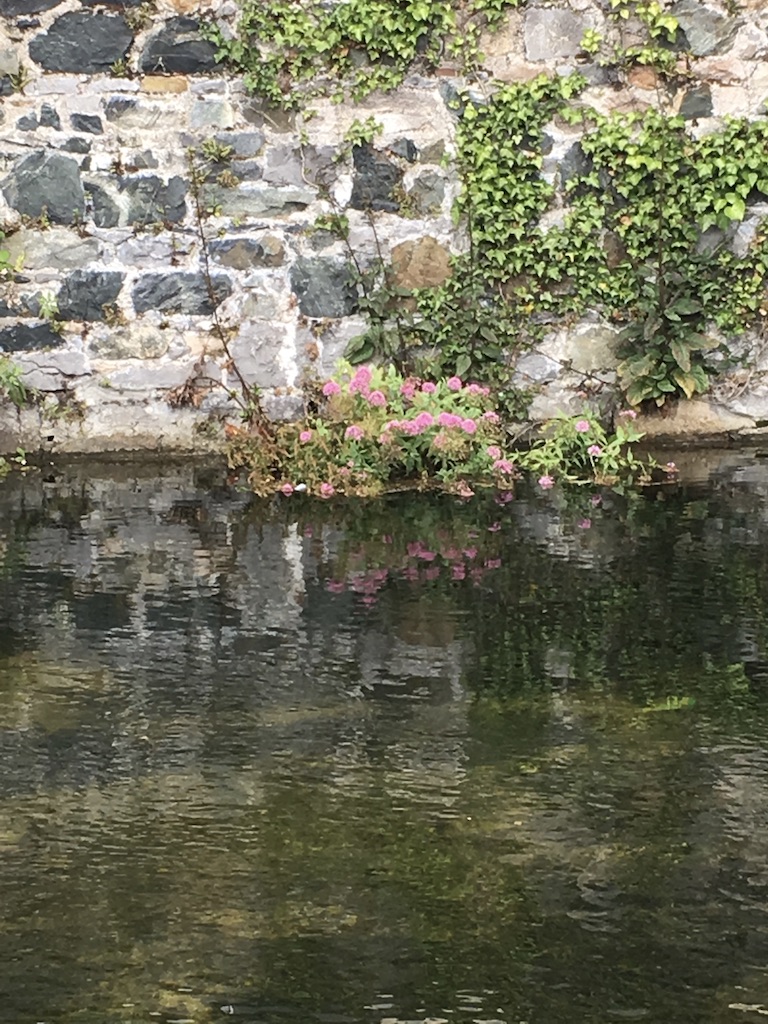
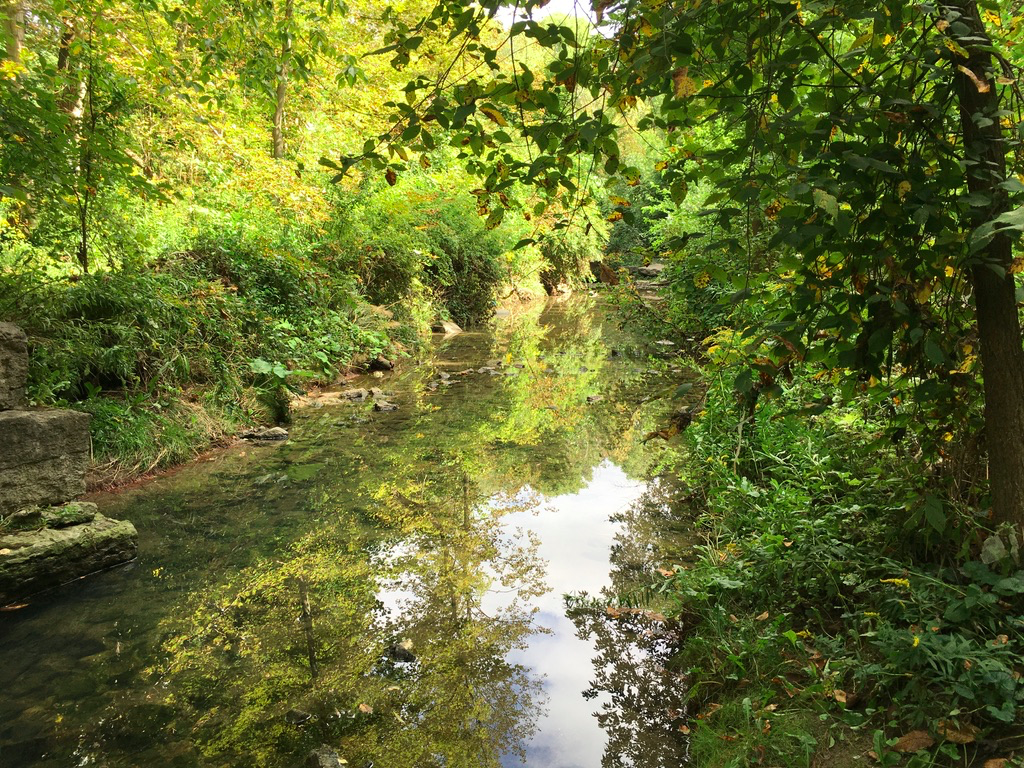
I’ve always had an eye for patterns, the repetition of a colour or shape or the reflection of movement in a pond or a stream. I look for them all around me, consciously and unconsciously. As I walk my eye will pick out a pattern, and sometimes I see that I am myself part of that pattern – the trail of footprints I leave on a beach or the flicker of my shadow along a sidewalk.

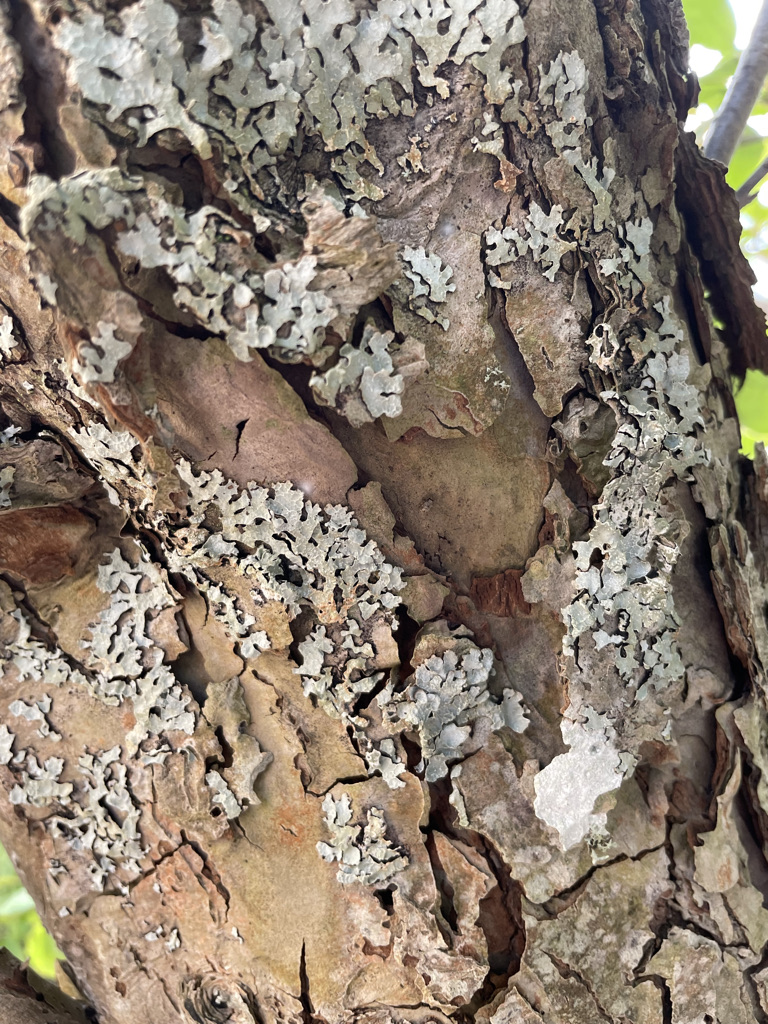
I love the structure and order that I can see around me – in rocks and lichens and tree bark and roof tiles and fences and waves and ripples and flocks of birds.

This image has an empty alt attribute; its file name is 61db87a4-c1f4-4a39-9848-afd39c4198c4_1_105_c.jpeg

Years ago, just after we were married, I took up my wife’s 35mm camera and spent years happily snapping patterns. And over time, I gradually found that I could leave the camera behind but still look for those patterns as I pass, and that the thrill of capturing that pattern in a photo has been replaced by an appreciation of the transitory nature of what I see.

I’m not Buddhist, but I think I can understand – imperfectly I’m sure – some of the Zen of a moment when I see something that is, at that particular time and place, the essence of a perfect pattern. It’s fleeting and I may only capture it in my mind’s eye for a split second. But I see it and I try to feel it and lock it away as a memory.

And yes, occasionally, I still get out my camera and try to record a pattern, if only to be able to share it with someone else. But that search for patterns is what keeps me walking, keeps me moving, keeps me engaged and interacting with the world around me.

Learning is in many ways the search for patterns in facts and figures, to organize them and arrange them in ways that explain what we see around us. I can remember being 7 or 8 years old and saying to a teacher, when she asked me how I was able to learn something so quickly – probably multiplication tables or some such – and replying that I just looked for the pattern in the subject and filed that away in my memory, and then seeing in her face a look of surprise. I suppose that 7 or 8 year olds seldom can articulate what they’re doing when they’re learning.

But for me that search for patterns to explain what I was seeing was natural then and it’s still natural now. The world is full of patterns, and patterns of patterns, in infinite complexity and loops and whorls. That’s what makes it interesting. Even straight lines can have depth.

Whimsical Walks, Lunenburg edition

Earlier in the year, I posted about the idea of making a game of your walks as a way to keep things interesting. A friend of mine read it and took it to heart, and quickly did a series of alphabetical walks that covered street names in Toronto for every letter of the alphabet except I think X (there is no Toronto street starting with X) and Z (only a handful).

Having moved to Lunenburg, I took a look a the map and realized that it wouldn’t take long to cover the alphabet here.

Having walked the length of Yonge St in Toronto, it took me much less time to walk Young here in Lunenburg, to cover off the Y. But there are no streets that I can find in town that start with E, I, Q, R, U, X, or Z. I was somewhat surprised to realize that there’s a King but not a Queen street in town, since most towns in English-speaking Canada seem to have both, and the lack of a street starting with an R was a bit of a surprise too. I’m giving myself the letter O, by the way, as Old Blue Rocks Road, so if you don’t think that counts then there’s no O either.

But nevertheless, in under 2 hours I had pretty much covered all the other letters of the alphabet, and had learned a bit about the town as I went. The UNESCO-designated heritage area of the Old Town, with its colourful houses and well-preserved wooden churches, is always delightful to wander through.

More surprising to me, perhaps, was wondering through the New Town area to the west of the harbour, up near the hospital, where I went to catch the W’s (Wolff Ave and Whynacht St). Visiting the town as a tourist, I hadn’t wandered up here before. The lower part of the New Town has some stately Victorian-era homes turned into B&Bs, and as you continue up the hill the homes get progressively more modern until up by Wolff they are just a few years old.

It’s good to see the growth in town that way. There’s more to Lunenburg than just the chocolate-box cheer and the colours of the Old Town. There’s more to it than just tourism, for that matter – there are factories and shops and services along with the restaurants and museums and galleries. There’s a school and good coffee shops and a pub where the locals go, and a hospital, and groceries, and a library, and playgrounds. The harbour is a working fishing port as well as a picturesque background, and the hills rising above the harbour have more than pretty views.

I like that it’s a complete place, self-sufficient and year-round. I like that we welcome people from round the world and share our place with them. And I like that come the autumn, it’s going to be our place, where a close-knit community keeps a steady beat until the next cycle of tourists come round.

Settling in

Over the past few weeks, I’ve started to go for longer walks around Lunenburg. I feel like I’m getting to know the place.

It’s helped that we’ve had some lovely summer days. Heading off for a few hours when the sun is shining just feels good, and knowing that come winter I’ll be missing that sun puts a little zest into taking advantage of it now.

So I won’t complain about it being too hot, and truth be told there’s usually a breeze that refreshes as you walk. And it’s also been the case that a hot day here is 5-6 degrees cooler than in Toronto, and that’s another aspect of settling in.

There are some nice walking trails nearby, like the Back Harbour Trail, and the Bay to Bay Trail. I’ve done those, and I’ve walked some of the back roads out to Blue Rocks, Mader’s Cove, and the 2nd Penninsula too, plus wandered around old town Lunenburg and the new town too.

It’s been fun getting to know the place better, the way you do on foot instead of in a car. You notice the houses, and the little touches in the way gardens and kids toys and flowers and yard tools are scattered about, that let you guess at the lives of those who live there. I’ve also noticed the wildlife – I’ve seen ospreys, gulls, herons, ducks, deer, and snakes all within a few km of our home.

I can’t help comparing things to Toronto. There are way fewer fancy cars, and more bikes and pickups, and less traffic. There are lots of lawn chairs and fire pits for sitting about at night. There are fewer people out walking dogs, and no apparent nannies taking kids for a stroll. There’s money about evidenced by toys but these are outdoor toys like boats and ATVs.

The biggest thing you realize is that the cultural mosaic of Toronto is very muted here. Instead you notice a smaller number of surnames attached to roads and bays and coves and houses – the local families that have been here for 200+ years.

So I’m liking it, as I settling in. There are more walks to do and more to learn and see. I’m looking forward to it.

Bucket List Walks

Blog posts are a labour of love for me, and yet there is a cost to running this site and organizing my walks.If you’d like to help with that, I’d really appreciate something for my tip jar.The Buy Me a Coffee service allows patrons like you to fund writers like me.  If that sounds like a worthy idea to you, then go ahead – keep buying me coffees.Thank You Very Much to everyone who has contributed already!

*****

An ever-changing list of walks I’ve done or would like to do. If it’s in bold italics it means I Did It!

Walks close to home in the Maritimes

Walks in Ontario

  • The Bruce Trail, Ontario
    • Niagara Section
    • Iroquois Section
    • Toronto Section
    • Caledon Section
    • Dufferin Highland Section
    • Beaver Valley Section
    • Blue Mountain Section
    • Sydenham Section
    • Peninsula Section
  • Yonge Street (from Lake Ontario to Lake Simcoe)
  • Tracing the path of Lord Simcoe from Fort George in Niagara-on-the-Lake to Fort York in Toronto
  • The Great Trail T-O-M walk – Toronto to Ottawa to Montreal following the Great Trail routes
  • Montreal to Toronto following the Waterfront Trail

Walks in the Toronto area

  • Crisscross Toronto (west to east and south to north, across the city within its boundaries)
  • Waterfront to Wine
    • East, from Toronto to Prince Edward County along the Waterfront Trail
    • West, from Toronto to Niagara along the Waterfront Trail
    • South, from Toronto to Pelee Island along the Waterfront Trail
  • The Great Trail in Southern Ontario (within 2 hours of Toronto)
    • Toronto Waterfront Trail
    • Toronto Pan-Am Trail
    • Toronto Pan-Am Connector
    • Niagara River Recreational Trail
    • Pickering Waterfront Trail
    • Durham County Recreational Trails
    • Laura Secord Legacy Trail
    • City of Hamiton Trails
    • Fort Erie to Hamilton connector trails
    • Hamilton to Brantford Rail Trail
    • Brantford to Kitchener connector trails
    • Kitchener to Elora connector trails
    • Elora to Barrie connector trails
  • Oakridges Moraine Trail around greater Toronto

Walks out in the world someplace

Personal Journeys

  • The journey of the Bradt Brothers, tracing my ancestors from New Amsterdam (now New York) up the Hudson to Albany and then west across upstate NY, across to Fort Erie, and along the Talbot Trail to Leamington in Essex County, SW Ontario, where I was born.

Boundaries

It’s human nature, I think, to look for the edges and test the boundaries of something. Or maybe that’s just my nature.

Water’s edge

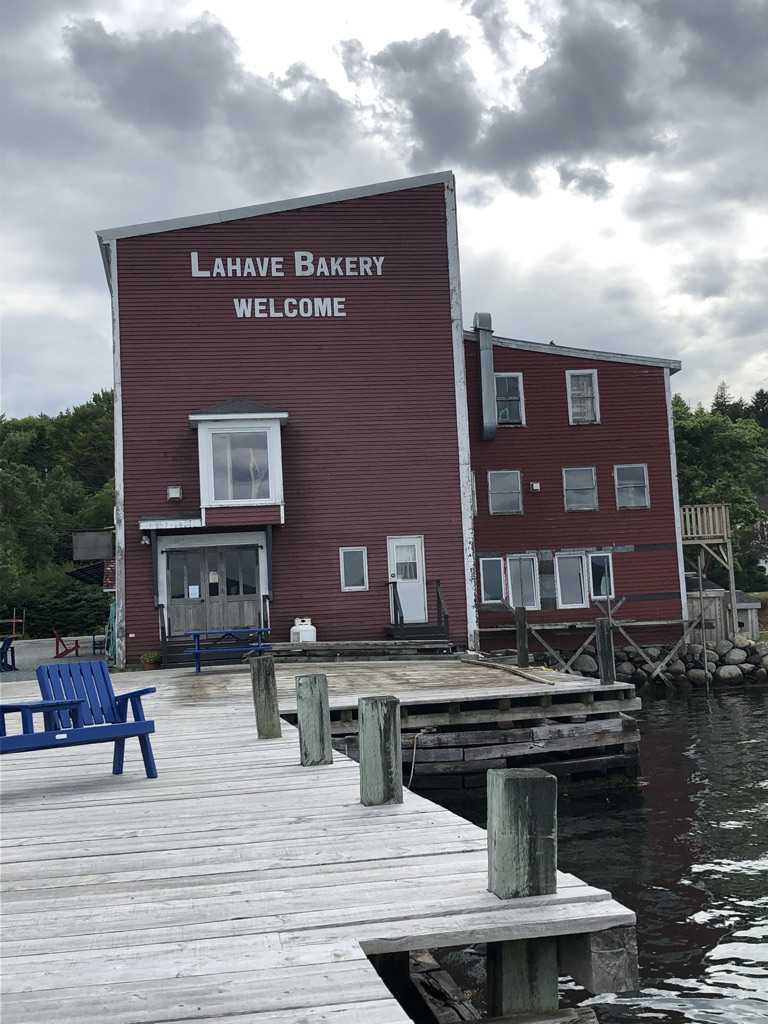
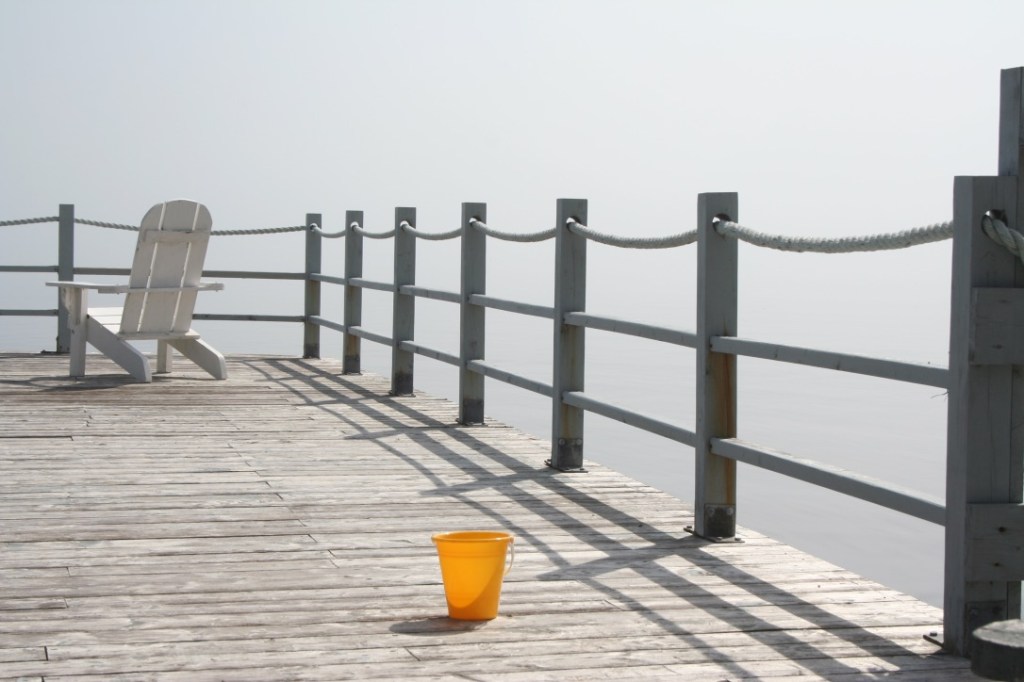
I was thinking this the other day, walking the pier near the Lehave Bakery, testing the edges by walking out along the wharf. Walk to the edge, and follow it round.

That notion of following the edge has been in my head, because now that we’re here in Lunenburg I’ve been thinking about some of the walks I’d like to do within the province, adding them to my bucket list, and those walks are themed by the edges I’d follow.

Nova Scotia is predominately a coastal province. By that I mean that most of the population lives near the sea shore. The larger cities and towns are mostly on the coasts – Halifax, Yarmouth, Sydney, and not least Lunenburg. The population has always faced the sea and looked to it for their livelihood. It means there are lots of roads and now trails that follow those coasts, so that makes walking a coastline activity.

Thinking about that got me thinking about boundaries and edges and limits. There are limits of geography, like the coast lines, and I’ll follow those. There are limits of endurance and strength, and while I don’t think I need those in exceptional quantities, walking several hundred km around the coasts will certainly call for some gusting towards those limits, at least for me.

And then there are limits we set for ourselves, limits of ambition I’ll call them. What do we want to achieve? How far do we push ourselves? Where will we take ourselves? Those limits are different for everyone of course, and I think they are also different at different points in our lives. The limits I set myself in my teens and 20’s are not those of my 40’s, 50’s, and 60’s. Do I want to walk these walks now because I want to push back on the shrinking of those physical limits? Maybe. Or maybe it’s just that now that I am retired and have a more or less grown child and fewer responsibilities, I feel like I can stretch my limits in ways that would have seemed imprudent or impractical when I was younger and paying mortgages and climbing corporate ladders.

The Olympics are on as I write this, and that is the spectacle of human limits writ large. What are competitive athletics if not tests of the limits of human strength and endurance and ambition? My walks are not my Olympics by any means, but deep down they come from the same source. Find the edge, and explore it.

Quiet Walks

Over the past couple of weeks, I’ve been walking a bit around town here in Lunenburg and the surrounding area. There are some nice little trails nearby, and the backstreets of town are also fun for contemplative wandering, getting to know the place better.

I also finally walked the trail to Mahone Bay (something I’ve been itching to do for months), and really enjoyed getting out for a proper 2-hour walk, something I haven’t done in ages. And afterwards in thinking about that walk, what made the strongest impression on me was the quiet soundscape – just crunching gravel underfoot, gently-stirred breezed-on leaves, and the chirps of birds and croaks of frogs. No leaf blowers, no airplanes, no lawnmowers, no chainsaws, and only a distant occasional whoosh of a car on a road.

I can’t remember when I’ve been able to take a quiet walk, a truly quiet walk. Toronto is always filled with sound, even in neighbourhoods I thought at the time were sleepy. The Toronto trails are nice but often near roads – for instance the Lower Don Valley Trail is mere meters from the Don Valley Parkway with its 6 lanes of constant traffic. You really cannot hear yourself think, but you get so used to it that you come to hear that cacophony as normal.

And then you move to a place like Lunenburg and you realize what a quiet walk actually should sound like. It’s gotten me looking forward to some further explorations, something to plan for in the still evening silence.

I’m going to like it round here, right up till I start moaning in winter about how it’s too damn quiet.

Walking on a Beach

We’re home.

This week we finally had a day when we could go for a stroll on the beach, and just chill. It’s been a hectic past few months – April was driving out to Halifax and quarantining and moving our son out of university residence and into his new apartment and visiting Lunenburg to see in person the new house we’d purchased via video link, and May was driving back to Toronto and getting our 1st COVID shots and getting organized to move and sweating the sale of our place there, and June was packing and driving and quarantining and unpacking in Lunenburg, and the first few weeks of July have been getting the car re-registered to Nova Scotia and getting our drivers’ licences and health cards and sorting things out in the house and cleaning and putting things away and driving to Bridgewater 847 times to pick up this and that and going to Halifax to get some furniture and putting that furniture together and organizing our books and getting to know some people in town and getting our 2nd COVID shots and then finally, this week, just looking outside and saying let’s go to the beach.

And it was wonderful. It was Hirtle Beach of course, our favourite and probably the chief reason we’re here at all. Slipping off sandals and splashing through chilly North Atlantic water, gazing at familiar sights and listening to the breeze and gurgle of waves, watching families braving the waters and young couples huddled on the sand. We’ve walked this beach a dozen times or more, and yet today was like our first walk.

In the parking lot near the beach, I turned to Ann and said hey look, Ontario plates on that car – that used to be us.

We’ve had a few moments over the past few weeks when we’ve said to ourselves, we’re here. Our first meal in our new house. Our first night out in Lunenburg. But now that we’ve had our first stroll on the beach, and now we really know that we’re here.

Time to get walking.

Spring Break

I don’t know why only college kids get Spring Break. Everyone loves the change in seasons, and welcomes warmer weather, so why don’t we all give ourselves a pause to refresh?

For us, this year’s Spring Break is a bigger break than past years. We’ve always loved being near water, especially salt-water, and we’ve always loved visiting Canada’s east coast, especially the south shore of Nova Scotia. That love, combined with retirement combined with COVID-19 combined with our son’s choice of a Nova Scotia university, have all come together into a big decision.

We’re selling up in Toronto and moving to Lunenburg.

So this year’s Spring Break will be spent driving out to Halifax at the beginning of April and spending a month out there. Partly it’s to help our son move out of residence and into an apartment at school end, partly to visit Lunenburg and get ourselves acclimated, and partly to see in person the house that we bought via FaceTime.

It’s a big step, and we’re kind of nervous, yet at the same time we’re really looking forward to it. Our actual move from Toronto won’t be until around mid-June, depending on the closing date for our place here, but in the meantime there’s been a million things that have kept us busy in getting ready, and now we’re counting down the hours till we head east for what is essentially our last visit – next time the drive from Toronto will mean heading home.

So, come this time next week, I’ll be stuck in a quarantine time-loop again walking round and round the garden, and then the week after that as well, and that’s all boring to talk about, so I’m putting Walkablog on hold for a couple of weeks until we’re able to get out and about.

Till then, enjoy the weather and stop to smell the flowers.

Walking Tips – Technology

Over the past couple of years of walking I’ve learned a few things about preparing for and enjoying a good long walk, so I thought would I share some of that knowledge. Hope it helps.

What?: I like to think of myself as relatively old-school when it comes to technology, where a good walk needs little more than comfortable shoes and clothing, and a decent bit of weather. But when I really think about it, my walking routine does in fact make use of several items of technology, so here are some tips on what I use. That’s the key thing, as well – it’s what I use. There are thousands of apps out there, and many different kinds of technology that might be used, however I cannot speak to anything other than what I actually use myself. Like with shoes, go with what’s comfortable for you.

Tips: Where, when, how and why

  • A phone. These days, everything starts with a smart phone, and I am hardly alone in carrying it around pretty much all of the time. You have one and you use it all the time as well, I’m sure, so I can’t tell you what kind of phone to buy or how to use it. Think of your phone as your technical Swiss Army knife – it’s more than a phone, amongst other things it’s also:
  • A Clock
  • A Stop Watch
  • An Alarm
  • An Exercise Tracker
  • A Map
  • A Compass
  • A Weather Station
  • A Music Player
  • A Camera

Get one you like and is comfortable for you, and for heavens sake keep the bloody thing in your pocket unless you need it – it seems like every time I’m out for a way, I have to dodge around someone who’s nose is buried in their phone as they walk, oblivious to all around them.

  • Map apps. Pretty much every phone comes with a default map application. Since I mostly walk around Toronto, I tend not to use maps much when I’m out walking (though I’ve often looked things up if I’m trying to find a particular street or something). In Toronto, I use maps more from a planning perspective – if I want to explore a trail or neighbourhood or whatever, then I’ll use the map to do that first so that I have a basic sense of time and distance. That will let me know flesh out the rest of my plan, along with the weather forecast, regarding food, clothing, water, etc. Of course, if I’m away from home in a new place, the map is invaluable.

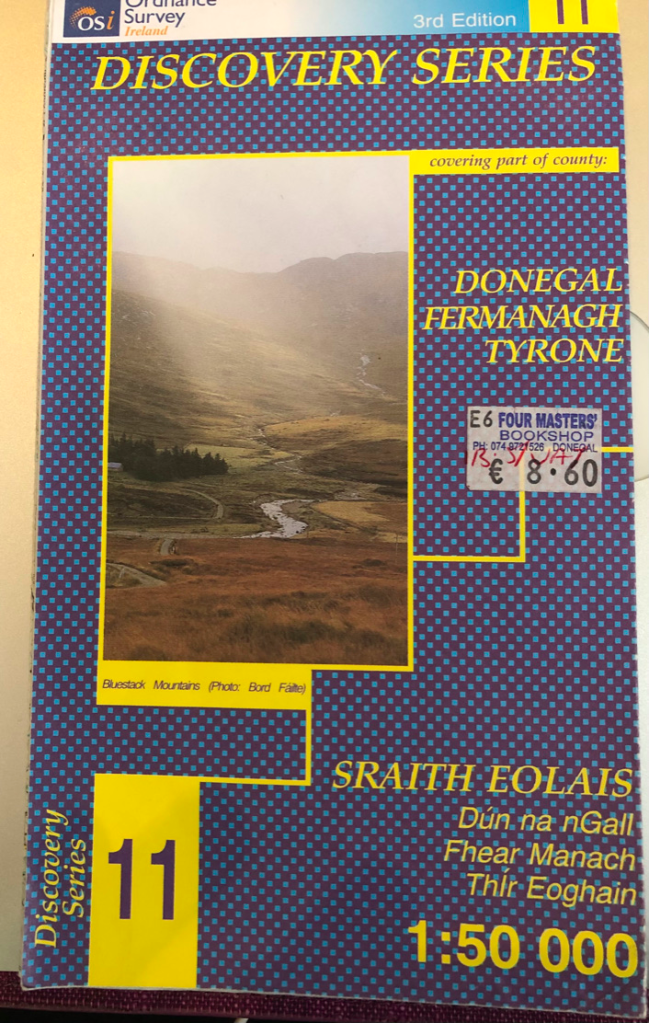
Of course, I do like an old school paper map too …

  • Trail apps. I have used a couple of different trail apps. One is called Gaia GPS, and the other is the Bruce Trail app. In both cases, finding and sticking to a trail can be tricky, and these apps combined with the GPS receiver in my phone help me stay on on track. In the case of GaiaGPS, I can also route-plan a freeform route or I can record my route as I go. GaiaGPS also lets me download various map overlays from different countries, so for example, if I am in Ireland I can see local maps for that country. Another app I’ve looked at but haven’t bought yet is the Ordnance Survey app from the UK Ordnance Survey agency. If you’ve every used their paper maps, you’ll know the very high standard they offer, and the app puts this in your pocket. If only every country had something similar!
  • Satellite Navigation. I have to confess I have only explored the use of these, I haven’t actually bought one, but if/when I do a long off-road walk I think I’ll buy one. These tools use GPS but they are dedicated to one purpose – navigation when you are off the beaten track. They also have an emergency function, so that if you get into trouble and you’re out of cell phone range, you can call for help.
  • Exercise trackers. I use an exercise tracker every day – in fact I rarely take mind off and use it to track my sleep as well as my steps, heart rate, active minutes, etc. For me this tool is about motivation. I’ve developed the habit of getting a certain # of steps per hour, per day, and per week, and the exercise tracker nudges me to keep that up. Using it that way, and actually doing the walks, first helped me shed something like 30 pounds and since then has helped me to keep it off. It’s not about the actual score, it’s the trend. I feel like I’ve let myself down if I don’t get my minutes and steps every day.
  • Cameras. Pretty much every smart phone these days has a camera, and this blog has encouraged me to use it when I’m out walking. It helps me to stay engaged in the world around me as I look for interesting things, and it also helps me to remember things – I can take a picture of a street sign, a commemorative plaque, a shop name, or whatever, something that I seem to need to do more often as I get older.
  • Music. Every smartphone offers the ability to play music, and lots of people also continue to use portable music players, like an iPod. Along with that, there are dozens of different kinds of ear phones and ear buds. I am partial to the Apple family of products – the Apple ear buds have a very comfortable shape that works well for me. The only advice I would give is that it can be handy to use wired ear buds rather than wireless because they don’t drain your phone battery as much. That said, newer phones are coming without an earphone connection any more, so you have no choice but to use wireless. Use what’s comfortable and remember to keep the sound volume down so that you can hear what’s going on around you, especially in high traffic areas.
  • Emergency tools. A phone can of course be a lifeline – the ability to dial 911 is super important, and shouldn’t be taken for granted. It’s partly for that reason that you should make sure your phone is charged before you go out. More than that, there are various waypoint and cairn apps you can install that let you define a place or destination and then track when you get there, so that a friend or loved one can see where you are and that you are sticking to plan. Beyond your phone, there are also back-country emergency beacon tools, that use a satellite connection rather than a cell network so they work pretty much anywhere. If you are hiking off the beaten path, they are a great investment in peace of mind.
  • Other ideas. As I said, there are lots of different types of technologies out there, and you can go nuts and try many or you can keep it simple. Things I’ve used while walking include other simple tools, like:
    • Flashlight or headlamp – if I know I’ll be walking towards the end of the day, or if I’m overnight trekking then a headlamp is a great safety device
    • Portable / solar charger for all your other electronics – this is the reason I like to keep it simple, because I hate to lug weight but sometimes you need to keep your other bits and bobs charged
    • tablet, e.g. an iPad – not all the time, because it adds weight, but if I know I’ll be out for a long walk I might take one so I can read the news or a book when I take a break
    • a laptop – similar, it’s heavy to carry but sometimes I’m combining a walk with work

Disclaimer: All opinions contained in this post are my own. I’m not a technologist, nutritionist, physiotherapist, or doctor. Take my advice as given – caveat emptor.