TO Places – The Beaches

Part of a series on my favourite places to go for a walk in Toronto

Blog posts are a labour of love for me, and yet there is a cost to running this site and organizing my walks.If you’d like to help with that, I’d really appreciate something for my tip jar.The Buy Me a Coffee service allows patrons like you to fund writers like me.  If that sounds like a worthy idea to you, then go ahead – keep buying me coffees.Thank You Very Much to everyone who has contributed already!

*****

And now on to the regular post …..

Any time of the year is a good time for the beach

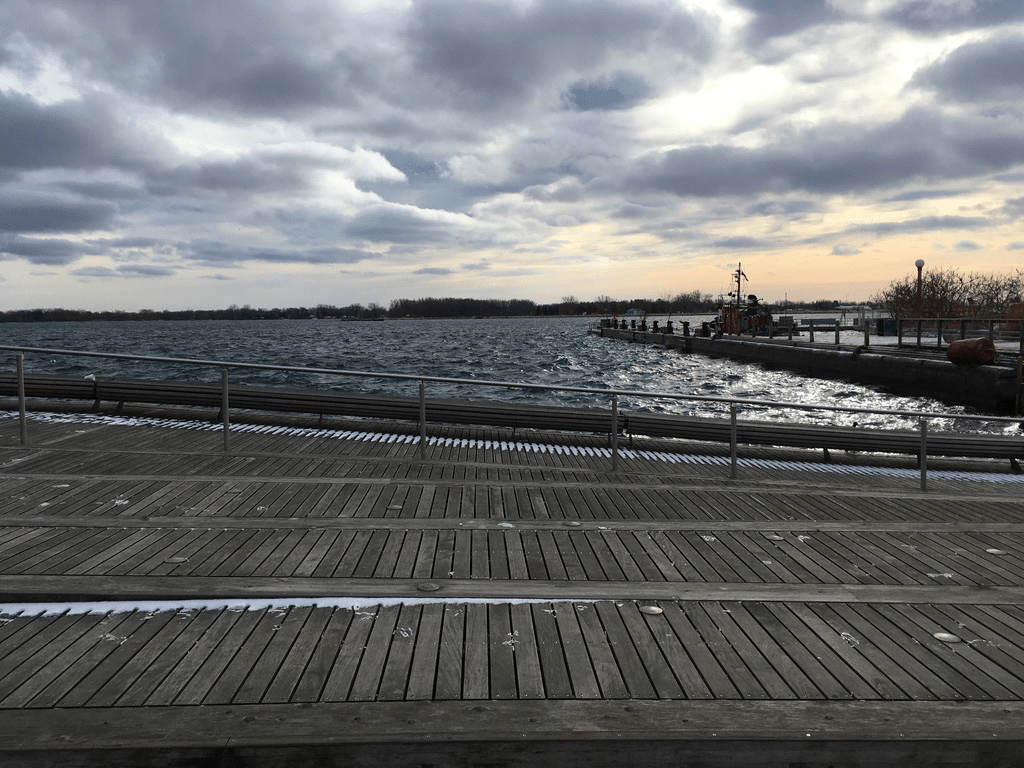
If you live in Toronto, just saying “the Beaches” probably brings up several images – the shops, restaurants and bars, ice cream, the parks, the sand, the boardwalk, and probably more besides. Whether you are a lifelong resident or a weekend visitor, strolling the boardwalk and staring at the waves is magical.

Location: There’s the “beach” part of the Beaches and then there’s the neighbourhood. The sandy lakefront starts at Woodbine Beach and continues along the lake to Balmy Beach Park. The neighbourhood stretches along Queen eastward from around Woodbine Avenue to the end of Queen Street near Victoria Park Avenue, and then south to the lake and north to Kingston Road.

Public Transit: Take the Queen 501 Streetcar east from Queen Station on Line 1 and get off at Coxwell Avenue for Woodbine Park, or a bit further east past Woodbine Ave for the shops.

Why I like it:

For me the Beaches bring up several other images. One is of Canada Day in 1999 – we had just arrived back in Toronto that day, having returned from London, so we thought we’d go for a walk to get reacquainted with the City. The Beaches seemed like the perfect spot to do that. There was a big celebration and party going on in Kew Gardens, and we nearly cried thinking about what we had left behind in London and what was welcoming us back to Toronto.

And then when we were expecting our son and my wife was well along in her pregnancy, in fact a day or 2 past her due date, we decided to go for a walk along the boardwalk. We’d heard that exercise was a good way to get things going, along with eating spicy food, so on our stroll we also grabbed a slice of hot pepperoni pizza.

With no signs of impending labour, we wandered the neighbourhood and came across a home for sale with an open house in progress. We popped in, and must have fit the estate agent’s profile, because she was all over us. We were living in a downtown condo at the time and knew that eventually we’d want a home with a garden and some space for a toddler, and this was a nice family house that backed onto the local school – you could send your child off through the backyard gate into the school grounds – and for a few moments we had serious thoughts of “what if we lived in the Beaches”.

And then we realized that the timing wasn’t great – she was only days from delivery and we didn’t fancy moving with a 1 or 2 month old – so we kept on strolling. Soon enough, within a few days our son was born, and we had more important things to do.

And as he got older, every few months we’d drive out to the Beaches, this time with a stroller, and walk along the boardwalk. Later our strolls took in the parks and playgrounds and ice creams and chasing him along the sand and tossing pebbles into the waves. Once he even won a prize by guessing the # of jelly beans in a jar at a local antique called The Seagull – it was a framed picture of well-known Beaches shops and restaurants. We kept that for years afterwards.

And then there’s the Toronto Waterfront Marathon. I did that in 2017, and the last quarter of the route took in Queen Street right through the heart of the neighbourhood. The eastern end of the route was at Maclean Avenue, where you turned and headed back down Queen, and from that turn there were about 8-9 km to the finish. I was exhausted when I came up Woodbine Ave onto Queen and as I plowed along I kept thinking “where is Maclean, when do I get there”. I was one of the stragglers at the end of the race but there were still lots of locals cheering on us slowpokes as we dragged ourselves through. I still think of that whenever I pass Maclean.

So all of those memories colour how I see the Beaches. I’m sure I’m not the only Torontonian who has a range of memories of the neighbourhood, and I’m sure that as long as we live here we’ll continue to visit to soak up the spirit of the place.

Sights:

The lakefront and the sand are why this area is popular, and the sightseeing starts there.

Woodbine Beach

There’s much more to the area than the actual beaches, of course. The parks are great for picnics and playgrounds. There’s also the pool at Woodbine Park, the outdoor skating rink at Kew Gardens, and many great spots to run around as a kid, an adult, or a dog (there are several off-leash dog run areas along the beach). Plus there are dozens of benches and Adirondack chairs along the boardwalk, perfect for people-watching or just staring at the lake.

The people-watching and window-shopping are also fun along Queen. The area is constantly changing, and old favourites like Seagull Antiques or Lick’s Burgers have sadly closed up, but new places open constantly and there are still some familiar spots like the Sunset Grill and the Beacher Cafe. COVID-19 has put a dent into the retail character of the area, but it will bounce back over time and in the meantime there’s plenty to see and do.

That’s true any time of the year, by the way. The changing seasons are reflected in the parks and the lake. On a hot summer day, the water is blue and enticing, while on a cold January day it can be grey-green and forbidding, but it’s always fascinating. The autumn colours are wonderful, and the spring flowers too. And the many places to pop into along Queen mean that you can always warm up or cool down no matter what the weather.
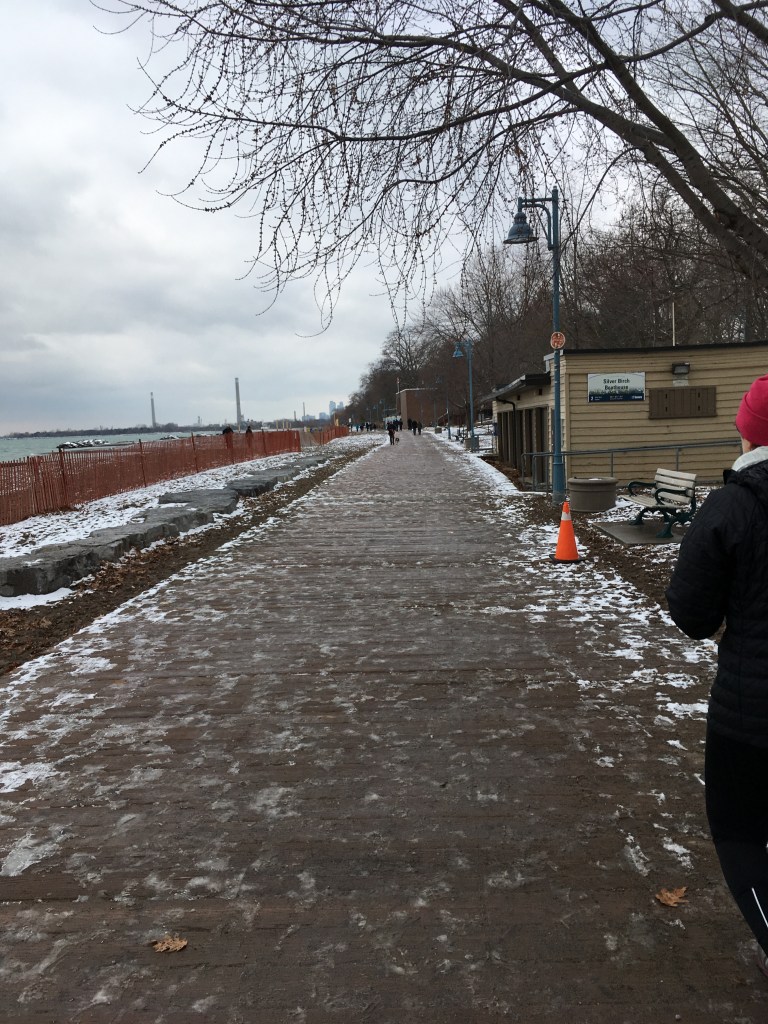
New Year’s Day at Balmy Beach

Food & Refreshment:

There are dozens of ice cream, coffee, burger, pizza, and other takeaway places in the area, including a Pizza Pizza outlet in Kew Gardens at the Boardwalk. There are also usually food trucks around on weekends. And of course, there are many local bars and restaurants to choose from, offering casual to formal options.

Another great idea is to visit some of the many food shops along Queen and grab the ingredients for a picnic – fresh fruit, bakeries, cheeses, snacks, coffee, tea, soft drinks, and more are all available, and there are many picnic tables scattered around the parks along with shady spots and sunny sand where you can enjoy your feast.

There are public washrooms in the parks, along with public water fountains. These are seasonal, open from about May 1 to about Oct 1 depending on the weather. Outside those months, the many coffee shops on Queen are good places for a pit stop.

Diversions:

  1. The Leslieville neighbourhood lies just to the west of the Beaches, along Queen between about Broadview to about Leslie. It’s only about a 2 km walk or so between the neighbourhoods, and there are lots of shops and sights in between, so breakfasting in Leslieville and lunching in the Beaches makes for a great day out.
  2. If the weather is kind, walking from Queen Station on Line 1 along Queen out to the Beaches will take you about an hour and a half, and then you can take the Streetcar back. You can also do that in reverse, and walk back to Queen Station.
  3. The Martin Goodman Trail follows the lakefront all the way across Toronto. Walking or cycling that trail to and from the Beaches is a great way to get some exercise.
  4. The Glen Stewart Ravine runs north from Queen at about Glen Manor Drive, and takes you along a wonderful trail up to Kingston Road. The autumn colours here are spectacular.
The RC Harris Water Treatment Plant at the east end of Queen

Toronto Discovery Walks

Part of a series on my favourite walking trails in Toronto.

Blog posts are a labour of love for me, and yet there is a cost to running this site and organizing my walks.If you’d like to help with that, I’d really appreciate something for my tip jar.The Buy Me a Coffee service allows patrons like you to fund writers like me.  If that sounds like a worthy idea to you, then go ahead – keep buying me coffees.Thank You Very Much to everyone who has contributed already!

*****

And now on to the regular post …..

Over the past several months, I’ve written about a number of my favourite walks in Toronto. This time, I wanted to highlight something a bit different.

One of the many great things about living in Toronto is the work that the City has put into exploring its past and making it accessible to a new generation of residents and visitors. One of they ways of doing that is a fantastic program called Discovery Walks.

Each of these walking routes explores some of City’s many natural features like the lakefront or the ravine trail system, and along the way points out the history of the City.

For example, the Garrison Creek walk takes you through downtown Toronto following the route of the now-buried creek that, back in the 1790’s, emptied into Lake Ontario near what today is about Bathurst Street. Following this route takes you through some interesting inner-city neighbourhoods that are full of history, as well as fantastic shopping, bars, and restaurants.

Other Discovery Walks include perennial favourites that I’ve covered, like the Beltline. They also include some lesser known yet well worth the walk trails like the upper west Humber, the eastern ravines and the beaches, or the Don Valley Hills and Dales.

If you visit the City’s website, the list of walks shown includes a map for each route. There are currently 11 of them, and they’re all great. Whether you’re a lifelong resident of Toronto or a visitor with an afternoon to fill, check them out! Toronto is a great walking city (ahem, it’s what I’ve been blogging about for months now!) and these walks prove it.

Length: Each trail is different. They are usually in the 1-3 hour range for a typical walker, and you can jump on/off any of these walks in many places.

Surface: A mixture – mostly they are paved and suitable for strollers and mobility devices, though there can be some gravel portions. Check each route map for details.

Public Transit: Each walk is accessible at start and finish by public transit, usually a combination of streetcar and subway, with some bus travel too. Each route map has details.

Route: See the City website for details. Each route has a detailed map that you can download.

Sights: Each of the walks has many sights to take in. Some are more nature-oriented, like the Humber Marshes, and some are more urban, like the Downtown or Uptown walks.

Any of these walks works well in any season. That said, I’ve always liked Toronto best in about mid-October on a crisp early autumn blue-sky day when the leaves have started to turn but it’s still warm enough for light clothes.

Food & Refreshment:

Most of the routes take you past at least some type of refreshments, either along the route or near the start or finish. Each route map will have some details.

Also, most of the routes take you at least partially through various City parks and trails, and there are public washrooms in most of them. There are also water fountains in most parks. Be aware, however, that these are usually seasonal so they are closed between roughly late October through early May.

Besides the public facilities, Toronto is well-endowed with coffee shops, bars, restaurants, and numerous other places where you can make a pit stop of one kind or another.

Diversions:

  1. Can I suggest blending some of my Favourite Walks with the Discovery Walks? Check out my list and you’ll see that portions of my favourite walks cover the same trails (the Beltline for example) as one of the Discovery Walks. You can walk my route but use the Discovery Walk for more historical info. Or you can walk the Discovery Walk and use my walk for pictures and maps. Mix and match.
  2. As the late great Ernie Banks used to say, let’s play two – why stop at one Discovery Walk when you can link them together and make a great outdoor day. For example, the Lambton House walk route is adjacent to the Humber River route.

Favourite Toronto Walks – A Downtown Loop

Part of a series on my favourite walking trails in Toronto.

Blog posts are a labour of love for me, and yet there is a cost to running this site and organizing my walks.If you’d like to help with that, I’d really appreciate something for my tip jar.The Buy Me a Coffee service allows patrons like you to fund writers like me.  If that sounds like a worthy idea to you, then go ahead – keep buying me coffees.Thank You Very Much to everyone who has contributed already!

*****

And now on to the regular post …..

The Crystal at the ROM

I’ve often wandered Toronto’s core, whether out for a noon stroll when I was working downtown, or just taking a roundabout way home when we lived near St. Lawrence Market. I thought it would be fun to put together a walking route of around 10 km that took in many of the sights, offered plenty of shopping, eating, and resting options, and provided a bit of tour through some of the historic parts of the city. I hope this route ticks those boxes for you.

Tip: I’ve included lots of links for some of the sights along this walk – check ahead to confirm opening times, and to find out about special shows or exhibits and things to do.

Length: About 10-12 km, depending on wanderings, so about 2.5 to 3 hours at a leisurely pace.

Surface: Paved.

Public Transit: I set this up to start and end at Nathan Philips Square, which is a block west from Queen Station on subway Line 1. You can also take the subway to Osgoode Station, also on Line 1 (on the University Ave side of the loop) and walk about 3 blocks east. Finally, you could adjust the walk to follow the loop shown but start/stop at Union Station, if you are coming in by GO train.

Route:

Starting at Nathan Philips Square, in front of the Toronto sign, head south-east towards Bay Street, and follow Bay south through the financial district to Front Street. Turn east on Front (left) and walk towards Yonge Street, passing the Hockey Hall of Fame. Continue east on Front Street past Berczy Park, crossing Church Street and continuing to Jarvis Street by the St. Lawrence Market.

Turn north on Jarvis and walk up to King Street, then turn west on King. You can cut through the gardens at St James Park if you’d like, or just keep going along King to Church Street. Turn north (right) on Church and continue up to Queen Street. Turn west (left) on Queen and continue to Yonge Street. Turn north (right) and walk up Yonge past Dundas Square, Ryerson University, and College Park, to reach Wellesley Street. Turn west (left) on Wellesley for about 50m, then turn north (right) onto St. Nicholas Street. Follow St. Nicholas north to Charles Street. Turn east (right) and return to Yonge Street, then turn north (left) and go up Yonge to Bloor Street.

Turn west (left) on Bloor and continue to Bay Street, crossing to the west side. Turn north on Bay and walk up to Cumberland Street. Turn west (left) on Cumberland and walk through Yorkville to Avenue Road. Turn south (left) on Avenue and walk down to Bloor. Cross Avenue and then cross Bloor, to reach the south-west corner by the Royal Ontario Museum. Continue west on Bloor to the gates marking the entrance to the Philosopher’s Walk, just west of the ROM.

Follow Philosopher’s Walk (fun fact – Philosopher’s Walk follows the ravine of the now-buried Taddle Creek) south to Hoskin Avenue. Cross Hoskin and then turn west (right) for about 50m to Tower Road on the University of Toronto campus. Turn south on Tower road and follow it through the arch at Soldier’s Tower. South of the Tower, follow Kings College Circle south and west and then cut west through the campus to reach the corner of St. George and Russell Street. Follow Russell Street west to Spadina Circle, then turn south on Spadina to reach College Street. Cross College and then Spadina to reach the south-west corner, and then continue west on College to reach Augusta Avenue. Turn south (left) down Augusta into Kensington Market. At Baldwin Street, turn east (left) and continue a few meters to reach Kensington Street. Turn south (right) and follow Kensington to Dundas Street.

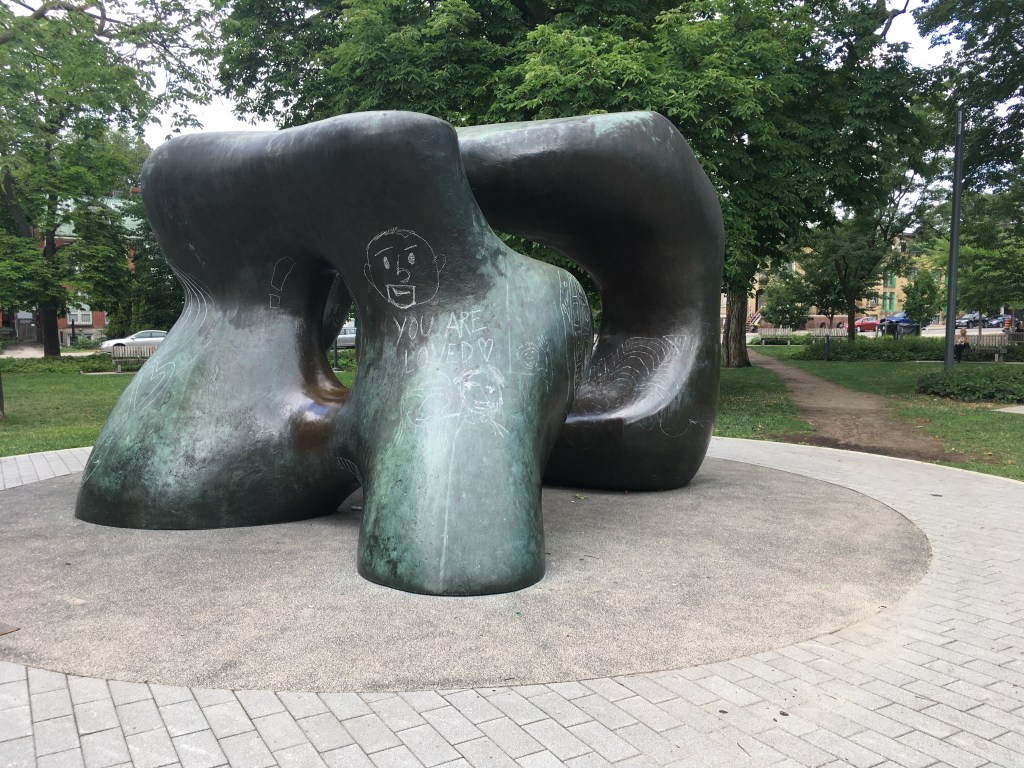
At Dundas, turn east (left) and follow it, crossing Spadina in Chinatown. Continue on Dundas to Beverley Street, crossing to the south-east corner by the Art Gallery of Ontario. Turn south on Beverly and walk down to Grange Park. Enter the Park and cut through past the Henry Moore sculpture to reach Stephanie Street. Turn east on Stephanie and then after a few meters turn south to walk through the little park at St. Patrick’s Market. Continue south to Queen Street. Turn east (left) on Queen and cross University Avenue to the north-east corner. Jog north on University a few meters to the gate into Osgoode Hall gardens, turning east and walking through the Gardens to emerge on the west side of Nathan Philips Square. Walk through the Square to take a selfie in front of the Toronto sign!

Sights:

There are too many sights along this walk to list them all. If you want public spaces then there’s Nathan Philips Square, Berczy Park‘s famous Dog Fountain, Yorkville Park, and Grange Park and a few more.

St. James Park gardens

If you want famous/interesting buildings there’s the Old and New City Halls, Brookfield Place, St. James Cathedral, College Park, all of U of T, and plenty of others too.

University College at U of T

If you want culture, there’s the Royal Ontario Museum and the Art Gallery of Ontario, not to mention the Hockey Hall of Fame.

Hockey Hall of Fame

And if you want shopping, there’s St. Lawrence Market, the Eaton Centre, Yorkville and the Mink Mile, Kensington Market, and the many shops along the route.

Lunch!

This walk was designed to tempt you with lots of sights, so I wouldn’t be surprised if you started out with the best of intentions to finish and got so distracted that you have to come back another day.

The Henry Moore sculpture at Grange Park

Also, this walk works in any season. I did it recently on a scorching July day, and being able to pop into places like the Eaton Centre for some AC cooling was really nice. Passing so many covered shopping areas like that also means that on a rainy or snowy day, you can duck out of the weather. Then again, like so many walks in Toronto, I think this would be at its best in early autumn, to catch the foliage in Queens Park and U of T, and to take advantage of the harvest foods at the markets. And finally, don’t forget that in winter, you can go skating on the outdoor rink at Nathan Philips Square. Really, any time of the year will work.

Food & Refreshment:

I set this up going anti-clockwise round the downtown core, which means you go by St. Lawrence Market near the start, a perfect place for breakfast or lunch or a snack. Going in this direction lets you pass through Kensington Market near the end, which is also a great spot for food plus it has lots of coffee joints, juice bars, and beer-and-alcoholic drink bars. In between, there are coffee shops, restaurants, ice cream parlours, bakeries, donut shops, food trucks, and more that cover the spectrum from quick takeaway to full service sit-down.

As far as restrooms and toilets are concerned, there are lots – Nathan Philips Square, St. Lawrence Market, the Eaton Centre, College Park, and Yorkville all have public facilities, and of course the many coffee shops and restaurants along the way provide lots of options.

One thing there isn’t a lot of is water fountains – there are ones in St. Lawrence Market and in the Eaton Centre, but other than that you may want to carry water with you. Of course, the many food/drink options along the way will tempt you if you’re thirsty, so staying hydrated shouldn’t be a problem.

Diversions:

  1. This whole route offers detours, distractions, and diversions. My advice is to use the marked route as a rough guide and just let your curiosity take over.
  2. That said, the two food markets (Kensington and St. Lawrence) are destinations in themselves for me, and so are the AGO, the ROM, and the Hockey Hall of Fame. I could spend hours at any of these places.
  3. From the St. Lawrence Market area, heading east a bit and taking in the Distillery District is good fun. There’s a great holiday market there in December, and some tasty food and shopping options year-round.
  4. Starting at about Carlton Street, and running north about a block east of Yonge along Church Street, the Village is a vibrant, fun, and colourful neighbourhood that’s Toronto’s spiritual home of Pride and its LGBTQ community. The annual Pride parade attracts hundreds of thousands of people of all ages and is centred along Church.
  5. A few blocks further east of the Village, along Parliament Street between about Gerrard and Wellesley, the Cabbagetown neighbourhood showed Toronto what we could do with our beautiful Victorian homes. It’s full of good shops and quiet little streets that are perfect for a stroll, and nearby Riverdale Park and the Riverdale Farm offer lots of things for kids to do.
  6. Yorkville covers several square blocks between Yonge Street and Avenue Road, and between Bloor and Scollard Streets. A hippie hangout in the 1960’s, today it’s full of high-end shops, art galleries, bars, restaurants, and some of the best people-watching in the city.

TO Places – Riverside and Leslieville

Part of a series on my favourite places to go for a walk in Toronto

Blog posts are a labour of love for me, and yet there is a cost to running this site and organizing my walks.If you’d like to help with that, I’d really appreciate something for my tip jar.The Buy Me a Coffee service allows patrons like you to fund writers like me.  If that sounds like a worthy idea to you, then go ahead – keep buying me coffees.Thank You Very Much to everyone who has contributed already!

*****

And now on to the regular post …..

One of the oldest neighbourhoods in Toronto is the area along Queen Street East, and east of the Don River. It has several names. The City calls it South Riverdale, on Google Maps it’s Riverside and Leslieville, and to Torontonians it’s now mostly thought of as just Leslieville. Whatever you call it, it’s a great area to wander and explore.

Location: For me, what I’ll call Leslieville is a bit more compact than what the City calls South Riverdale. I think of it as extending a few blocks north and south of Queen between Broadview and Greenwood Avenue to the east, and Eastern Avenue and Dundas Street to the south and north. Most Torontonians think of Riverdale as being a bit on the east and west sides of the Don along queen, from River St in the west to Broadview (or a bit past that to the train tracks) in the east. If that’s Riverdale to you, then Leslieville is the area east of Riverdale along Queen to Greenwood.

Public Transit: Take the Line 1 subway to Queen Station, then catch the 501 Streetcar east to about Broadview if you want to wander east through Leslieville. Or stay on the streetcar to about Greenwood and then you can wander back west. It’s only about 4.5 km along Queen back to the subway.

Why I like it:

I like it for several reasons. First of all, there are a ton of little shops, bars, restaurants, and funky dives. OK, it did go through an overly-hipster stretch a few years ago, but now it’s matured into a gentler post-hipster family neighbourhood that still tries to show a little edge here and there, yet not enough to actually be dark and edgy – the equivalent of parents in their early 30’s. For me as a parent pushing 60, it’s great walking around and seeing young families starting out.

Another reason to like it is that it’s a foodie place and I do like to eat. There are plenty of places and they create some competition for each other – you have to be good to stand out. And that foodie scene is then echoed in some of the food shops – cheesemongers, butchers, fishmongers, organic greengrocers, bakers, and more. You could dine very well for breakfast, lunch, and dinner, and finish in a cool bar, anywhere in a 2 km stretch of Queen between Broadview and Leslie. That competition also means that places turn over, so if you go back every few months there will be something new to try.

One other fun fact – back in the 1980’s, Canada’s national broadcaster the CBC ran a show for teens called the Kids of Degrassi Street, about inner-city kids living on what is a real street that’s smack in the middle of the area. In the 2000’s, a revived and updated version of Degrassi Street starred a little known young actor named Aubrey Graham, who today is better known as Drake. Today, you can wander along the real Degrassi street looking at the renovated homes that are now everywhere – a far cry from the working class world of the original Degrassi Street TV series.

Sights:

The most obvious sights are along Queen, and just walking up and down here you’ll find something to catch your eye, whether it’s a cool design/clothing place, a retro bar, or a thrift shop full of bargains. The streets will be a mixture of locals and tourists, young and old, new parents, grandparents, kids, dogs, bikes, strollers, and little wagons. It’s a real neighbourhood, not a manufactured one, where people live and work and play. Walking around you see Toronto in its diversity, though it’s also true that the gentrification and ensuing increase in housing costs means that it’s losing some of its funky edge.

Besides the shops, you see that gentrification when you wander the side streets, increasingly full of older homes renovated and updated. The time to buy here was 5-10 years ago – a $500k fixer-upper then will probably be worth well north of $1m now. If you are into houses and home reno’s, wandering about will give you lots of ideas to try.

There are also some nods to history throughout the neighbourhood. Just north of Queen, on Broadview, there is the former Don Jail, built in the 1860’s and only closed in the 2000’s.

Today, the building has been restored and incorporated as the admin wing of BridgePoint Hospital, and you can tour the grounds to admire the architecture.

There’s also nods to local history at places like the Leslieville Pumps. This gas station is now known more for it’s takeout or eat-in BBQ than it is for petrol.

Food & Refreshment:

Too many to list, there’s everything from fine dining to bistros to diners along Queen. Toronto’s diversity is reflected as well – pizza, sushi, BBQ, Indian, Thai, Caribbean, you name it.

There are lots of coffee places and bars too, many with outdoor tables which are perfect for people watching. Summer is the best time for that, and sun-starved winter warriors are often sitting out in March or April whenever they can.

There are some public washrooms at the community centre at Jimmy Simpson Park. Other than that, a coffee place is your best bet for quick pit stop.

Diversions:

  1. It’s not massively far to start out at St. Lawrence Market for breakfast and then walk north and east through Corktown to Queen and then on over the Don River into Leslieville. You can of course go the other way, starting in Leslieville and ending perhaps at the Distillery District or at St. Lawrence. Either way, you tie together 2 great foodie areas with a nice 4-5 km walk.
  2. To the north of Leslieville along Gerrard Street, is one of Toronto’s several Chinatowns, centred around Broadview. A loop up Broadview from Queen to Gerrard and then east to about Carlaw will take you through that vibrant scene.
  3. If you keep going east on Gerrard, past about Leslie, you come to Little India, the downtown’s place for authentic south Asian foods, fashion, and charm.
  4. At the east end of Leslieville at about Greenwood, a short walk south and east takes you to Ashbridges Bay, which is basically the entry into the Beaches neighbourhood.

Favourite Toronto Walks -Mid-Toronto Loop

Part of a series on my favourite walking trails in Toronto.

Blog posts are a labour of love for me, and yet there is a cost to running this site and organizing my walks.If you’d like to help with that, I’d really appreciate something for my tip jar.The Buy Me a Coffee service allows patrons like you to fund writers like me.  If that sounds like a worthy idea to you, then go ahead – keep buying me coffees.Thank You Very Much to everyone who has contributed already!

*****

And now on to the regular post …..

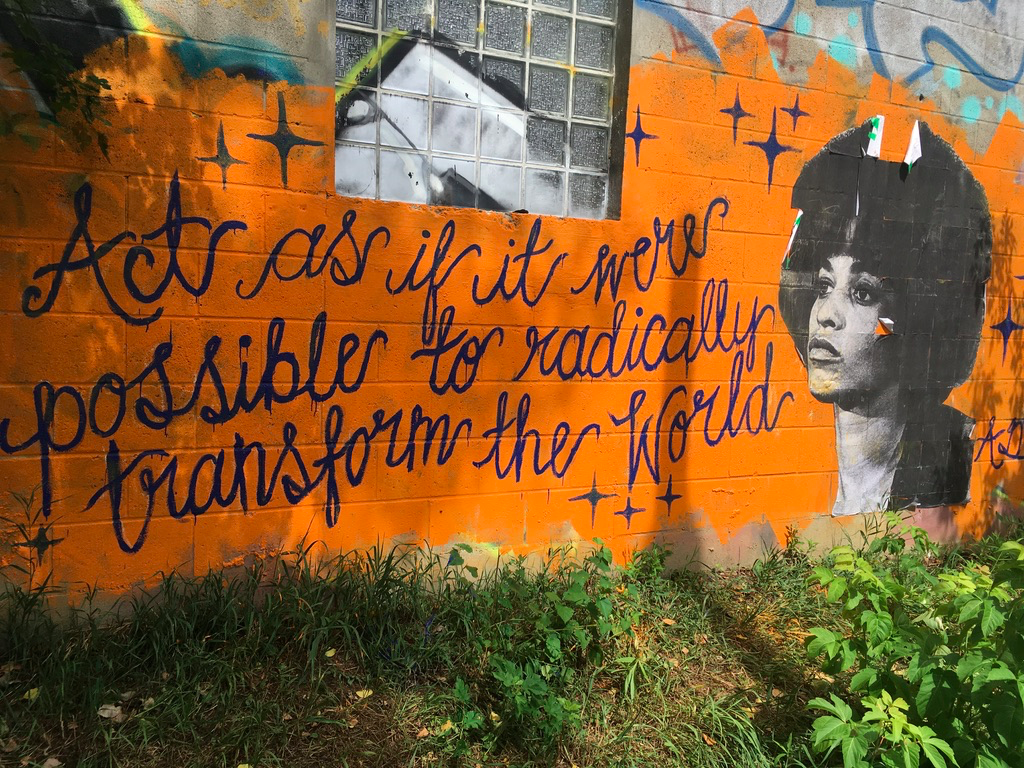
Graffiti art on the Lower Don

I was thinking about how to make an all-day walk that tied together some of my favourite parks and trails in mid-Toronto, and looking at a map I realized that I could put together something that stared and ended in mid-town and took in the Don Valley, the lakefront, and the parks and trails to the west around Roncesvalles. Here’s what I came up with:

This takes in a number of Toronto’s wonderful leafy parks (Moore Ravine Park, Corktown Common, Coronation Park, Marilyn Bell Park, Sunnyside Park, and Earlscourt Park), along with the Mount Pleasant and Prospect Cemeteries, and incorporates big chunks of the Kay Gardner Beltline and York Beltline Trails, Lower Don Trail, Martin Goodman Trail, and the West Toronto Rail Path Trail. Whew!

Length: Depending on your exact route and any detours, it will be about 30-32 km. Allow yourself about 7-8 hours to give time for breaks, picnics, and perhaps some shopping.

Surface: Mostly paved, with some gravel paths along the Kay Gardner Beltline.

Public Transit: Take subway Line 1 to Davisville Station and walk south 2 blocks along Yonge Street to Merton Street. Cross at the lights, walk about 50m east and turn into the laneway behind condo to reach the Beltline Trail opposite the gate into Mount Pleasant Cemetery. The finish is the same spot, so just reverse your steps to get back to Davisville Station.

Route:

Starting in mid-town on the Kay Gardner Beltline Trail on the north side of Mount Pleasant Cemetery, it follows that Trail through the Cemetery and then out on the south-east end, to continue down the Moore Ravine past the Don Valley Brickworks. Here, divert to the Brickworks for a pitstop, and then cross Bayview to join the Lower Don Trail.

Continue south on the Don Valley Trail to Rosedale Valley Drive. Since the Don Trail stops here, it climbs the hill beside St. James Cemetery and then enters Riverdale Park, following the trails there back down into the Don Valley to pick up the Lower Don Trail again. Continuing south, it reaches Corktown Common and then bends around to the west as it joins the Martin Goodman Trail along the lake.

Continuing west on the Martin Goodman Trail, you go all the way across to Sunnyside Park, and then take the footbridge over the roads and rail lines to reach Roncesvalles Avenue. Walking north up Roncy, you reach Grenadier Road, turn east for a bit, and then jog north up Sorauren Avenue to reach Dundas St W. Turning east, you follow Dundas for about 100m to reach the start of the West Toronto Rail Trail. This takes you north for several km past Bloor Street, and deposits you on Osler St, where you jog north and west to reach Davenport Road, just west of Earlscourt Park.

Cutting through the park, you emerge onto St. Clair Avenue at the bottom of Prospect Cemetery. The roads through here wind north and exit onto Eglinton Avenue. Turning west for a bit, you find Caledonia Road, go north to Bowie Avenue, and then turn west to pick up the start of the York Beltline Trail. This then curves north and then east, taking you eventually to Marlee Avenue. Exiting this trail, you cross Marlee at the lights, follow Elmridge Drive over the Allen Expressway, and then turn into the lane to join the Kay Gardner Beltline again at its western end. Following this all the way back to Mount Pleasant Cemetery completes the loop.

Sights:

What I like about this route is that it shows off so many of the best parts of Toronto – the parks, the ravines, the trails, the lake, and diverse neighbourhoods full of shops, restaurants, and bars. You get some natural fun along with some urban colour.

At the start, Mount Pleasant Cemetery is worth a visit all by itself. I love wondering its cool shaded roads and exploring the history of Toronto expressed in the headstones and monuments. The Kay Gardner Beltline Trail is incorporated into the Cemetery, so you can just follow the purple line painted on the road, or you can detour and explore a bit.

As you exit the Cemetery, you enter one of the best walking trails in Toronto, the Moore Ravine Trail. The trees, the quiet, the burbling of Mud Creek, and the people watching are all fantastic. It’s a short walk, but it then takes you past the Don Valley Brickworks, again a worthy destination on its own.

Cool Moore Ravine shade on a hot summer day

From the Brickworks, following the Lower Don Trail takes you under the Prince Edward Viaduct that carries Bloor Street and the subway over the Don Valley. Climbing the hill at Rosedale Valley Road takes you into Riverdale and east Cabbagetown. The zoo and park here are great fun for kids, and in summer the hot dog and ice cream vendors are worth a treat.

And of course, then there’s Corktown. The Common is one of my favourite recent additions to the City. I remember this area in the 1980’s as a post-industrial grey wasteland, and to see it now, transformed, is to be reminded that even if we badly bugger up the world, we can, if we put our minds to it, help nature reclaim and renew it.

The wavedeck at the foot of Spadina

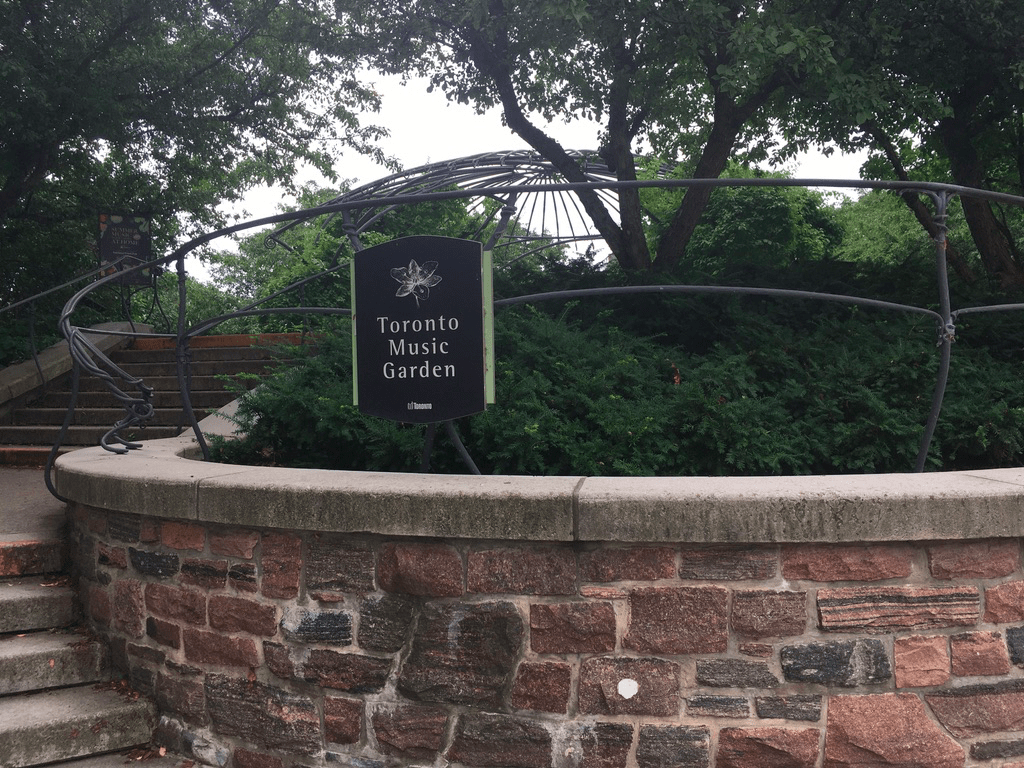
The Martin Goodman Trail takes you through the Queen’s Quay neighbourhood, another area that’s seen huge changes over the past 20 years. The shops at Queens Quay itself have been joined in the area by many condo’s, and while I can’t say I’m a fan of tall glass towers, it does mean that there’s a much more residential feel in the area now. Combine that with reminders of industry like the Redpath Sugar Mills along with the marinas, the Harbourfront Centre’s art galleries, and little parks like the Toronto Music Garden and you get a diverse area with many things worth a detour and exploration.

Past Queens Quay, the lakeshore all the way west is mostly one big big green space divided into several parks – Coronation, Marilynn Bell, and Sunnyside. Each is chockfull of picnic areas, benches, Adirondack chairs, and cool shade. I could do without the roar of traffic from the busy nearby roads, but when you get a little quiet lull, the honk of geese and splash of waves reminds you that you’re next to Toronto’s greatest feature – Lake Ontario.

Little Norway Park along Queens Quay

Then you jump back into urban life, along Roncesvalles, where shops, restaurants, and bars abound. There’s a lot of life here and it’s changed so much over the past 20 years that I hardly recognize it. The recent addition of the Museum of Contemporary Art to the area just continues to boost an already-booming area.

The West Toronto Rail Path leads you into an area that hasn’t yet been gentrified (yes there are still some of those in mid-Toronto). This area still has a lot of older untrendy shops that remind you that actual working-class people still live in actual working-class houses.

Graffiti art along the West Toronto Rail Path

And then Earlscourt Park, leading to the Corso Italia area along St. Clair Avenue West brings you into a slice of Toronto that has seen waves of newcomers bring life along with their culture and foods. It’s changing still as it always has – come back in 20 years and the Corso Italia may become Little Mexico.

Prospect Cemetery is a cool oasis about 3/4s of the way through this walk, and like Mount Pleasant, it’s a reminder of so many things about Toronto’s past. Whereas Mount Pleasant’s early headstones show the Anglo-Scots surnames of the “Toronto the Good” era, in Prospect Cemetery the names are Irish, Ukrainian, Polish, and Portuguese – west Toronto has been working class for more than one hundred years.

Prospect Cemetery

You see that working class vibe as you leave Prospect and cross Eglinton. The houses and shops here are smaller but no less well tended than the bigger places near, for example, Rosedale or Forest Hill. And then joining the York Beltline, you are joining a path that follows one of the key transportation links that made this area an industrial powerhouse for decades. It’s slowly becoming more residential, and as you walk east back towards the finish, you move back in time from the newer redevelopments into the older, greener mid-town neighbourhoods.

greenery along the Beltline

In walking this, in many ways you do loops in time and in demographics as well as geographically. Along the way, the route takes you from the old City of York which dates back to 1780’s, neighbourhoods that grew up between the mid-nineteenth though to the mid-twentieth centuries, and up into the latest waves of downtown urbanization. It covers inner-city rent-controlled public housing, the latest young-homeowner condo forests, older working-class, and upscale old-money. And, it shows off the natural features of Toronto that I like the most – the ravines, creeks, rivers, and the lake.

Finally, I’d be remiss if I didn’t mention that the time of year will offer a lot of variety to this walk. You can do this in any season, though some of the trails can get icy in January and February. It’s, shall we say, bracing to walk along the lake in the winter, but when it’s cold and the waves are high the natural ice sculptures can be dramatic. Of course, autumn would always be lovely given the many treed paths and parks so a crisp October day might be perfect. And spring and summer offer their own joys. I did this walk recently, in July 2020, and picked a day that was in the mid-20’s. There are some stretches, especially near Ontario Place and on the York Beltline, where there is little shade, so if it’s bright and sunny you’ll definitely need sun protection.

Food & Refreshment:

There are many, many options along this route. If you like picnics, this route offers some excellent locations in the parks you pass. If you like quick bites, then there’s that too – food trucks, ice cream, coffee, and little cafes. And of course, there are restaurants galore, in parks like the Brickworks, or in neighbourhoods like Queens Quay, Roncevalles, or the Corso Italia.

Washrooms are located in most of the parks along the way, though many are closed in the cold months (November-April). There are year-round washrooms at the Brickworks, along Queens Quay, and in the community centres at Earlscourt Park and Memorial Park. There are also many coffee shops along the way where you can use the facilities for the price of a coffee.

In terms of water fountains, it’s best to carry at least some water. There are places in many of the parks but these are turned off in the cold months. Other liquid refreshment options abound along Queens Quay and in Roncesvalles.

Diversions:

  1. This is a route that is easy to break up over several days. The parks make good jumping on/off points – Corktown Common, Coronation Park, and Earlscourt Park are all near streetcar stops and can work well this way.
  2. If you are coming in from outside Toronto, you might want to stop/start at Union Station instead of Davisville. You can take the GO Train to Union and walk down Bay Street to Queens Quay, and join the loop that way.
  3. I’ve described this going clockwise around Toronto, but of course you could do it counter-clockwise. Either way, you have to descend from mid-town to the lake and climb back again, though I find the climb through Earlscourt and Prospect Cemetery to be a bit less steep than up the Don Valley and the Moore Ravine.
  4. In walking this, you’ll pass some great shopping/dining areas, especially around Corktown – the Distillery District and St. Lawrence Market are an easy detour away, and you can avoid the industrial grunge around the bottom of the Lower Don Trail where it joins the Martin Goodman Trail.
  5. If you really want to extend your loop, you can also incorporate the Toronto Islands. Just take the ferry at the bottom of Yonge over to Wards Island, walk the path west to Hanlon’s Point and ferry back to the docks to rejoin the path I’ve outlined. I’d allow at least 1.5 hours for this, including ferry waiting times.

TO Places – Roncesvalles and High Park

Part of a series on my favourite places to go for a walk in Toronto

Blog posts are a labour of love for me, and yet there is a cost to running this site and organizing my walks.If you’d like to help with that, I’d really appreciate something for my tip jar.The Buy Me a Coffee service allows patrons like you to fund writers like me.  If that sounds like a worthy idea to you, then go ahead – keep buying me coffees.Thank You Very Much to everyone who has contributed already!

*****

And now on to the regular post …..

Ronscesvalles is both a neighbourhood and a street, and its location next to High Park makes it a perfect area to explore, shop, and eat either before or after wandering the park.

Grenadier Pond in High Park

Location: The neighbourhood of Roncesvalles parallels the avenue of the same name for a few blocks to the east and west of the street. Roncesvalles Avenue starts a couple of blocks south of Bloor Street West, and runs south to end at Queen Street West. It’s bounded to the east by the train tracks that curve up from near Queen at about Landsdowne Street, and on the west by High Park, although many people would consider the streets immediately adjacent to the park to be the neighbourhood of High Park. Anyway, just aim for Roncesvalles Avenue and you know you are in Roncy the neighbourhood.

Art in the Park

Public Transit: Take Line 2 west to Keele Station, and walk south on Dundas a couple of blocks until the road forks – follow the right hand fork and you are on Roncesvalles Avenue. Or, take the 501 Queen streetcar from either Queen Station or Osgood Station on Line 1, and get off at the south end of Roncesvalles Avenue.

Why I like it:

Roncy the neighbourhood for me is really about the shops and restaurants along Roncesvalles Avenue. Years ago, when I first moved to Toronto, my brother had a tiny studio apartment at the corner of Dundas and Bloor. I used to visit and we’d walk down Roncy Avenue, which back then reflected the eastern European wave of immigration that had settled in the area in the 1920’s and 1930’s. You could get a decent schnitzel and a beer (but not much else) at a half-dozen places back then.

In the 1980’s and 1990’s, the area started changing. The older generation started to sell off to a younger, and as we moved into the 2000’s, these younger folks had a different food and shopping sense. The older eastern European places started to change hands and gradually, as part of restaurant trends throughout the city, new flavours and cultures started to settle. Today, it’s 2 km of funky restaurants mixed with old favourites, where you can get a great BBQ, quality seafood, Asian fusion, and much more. You can also shop for locally grown organic produce, cheeses, books, clothes, or antiques, stop for a local not-another-coffee-chain coffee, or indulge in a drink at one of several bars.

Plus, you are just a couple of blocks from High Park. It’s easy to start on Roncy for breakfast or lunch, then go for nice stroll around the Park and end up back on Roncy to pick up fruit and veg for dinner before heading home. Of course, you can do the opposite and start in the Park for a brisk, appetite-building walk before satisfying that hunger in one of Roncy’s many restaurants.

Sights:

To be honest, if your idea of sights includes tall buildings and high culture, then this may not your place. On the other hand, if your idea of sights includes some funky fresh menu options and window-shopping in a real neighbourhood filled with the diversity of Toronto, then you are in the right place. Combine that with the natural beauty of High Park and you’re set.

Even then, there is culture in the hood. Just east of Roncy there is the new Museum of Contemporary Art on Sterling Road. Since that opened, a number of gallery spaces have started up in the area, creating a new cluster of art buzz that takes you outside the cloister that used to be centred near the AGO in downtown Toronto. It’s definitely worth a visit.

Another cool option is the Dream in High Park, when the Canadian Stage Company puts on a full length play by Shakespeare during the summer. I remember going 30 years ago (Midsummer’s Night Dream?), and it’s still a tradition. [Sad note: COVID-19 has cancelled this for 2020, alas! Cross your fingers for 2021]

The Dream stage area looking very COVID neglected in the summer of 2020

Of course, walking in the park is its own type of culture. I like coming in any season. Autumn of course is a natural, with the turning leaves. Spring is also great, especially in May when the cherry blossoms bloom in High Park (beware the crowds though, weekends can be brutal). A summer day is great, and so is a winter’s afternoon. Oh, let’s be honest, it’s always good. Just come.

Food & Refreshment:

As I’ve said, there are many restaurant, food shop, and bar options up and down Roncesvalles Avenue. There are also many more along Bloor West which forms the northern border of High Park, especially to the west of the park. These days as well, if you walk the length of Roncy down to Queen West and then turn left (east), you’ll go through Parkdale and several other changing/renewing neighbourhoods. It can be a great walk that way too.

In High Park itself, there’s a couple of places to eat including the famous Grenadier Restaurant, and often ice cream or food truck vendors in summer. There are washrooms throughout the park and lots of water fountains [but COVID-19 has many water fountains shut off in 2020 so bring your own water], though these are open only in the warm months between May and October. In the cool months, there are lots of coffee shops back on Bloor or Roncy where you can have a quick pit stop.

Diversions:

  1. Starting just east of Roncesvalle Avenue, at Lansdowne and Queen, is the newish West Toronto Railpath. It runs sort of north-south, and takes you up north of Bloor to near Davenport Road. It’s being expanded and in a few years will be connected into the city’s wider bike plan.
  2. Within High Park itself there are many trails and roads, some paved and some not. On a quiet weekday, it’s easy to get lost in what can feel like a giant forest in the middle of Toronto. You can spend a couple of hours covering many km of trails.
  3. High Park is also home to the High Park Zoo, a small but fun place for kids. We took our son there many times when he was a wee lad.
  4. At the bottom of Roncesvalles Avenue, where it crosses Queen West, there is a bridge and connector trail that crosses the train tracks, the busy Gardiner Expressway, and Lakeshore Boulevard. This lets you jump onto the Martin Goodman Trail along the shore of Lake Ontario, at Sunnyside Park. Either direction, east or west, is fun. I like to go west and cross back over Lakeshore at about Ellis Avenue in order to walk north just to the west of High Park, through the neighbourhood of Swansea, and end up back on Bloor West. From there I can turn right (east) and finish back at Roncesvalles.

Favourite Toronto Walks -Rosedale Rambles

Part of a series on my favourite walking trails in Toronto.

Blog posts are a labour of love for me, and yet there is a cost to running this site and organizing my walks.If you’d like to help with that, I’d really appreciate something for my tip jar.The Buy Me a Coffee service allows patrons like you to fund writers like me.  If that sounds like a worthy idea to you, then go ahead – keep buying me coffees.Thank You Very Much to everyone who has contributed already!

*****

And now on to the regular post …..

Toronto, like any city, has many neighbourhoods and all of them have some history and uniqueness to them. Some are hip and trendy, some are gritty, and some are upscale and stately. Rosedale is the latter. It’s long been known as a district of fine older homes set amongst quiet leafy streets, and that makes it a great area for a summer’s shady walk. Here’s a route that I’ve done before, and it’s equally great in the spring and autumn too.

Length: around 8 km, so about 1.5 hrs

Surface: paved (except in the parks)

Public Transit: To start, take the subway Line 1 to St. Clair Station. The finish on the route map is at Line 1 Rosedale Station, but an alternative is to finish at Line 1 Summerhill Station, both on Yonge Street.

Route:

Starting at St. Clair Station, exit the subway onto St. Clair Avenue East. Walk east on St. Clair (on the south side of the road to Inglewood Drive. Turn south and follow Inglewood as it bends to the east. Cross Mount Pleasant Road at the traffic lights and continue east on Inglewood to its end, where it bends to the right (south) and becomes Rosedale Heights Drive. Follow Rosedale Heights south and back west until you come to MacLennan Avenue. Turn left (south) and walk down the hill to the ramp on your right leading upwards – follow that onto the pedestrian bridge over the train tracks, over, and down the ramp onto Summerhill Avenue.

Pedestrian ramp over the train tracks at Summerhill

Once you are over the tracks, walk east on Summerhill to Chorley Park (a great spot for a picnic). Wander through the park and exit on the south west corner onto Roxborough Drive. Follow Roxborough west, passing Rosedale United Church and Whitney Park onto Edgar Avenue. Follow Edgar west to Rosedale Park, and turn left (south) onto MacLennnan. Follow that south to the roundabout and take the road to the south-east, Highland Avenue. Follow that southeast to Glen Road. Turn right on Glen Road and cross the bridge over the ravine.

View at the Glen Road Bridge

At South Drive, turn right (east) and follow that to Elm Avenue. Turn right (east) and follow Elm until it turns into Castlefrank Road. Follow Castlefrank east and then south as it bends. At Dale Avenue turn right (west) and follow Dale west to Glen Road. At Glen, turn right (north) and follow it to Maple Avenue, turning left (west) onto Maple and continuing to Sherbourne Street. At Sherbourne, turn right (north) and follow it to South Drive. Turn right (east) on South Drive and follow the curve around to the north, where it turns into Crescent Drive. Keep following Crescent as it curves around to the west and crosses over Mount Pleasant Road. To finish, follow Crescent west to to Rosedale Station, on Yonge Street.

Sights:

What’s lovely about this walk is that you get a combination of stately homes and parks for a rest. It’s a people-watching walk too, as there are always pedestrians out for a stroll. And it can be a fun, spot-the-flash-car walk as well – you’ll run out of fingers and toes before you run out of Porches to count, for example.

Rosedale prides itself on what it thinks of as understated elegance. This is not a bling-house neighbourhood, it’s more old money than new, more Chanel than Versace, more Mercedes than Ferrari. You walk here because it’s fun to imagine the lives behind the curtains.

While there’s no truly dramatic scenery nor any particularly impressive architecture, streets filled with large, red-brick homes dating back to the late 1800s tell a story of solidity and comfort. There is history here, in that the red bricks of the oldest homes probably came from the Don Valley Brickworks, like many of the other famous buildings in Toronto – Old City Hall, Massey Hall, and so on. And the area dates from a time when Canada and Toronto was establishing itself, post-1867 Confederation, as a prosperous, industrious part of the Empire.

While today, Toronto likes to think of itself as hip and is proud of natives like Drake promoting the 6, Rosedale still has a whiff of the Toronto-the-Good era, the so-called blue-light Toronto when nothing opened on Sundays, temperance movements tried to suppress the evils of alcohol, and good citizens meant good Protestants attending church on Sundays. Back then, non-WASPs had their own neighbourhoods, and Rosedale was a solidly white upper-class enclave. It’s more diverse today, but its still upper-class – the area is the wealthiest part of Toronto.

That wealth is visible in the homes, the cars, the land, and quiet streets. It’s also visible in the shops along Yonge, between Rosedale and Summerhill subway stations. There was a time when a strange face wandering through Rosedale would draw attention. Today, it’s less hide-bound, less class-ridden, and less uptight. But there’s a reason that one of the first LGBTQ bookstores in Toronto was called This Ain’t the Rosedale Library.

Food & Refreshment:

Food and refreshments on this walk are mostly around the start and finish – there are many cafes, coffee houses, restaurants, and food shops along Yonge near St. Clair, Rosedale, or Summerhill stations. In the heart of Rosedale, on Summerhill Avenue just over the train tracks, there is the Summerhill Market, Rosedale’s version of a corner store (and a fab gourmet stop on it’s own). All this gives many options to load up for a picnic, and Chorley Park is the perfect spot for that.

There are water fountains at Chorley and Rosedale Parks, available between about May-October, and there are public toilets at Rosedale Park as well. There are also public washrooms at St. Clair in the shopping mall at the north end of the station. Finally, there are washrooms, a great cafe, and water at the Brickworks if you divert from this walk (see below).

Diversions:

  1. An alternative route is to turn north once you cross Mount Pleasant Road on Crescent Road, onto Wrentham Place. Follow that north to Roxborough Street and turn left (west), then north on Chestnut Park. Wind through these little streets and find Cluny Drive, turn north, and find Rowanwood Ave. Follow that around to the east onto Thornwood and then north and around to Pricefield Road. Take Pricefield west all the way past the Pricefield Playground and into Scrivener Square by the old Summerhill train station that is now the Summerhill LCBO at Yonge Street. Turn right and walk under the train tracks to Summerhill Avenue to the Summerhill Station on Line 1. This diversion takes you through more quiet, charming back streets and lets you end by the gourmet shops at Scrivener Square.
  2. Another fun diversion is to cut through Chorley Park and join the connector trail that descends into the Moore Park Ravine – this will put you opposite the Don Valley Brickworks, and you can pop in there for a potty stop or food/water/coffee. The Chorley Park connector trail also puts you onto the Beltline Trail, and you can follow that south and around past the Brickworks. The Beltline continues north up through David Balfour Park, under St. Clair Avenue, and on into Mount Pleasant Cemetery to finish near Davisville Station on Line 1 subway. Or you can climb out of the trail just before you get to St. Clair, and walk back along that road to finish back at St. Clair Station.
  3. You can also take the Chorley Park connector, follow the Beltline around, and then take Milkman’s Lane to climb out of the Yellow Creek Ravine and into Rosedale. This will put you onto South Drive by Glen Road, where you can rejoin the main route described above.

TO Places – Moore Ravine and the Brickworks

Part of a series on my favourite places to go for a walk in Toronto

Blog posts are a labour of love for me, and yet there is a cost to running this site and organizing my walks.If you’d like to help with that, I’d really appreciate something for my tip jar.The Buy Me a Coffee service allows patrons like you to fund writers like me.  If that sounds like a worthy idea to you, then go ahead – keep buying me coffees.Thank You Very Much to everyone who has contributed already!

*****

And now on to the regular post …..

The Don Valley Brickworks Park is one of the best little walking parks in Toronto, and getting there by walking down the Moore Ravine trail just adds to the fun. Please note that as of this post (July 2020), the City of Toronto is doing extensive work on the Ravine that will continue through the summer of 2020. You can still walk it, though there is a lot of dust and noise at the north end of the ravine trail Mon-Fri. Weekends are quiet but still dusty.

All that said, it would be a shame to skip the Moore Ravine just because of work to make it even better. Once you get past the first several hundred meters, you the path is (literally) clear to walk and enjoy the shady tunnel beside burbling Mud Creek.

Location: Moore Ravine starts at Moore Avenue, just east of Mount Pleasant Road. It follows Mud Creek down into the Don Valley, and the northern entrance to the Brickworks Park is at the south end of the Ravine trail. The Brickworks can also be reached from the south, off of Bayview Avenue. It lies just to the west of the Don River.

Public Transit: If you are starting at the top of the Moore Ravine, then take the 74 bus from St. Clair station on Line 1. You can also walk from St. Clair station in about 20 minutes. If you are starting from the south, take the 28 bus from Davisville Station on Line 1.

Why I like it:

Pure and simple, it’s just a fun place to walk. The Moore Ravine trail is wide and well shaded, and for most of its length runs beside Mud Creek. On a peaceful mid-week day, I’ve been the only person on the trail and able to hear the birds, the water, the swish of a breeze in the trees, and the crackle of leaves underfoot. Then when you get to the Brickworks, you leave a forested, mostly natural setting and enter a man-made setting that’s slowly reverting to nature. The old clay pits are slowly being reclaimed by grasses, shrubs, marsh ponds, and trees, and the paths meander so that you can cover a few km in a small area.

I love these connected parks in any season. In spring I’ve seen turtles basking on logs, and heard frogs grunting amorously. In summer cool shade of the ravine is a blessing, and there’s usually a breeze in the Brickworks to make the tall grasses sway. Autumn is the best, to me at least, with the leaves exploding in colour, and in winter there’s a different kind of peacefulness on a cold blue-sky snow-crunching day.

Sights:

Turtle sunbathing on a May warm day

There are lots of things to see, both man-made and natural. Just south of the Brick Works Park is the Evergreen Brickworks, which occupies the old industrial buildings of the original Don Valley Brickworks company. This complex has become an environmentally friendly showcase for sustainable development and the reclamation of industrial sites.

There are always interesting things going on here, including festivals, weekend farmer’s markets, winter markets and winter activities like skating, and lots of kid and family friendly activities. To be honest, sometimes the kids get a little over the top for me, so I usually try to go during the week when it’s quieter.

The walks around the park and the ravine are the stars of the show for me. If you are a bird watcher, you’ll probably spot dozens of species, and if you are an amateur entomologist you will have a lot of fun spotting beetles, butterflies, and various hopping insects. Those more interested in flora than fauna are also in for a treat, because of the mixture of Carolinian forest, grasslands, and marshy ponds. There are wildflowers, blossoming shrubs and trees, and aquatic plants to explore, so if that’s your thing I guess spring and summer are your seasons.

And if you just want to wander, try climbing the hill on the east side of the Brick Works Park. From the top, you get a great view south over bowl of the park with the Toronto downtown skyline on the horizon.

Food & Refreshment:

Depending on when you go, there might be a festival on, or the weekend farmer’s market, and that means food trucks and food vendors. I’ve been there when there was a Latin American festival going, and besides the music, there were lots of empanadas, burritos, tacos, and more than I could possibly try. In winter there’s often a hot choco vendor, and in summer there might be ice cream.

And everyday that the Evergreen Brickworks is open (which is almost 365 days a year), there is Cafe Belong. It’s a full-service sit down restaurant that also does takeout, and they have a full bar too along with a gorgeous patio space that’s perfect on a summer day. The food is tasty, organic, and ethically sourced for guilt-free indulging.

Diversions:

  1. The Brickworks is one of my standard stops if I am walking the Don Valley Trail from Corktown Common to Wilket Creek Park. You can use the Brickworks as a great jumping off point too, starting there and walking the Trail south to Corktown to end up at the Distillery District.
  2. There are other connector trails too – if you start down the Moore Ravine, you can exit to the west of the Brickworks and take the Chorley Park connector trail up out of the valley and into Rosedale. From there you can walk through one of the most beautiful neighbourhoods in Toronto to end up back at Yonge Street.
  3. The Brickworks is also about half-way on the Kay Gardiner Beltline Trail. Walking down Moore Ravine, you’re actually on a section of the Beltline. It continues north of the Moore Ravine, cutting through Mount Pleasant Cemetery (worth exploring all by itself) and continuing all the way west to Bathurst Street. Or from the south end of the Brickworks, the Beltline curves back north and west through David Balfour Park and then Mount Pleasant Cemetery where it completes its loop.
  4. One other route I’ve done is to start at Ramsden Park on Yonge Street (opposite Rosedale Station on Line 1), and walk south-east down Rosedale Valley Drive to Bayview where I turn north and follow the Don Valley Trail back up to the Brickworks. From there I usually keep going up Moore Ravine, through Mount Pleasant Cemetery and onto the Beltline which takes me more or less home. Going in this direction I get lots of uphill walking.

Toronto to Niagara-on-the-Lake – Ideas for a Visit

The other day, I was describing my Niagara-on-the-Lake to Toronto journey to someone, and lamenting how COVID-19 is cutting into my ability to do something similar this year. It seems like it was a million years ago that I did that walk, yet it was only last autumn.

Since we are (fingers crossed) slowly moving towards easing of COVID-19 restrictions in Ontario, and part of that recent easing includes the re-opening of some Niagara-area wineries for tastings, I thought it would be helpful to jot down where I stayed on my journey and where I had meals. If you are able to get out of Toronto, you might want to check out these places yourself.

Accommodations

If I were younger, I might have considered camping for at least some of my walk, in particular along the Bruce. If I had done that, I’d have had to stealth camp, because there’s no official overnight camping allowed in the various parks and conservation areas that the Bruce and Waterfront Trails cross.

Stealth camping means walking till dusk, setting up your tent and crawling in, and then waking at dawn to strike camp and get going before anyone comes along. Lots of Bruce Trail through hikers do it, and as long as you are discrete and respectful of private property, you can usually get through unmolested. Still, doing so would have meant carrying a tent, sleeping bag, etc. and that would have added 2-3 kg to my pack, plus extra food, and it would also have meant walking for longer days, dawn to dusk. I wanted the trip to be challenging, but I just couldn’t take the thought of it being that challenging.

Instead I opted for comfort. My muscles would be aching after a long day, so the thought of a nice hot shower each evening outweighed the thought of seeing if I could rough it. I picked all of these spots based on proximity to my route, more than anything else, but that said all of them were great.

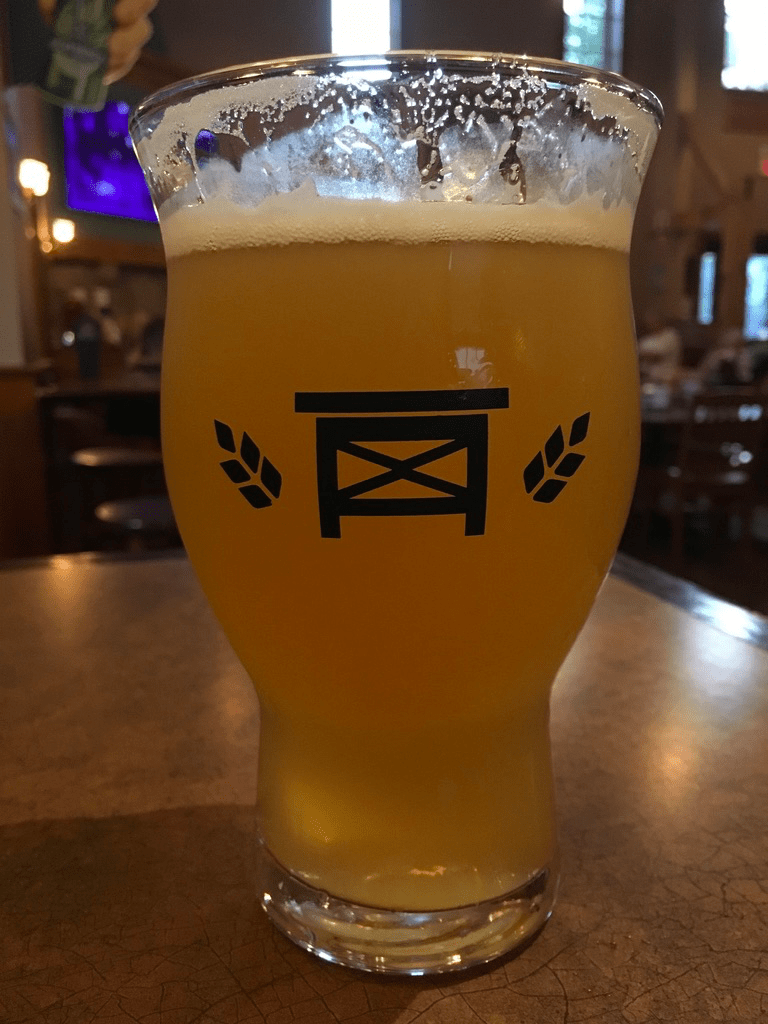
An excellent micro-brew IPA from Bench Brewery
  • Shaw Club, Niagara-on-the-Lake
    • Great little place, a little bit off the main touristing stretch of Picton Street and yet only a few minutes walk away, and more importantly for me, just a few hundred meters from Fort George where I started my journey
  • Stone Mill Inn, St. Catherines
    • A converted warehouse property only a few hundred meters off the Bruce Trail, with welcoming staff, quiet, well-appointed rooms, and for me, HOT SHOWERS!
  • Jordan House, Jordan
    • One of the oldest taverns in Jordan, now with several rooms as well that are managed by the Inn on the Twenty. Simple yet close to the Bruce Trail and the bonus of a fab breakfast at the Inn
  • Crown Ridge B&B, Grimsby
    • A comfy B&B on the outskirts of Grimsby and literally across the road from the Bruce, where I had a large room with a balcony deck – it was great going to sleep to the sounds of crickets
  • Waterfront Hotel, Burlington
    • A clean, modern, mid-range hotel right on the Waterfront Trail by Spencer Smith Park in downtown Burlington
  • Waterside Inn, Port Credit
    • Another clean, modern, mid-range hotel right on the Waterfront Trail, this time beside the harbour in Port Credit
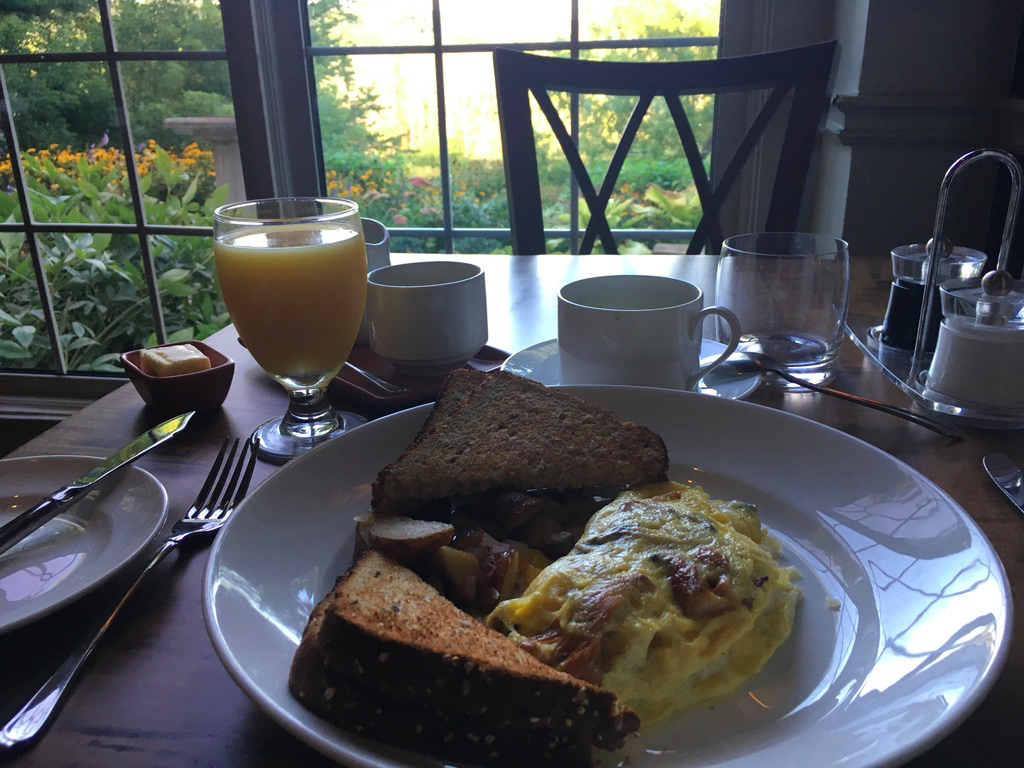
Breakfast at the Inn on the Twenty in Jordan Station

Meals

My basic plan, since I was staying at hotels, was to eat a hearty, healthy breakfast each day and a good dinner at night. That way, during the day on the Trail I could munch on snacks like dried sausages, dried fruit, an apple or orange, pumpkin and sunflower seeds, and energy bars. When I’m working hard I don’t want a big meal anyway, and this meant I could have a snack at each rest break and keep my energy levels up.

The breakfast part worked out as I had planned, though the Inn on the Twenty where I ate after staying at Jordan House only served breakfast at 0800, so I lost a bit of trail time. Other than that, I really appreciated being able to fuel up in comfort each morning – instant coffee and oatmeal on the trail can’t compare to fresh fruit and a good strong cup of morning brew.

Similarly, being able to have a hot meal at the end of the day, and also I confess a good glass of wine, was a reward to myself. If you can’t earn your comforts and enjoy them, well, what’s the point? A good burger versus freeze-dried chili – what choice is that?

A tiny Niagara estate that makes a fantastic Pinot Noir
  • Treadwell, Niagara-on-the-Lake
    • A farm-to-table restaurant, they work with local Niagara-area farmers and producers to make memorable meals. Their sommelier is excellent and their selection of local wines means you can try stuff you’d never find on your own. It was a great way to get ready for my big walk.
  • Zees Grill, Niagara-on-the-Lake
    • We had breakfast there, as it’s attached to the Shaw Club Hotel. We were served outside on the veranda, and it was a lovely soft first-day-of-autumn morning.
  • Jonny Rocco’s Italian Grill, St. Catherines
    • This restaurant is attached to the Stone Mill Inn, which was just as well since my feet were tired and stiff after day 1 on the Trail. It’s a casual place with homemade Italian dishes, and their make-your-own-pasta was really tasty. I had penne, marinara sauce, fresh spinach, and flor di latte cheese. That’s how you carb-load for another day on the trail.
  • Cora’s, St. Catherines
    • This breakfast chain has a franchise on Tremont Road, where the Bruce climbs the escarpment, so you’re just meters from the Trail. I ate there the morning of Day 2, and got a big plate of eggs, toast, and fried potatoes with coffee for under $10. There are many locations around Canada and they’re a great option if you’re tired of Tim Hortons.
  • Jordan House Tavern, Jordan
    • It’s a pub, and it’s got all the pub good things you’d expect. The food is fresh and prepared in-house, so the burger and salad I had were made from high quality local ingredients, and the beer was a local micro-brew called Bench IPA.
  • The Martini House, Burlington
    • I took my parents there since we’d connected for the evening as I was passing through Burlington. This restaurant is a favourite of my in-laws, though I guess it’s quieter when they go there for lunch than it was in the evening. The food’s pretty good – I had a fab vegetarian dish and the wine list is simple with some good value wines.
  • Tim Hortons
    • If you don’t know what a Tim’s is, then where have you been? While they are predictable, they’re everywhere, convenient, clean, and good value. Plus you get the bonus of listening in on the regulars that seem to congregate in every Tims I’ve ever been in.
The courtyard outside Treadwell in Niagara-on-the-Lake

Let’s hope that COVID-19 stays under control. Please do your part by respecting the advice of public health authorities. Together we’ll get through this, and back to normal.

TO Places – St. Lawrence Market

Part of a series on my favourite places to go for a walk in Toronto

Blog posts are a labour of love for me, and yet there is a cost to running this site and organizing my walks.If you’d like to help with that, I’d really appreciate something for my tip jar.The Buy Me a Coffee service allows patrons like you to fund writers like me.  If that sounds like a worthy idea to you, then go ahead – keep buying me coffees.Thank You Very Much to everyone who has contributed already!

*****

And now on to the regular post …..

The area around St. Lawrence Market includes nearby Corktown and the Distillery District, and it’s a fantastic intro to Toronto – downtown, close to hotels, shops, and transit, full of history, and even more full of good things to eat. If you have just one day in TO, then come here.

Location: St. Lawrence Market itself is at the corner of Front and Jarvis Streets. My personal definition of the more general Market neighbourhood is the area between Church Street in the west to Cherry Street in the east, and King Street to the north down to the Esplanade in the south.

Public Transit: The nearest subway is King Station, on Line 1. The St. Lawrence Market is about a 5-7 minute walk from there. You can also take the 503 or 504 Streetcar east from King Station and get off at Jarvis Street – the Market is just a block south from there.

Why I like it:

First of all, there are a lot of memories for me here. When I met my soon-to-become wife in 1987, she was living in the area, just off the Esplanade. Since she had a much nicer apartment than my basement bedsit, I moved in with her and we lived there for the 1st year or so of our marriage. We also lived just north of here in the early 2000’s and spent many hours walking the neighbourhood pushing a stroller to get our son to sleep.

When we were young and, let’s call it non-affluent, we would hit the market at the end of the day, when vendors were selling off their unsellables. As our budgets expanded, and as we travelled, we starting looking for things we’d tasted in Europe – the cheese, the olives, the fish, the meats. Then when we became parents, a Saturday at the Market became an easy way to keep young one entertained and fed with interesting snacks. And always, it’s been a place to take visitors to the city, who never fail to be wowed by the scents, the sights, and the sounds.

Over the 30+ years since we lived nearby, we’ve always made a point of visiting the Market whenever we can, regardless of where we’ve lived in the City (or elsewhere – we would always try to squeeze in a visit when we came home while we were living in London). There is so much to see and do any time of the year, and if we’re feeling a bit bored by food-shopping we can always explore the rest of the area, especially east over through Corktown and the Distillery District.

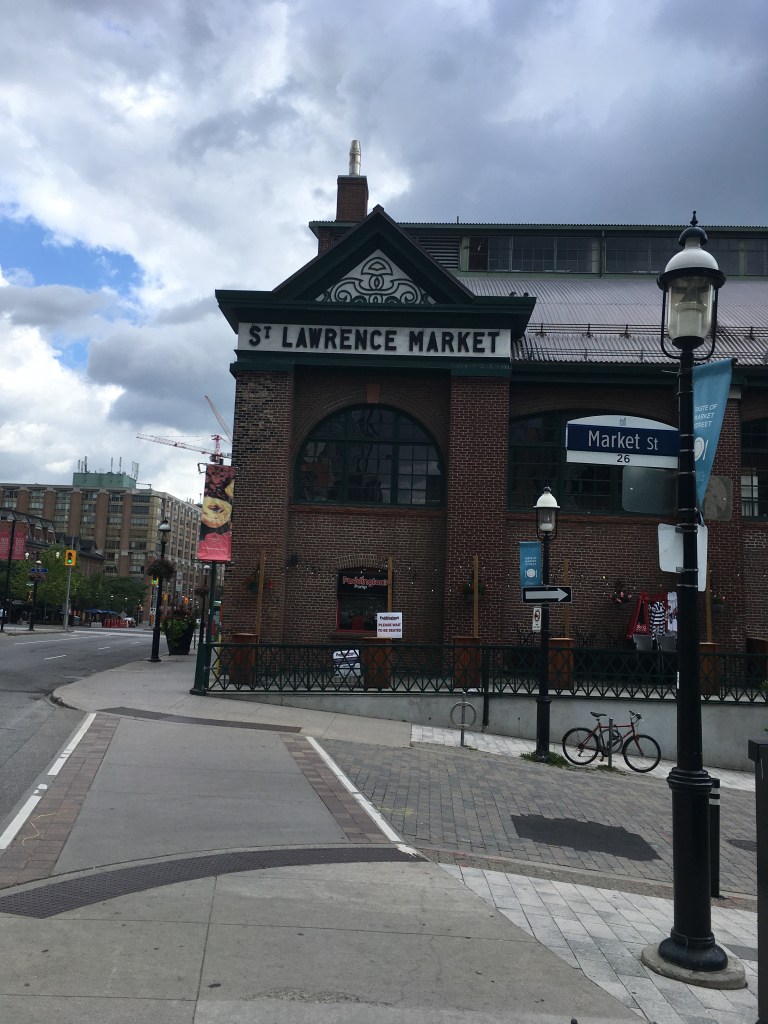
There are actually 2 markets, the red brick South Market which is open 5 days a week, and the now-temporarily-in-a-tent-for-the-next-few-years-and-confusingly-named North Market, which is currently located south of the South Market. The North Market, which used to be on the north side of Front Street across from the South Market, is open on Saturdays as a farmers market and on Sundays as an antique market. The City is building a new structure to house it, and it will eventually return to its rightful North Market location.

Sights:

Since this area is one of the oldest in Toronto (at least, what passes for old in the sense of European settlement), there are many historical sites and features. But for me, the starting and ending point is the Market itself. I always get a tingle of anticipation whenever I visit, thinking of what I’ll find and what I’ll cook and, most importantly, what I’ll be tempted to eat while I’m there.

It’s also one of the great all-season places in Toronto. Spring is about new flowers and days just warm enough to sit out at a picnic table. Summer overflows with vendors on the sidewalks, with fruits and veggies from all around Toronto. Autumn is my favourite, when the harvest season brings those crisp blue-sky days that make wondering so much fun. And winter is great too, especially around the holidays, when the market is bursting with shoppers and carollers and cheer.

Outside the Market, the shops along King and Front Streets are interesting too. It’s become a bit of a furniture/design destination. There’s also George Brown College just east on King, so there’s a student vibe that’s fun. And of course, over at the Distillery District, there are tons of shops and funky laneways to wander and browse.

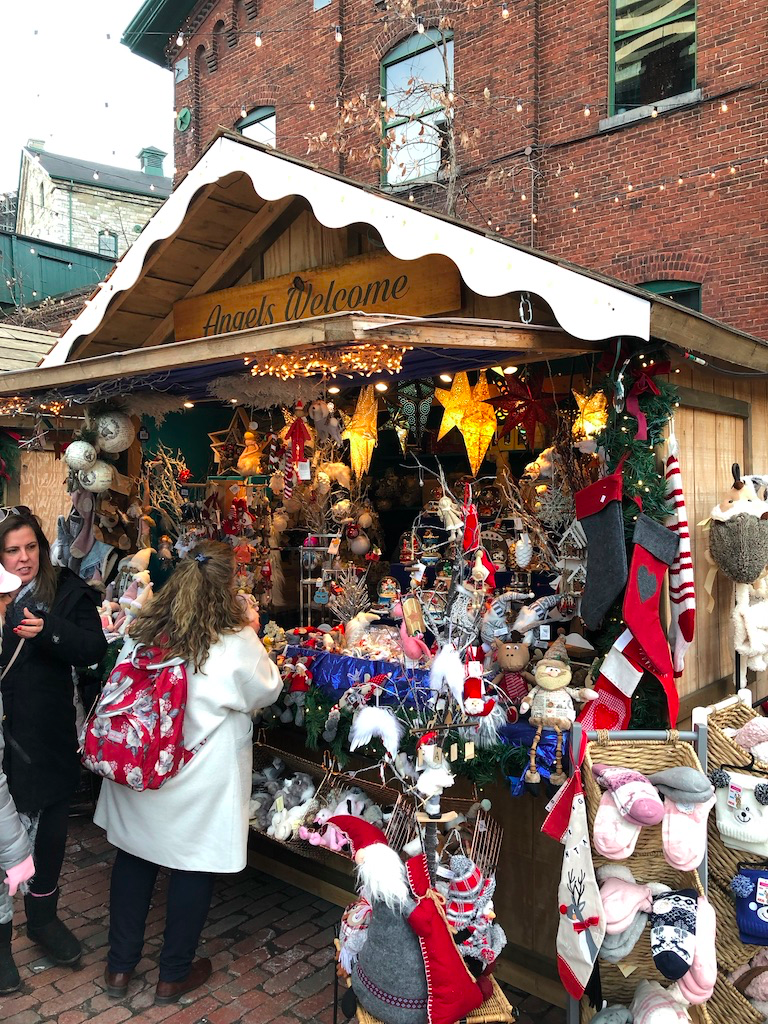
Holiday Market at the Distillery District

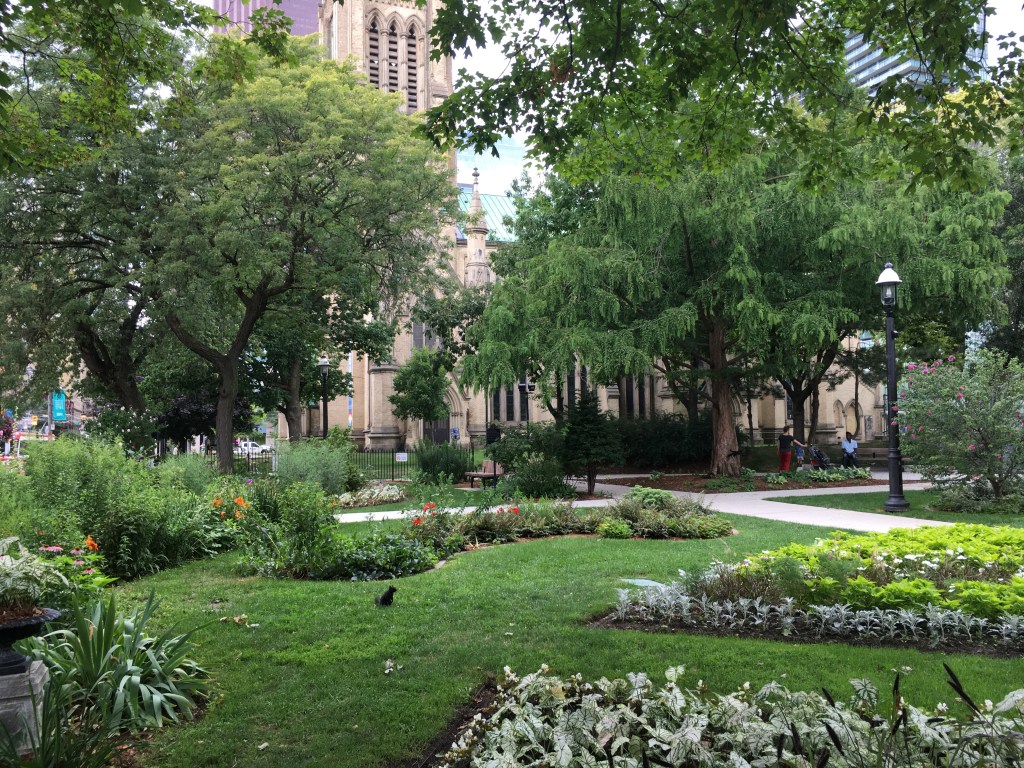
If you need some green space, there’s that too. The park next to St. James Cathedral is always green and welcoming. There are also a series of parks along the Esplanade (including one that’s in the opening shots of Kim’s Convenience), and at the east end of Corktown there’s the fabulous Corktown Common.

Winter at St. James is beautiful too

There are probably other things in Toronto that some might find more fun, but for me, spending the morning shopping at the Market, then picking up a picnic lunch and going for a walk through the neighbourhood to end up at the Common where I can sit on the grass and eat my feast, all followed by a coffee at Balzac’s in the Distillery – that’s a perfect day.

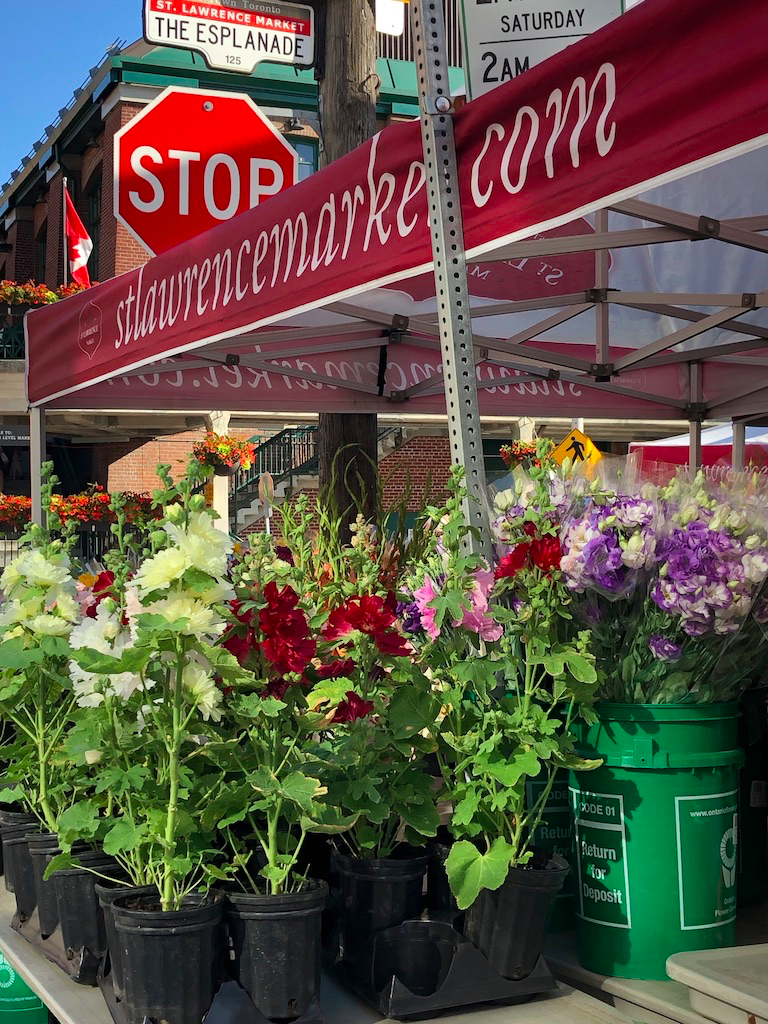
Summer at the market includes flowers

Food & Refreshment:

There are just too many to choose from – if you want to sample the multi-cultural variety of Toronto, you can start here and cover a lot. There’s down-home Canadian (Paddington’s Pump’s famous back bacon sandwiches!), pizza and pasta, souvlaki, sushi, chow mien, crepes, cheeses, smoothies, sausages, pates, pickles, breads, pretzels, sweets, fruits, veggies, spices, salts, herbs, oils, flavourings, and so much more, and that’s just in the Market itself.

Breakfast at Paddington’s Pump

When it comes to food, you have options. You can view it as a giant, full-on grocery store and pick up the ingredients for a feast. You can look at it as a great take-out place, from any of a dozen or so places that range from avocado toast to zaatar-spiced treats. Or you can sit down in a more restaurant-like setting (across the street at Market Lane) and enjoy a meal and a glass of wine at one of the places there. And of course, you can do all 3 the same day, as we often do.

Along King there are many more restaurants and bars, and if you time it well you can try some budding chef’s talents at the Chef’s House restaurant run by the George Brown College catering school.

Finally, the Distillery District has its share of wine and dine options, along with coffee, tea, and chocolate treats.

Come hungry and you’ll be fine.

Diversions:

  1. I’ve used the Market in the past as my jumping off place for long walks. To the east at the Common, you can pick up the Lower Don Valley Trail. To the south, you can join the Martin Goodman Trail. Either way, fuelling up at Paddington’s Pump is a great way to start a long walk.
  2. Just west of the St. Lawrence area, at Yonge and Front Streets, there is the Hockey Hall of Fame – what could be more Canadian, eh?
  3. While this isn’t the official Theatre District, you can find your share of the arts here. There’s the Meridian Hall (formerly the Hummingbird Centre for the Arts), the St. Lawrence Centre for the Arts, Young People’s Theatre, and the Canadian Opera Company’s St. Lawrence space, all within a few blocks of St. Lawrence Market.
  4. Throughout the year, there’s live music and festivals galore, everything from buskers and Buskerfest to BBQ fests to Toronto’s own Holiday Market. Check sites like Toronto.com or BlogTO to see what’s happening.