Walks Past – Sydney, Dec 2006

As I write this, it’s late March – wet snow, cold and grey – and my thoughts drift to warmth, to revisit a sunnier place.

In late 2006, I was working for a UK-based company that had software development teams in Toronto as well as in Sydney.  I was heading up a team in Toronto when my counterpart in Sydney left the company, so I was lucky enough to be seconded over to lead the team there while we looked for a new manager. 

Because I was going to be in Sydney for several months, I asked that my family be able to come with me. My employer generously agreed, so my first trip was a solo visit for 10 days in December to meet my new team and scout for a place for us to live so that after Christmas my family and I could travel out together. This meant that I left a dreary Toronto early winter for the early summer of New South Wales – a hard life!

The company offices were in the CBD off George Street, so when I arrived that first time in December, I stayed in a hotel near Darling Harbour to be close and while also being centrally located for exploring the city over that 1st weekend.

By the time Saturday came round, I’d been there for a few days already so I was more or less over the jet lag. During the week, I had been doing some research online and had some ideas about where I wanted to walk. It was a lovely late spring day, with warm temps but not yet hot – perfect for walking. My first impressions were of sun, shining waters, warm friendly people, and tempting places to explore.

Despite the temptations of the Darling Harbour area, my plan was to head west into some of the nearby residential neighbourhoods to get a feel and see where we might live during our stay. I’d heard about Glebe, Balmain, and Annandale so I decided to head in that direction.

My hotel was near the Harbourside Shopping Centre, so my direction west took me across the thumb that Pyrmont makes separating Darling Harbour from Blackwattle Bay. It led me to the Sydney Fish Market. I love to cook and to explore food markets, and I was looking forward to seeing this famous landmark. I was not disappointed.

The first thing that struck me was that it wasn’t just a food market – it’s also a fantastic collection of restaurants and food stalls. After quickly deciding that this would be a frequent family destination, I followed my nose to choose a place serving super-fresh fish and chips, and took it outside to gobble in the sun. Who needs poutine!

As tempted as I was to just hang out there all day and gorge, I knew I had to get going to walk off lunch. I didn’t really have a destination in mind other than to wander the neighbourhoods, so I meandered generally west through Glebe and then north to find myself on Balmain Road.

As I walked along, it all seemed pleasant enough – tree-lined streets, very walkable, relatively close to the CBD. Still, it wasn’t what I was looking for. We lived in a somewhat similar neighbourhood in Toronto, so why go all the way to Australia to live an inner suburb? I knew that my wife would find it a bit boring, so I turned around and head back towards the CBD.

It was a trudge back through Balmain, Glebe, and Haymarket under an increasingly hot sun to get back to the downtown area near the Central Station. When I finally found George Street and started down along it, I was feeling hungry and parched. Fortunately I found the marvelous Queen Victoria Building. It’s a wonderful shopping centre, with many shops, cafes, and restaurants and most importantly for me that day, it was air conditioned.

After a sandwich and a cup of my new-found favourite – a flat white – I was refreshed and ready to continue exploring. I decided to follow George Street northwards towards Circular Quay. It was people-watching heaven – the bustle and shops reminded me very much of Yonge Street in Toronto and I instantly felt at home. I knew as I walked along that this was much more the type of energy that we were looking for. That decided it for me – we needed to find a flat downtown near the CBD.

My day wasn’t done however. There was still a lot of daylight left and lots of city to explore. I had read so much about Circular Quay that I just had to see it and the famous view of the Opera House and the Harbour Bridge. I hurried down George Street and through the ferry buildings to stand on the wharf and soak up the view.

Standing in the sun, tired but happy, I knew then that our upcoming stay in Sydney was going to the adventure of a lifetime. It turned out to be all of that and so much more. We found a flat on Jamison Street near Lang Park, and our son went to the Fort Street Public School near the Sydney Observatory in the Rocks.

It was a magical few months. We explored the city, sampled many wonderful restaurants, celebrated Australia Day, toured the nearby countryside, swam off Manley Beach, enjoyed the ferry rides, wandered the zoo, and took part in the 75th anniversary walk across the Harbour Bridge. That first long walkabout the city, that day in December, opened my eyes to the diversity, energy, and sheer fun of Sydney and made it one of my favourite cities in the world.
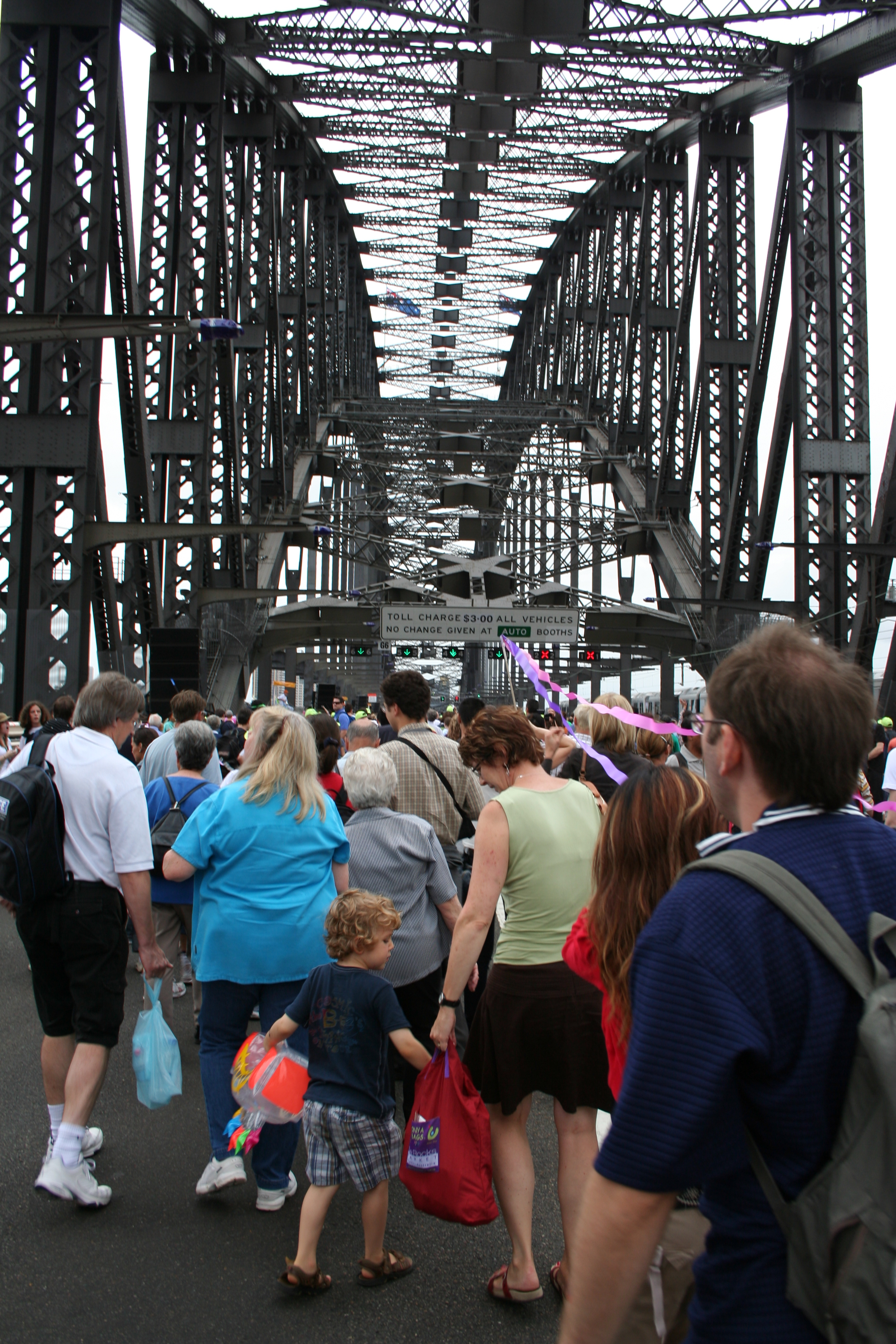
75th Anniversary Walk across Sydney Harbour Bridge

A Walk in Bermuda, part 2

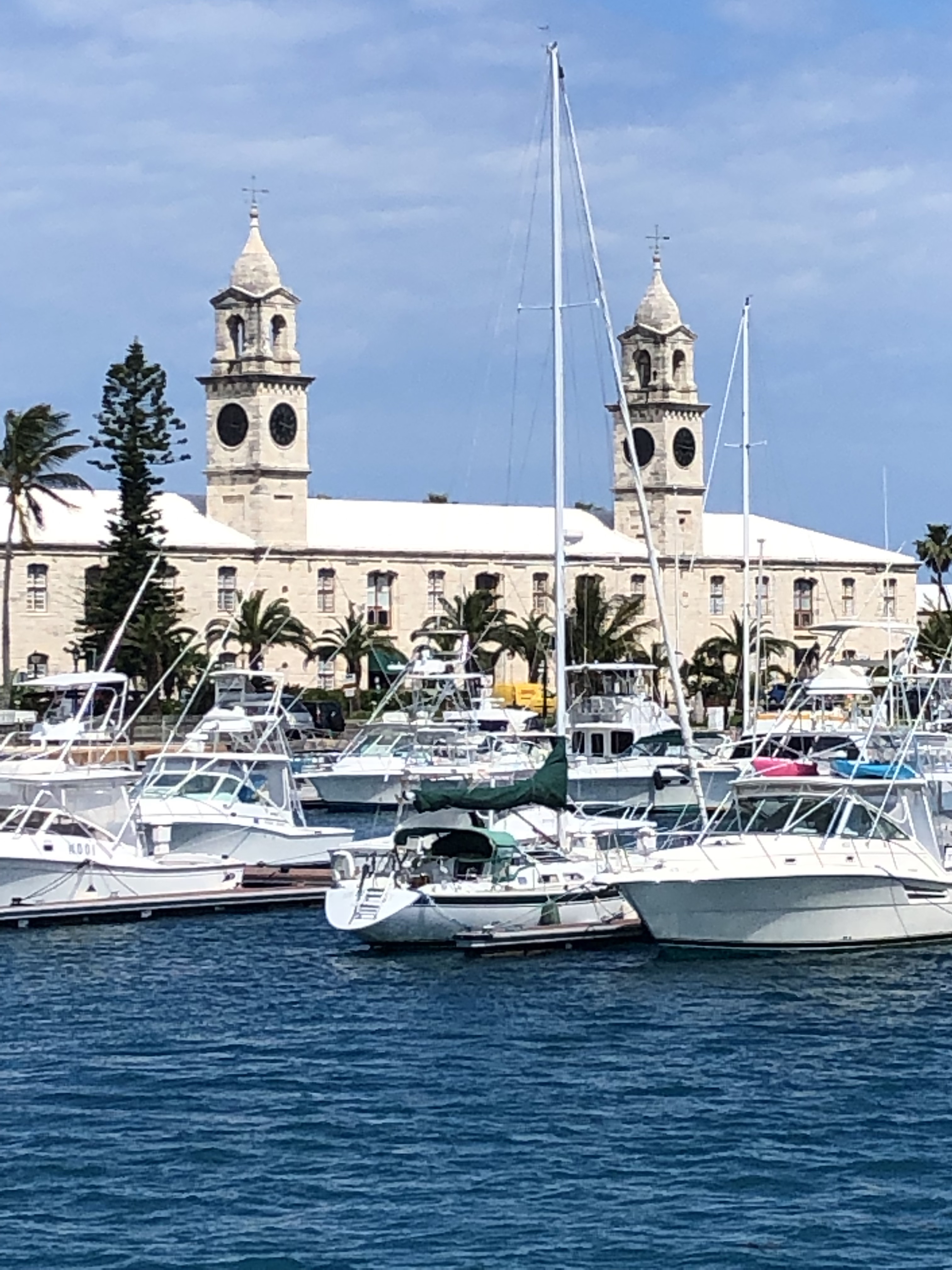
After our long rumble along the Railway Trail, we were ready for an easier day. We decided to take the ferry over to the Dockyards and explore that area. The sun was out and the journey across the Great Sound offered fabulous views, especially on the approach to the dock.

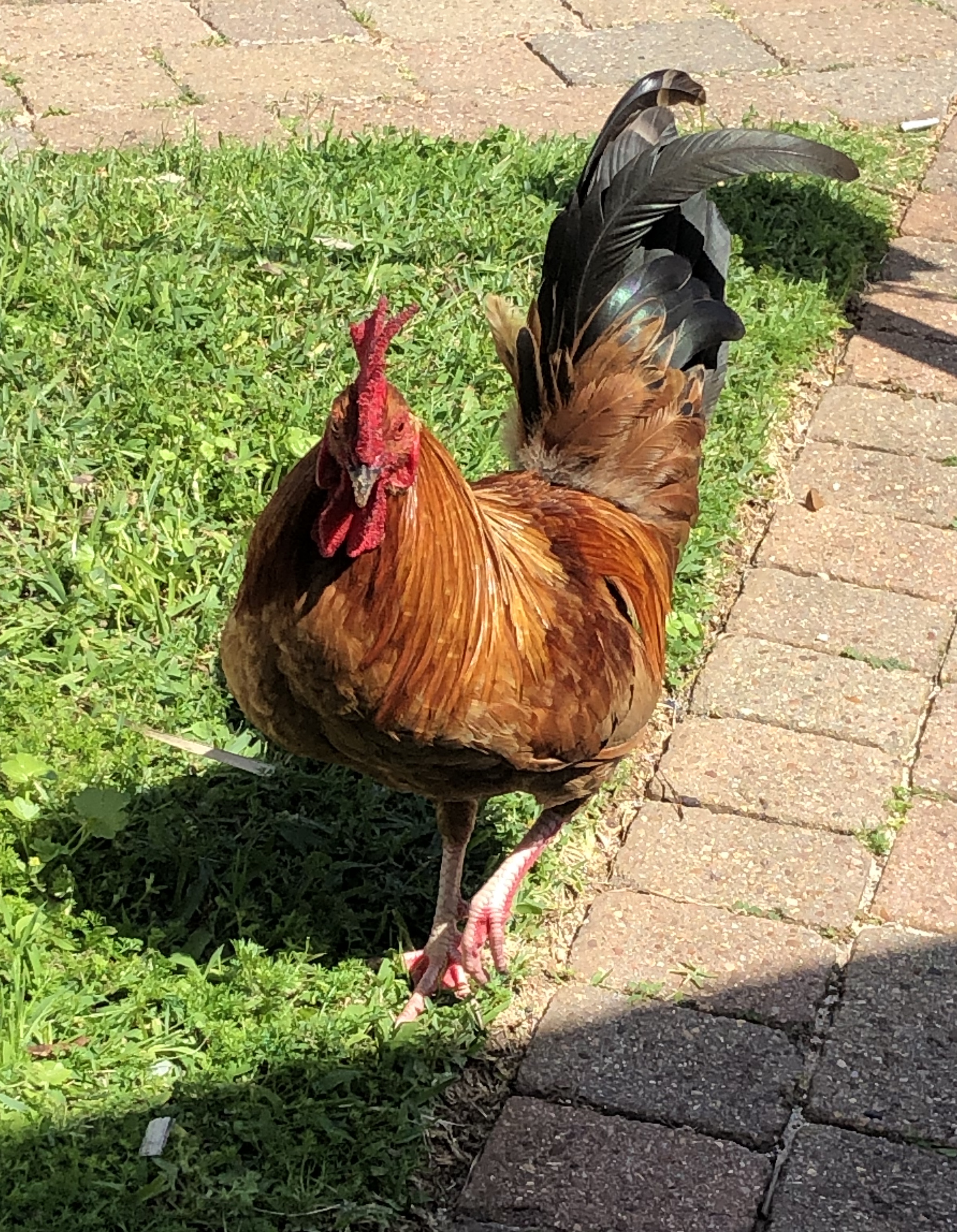
We hadn’t really done that much research and were just looking for a stroll, and for those who like that sort of walk the Dockyards is a good place to do it. It’s actually not that big of a place, which we discovered after we’d walked around the whole area in under 20 minutes. Since we weren’t in a mood for shopping we took the always prudent option – when in doubt, have lunch. The Frog and Onion pub offered outdoor tables, refreshing locally made ale, and entertainment from some of the feral chickens that roam the island.

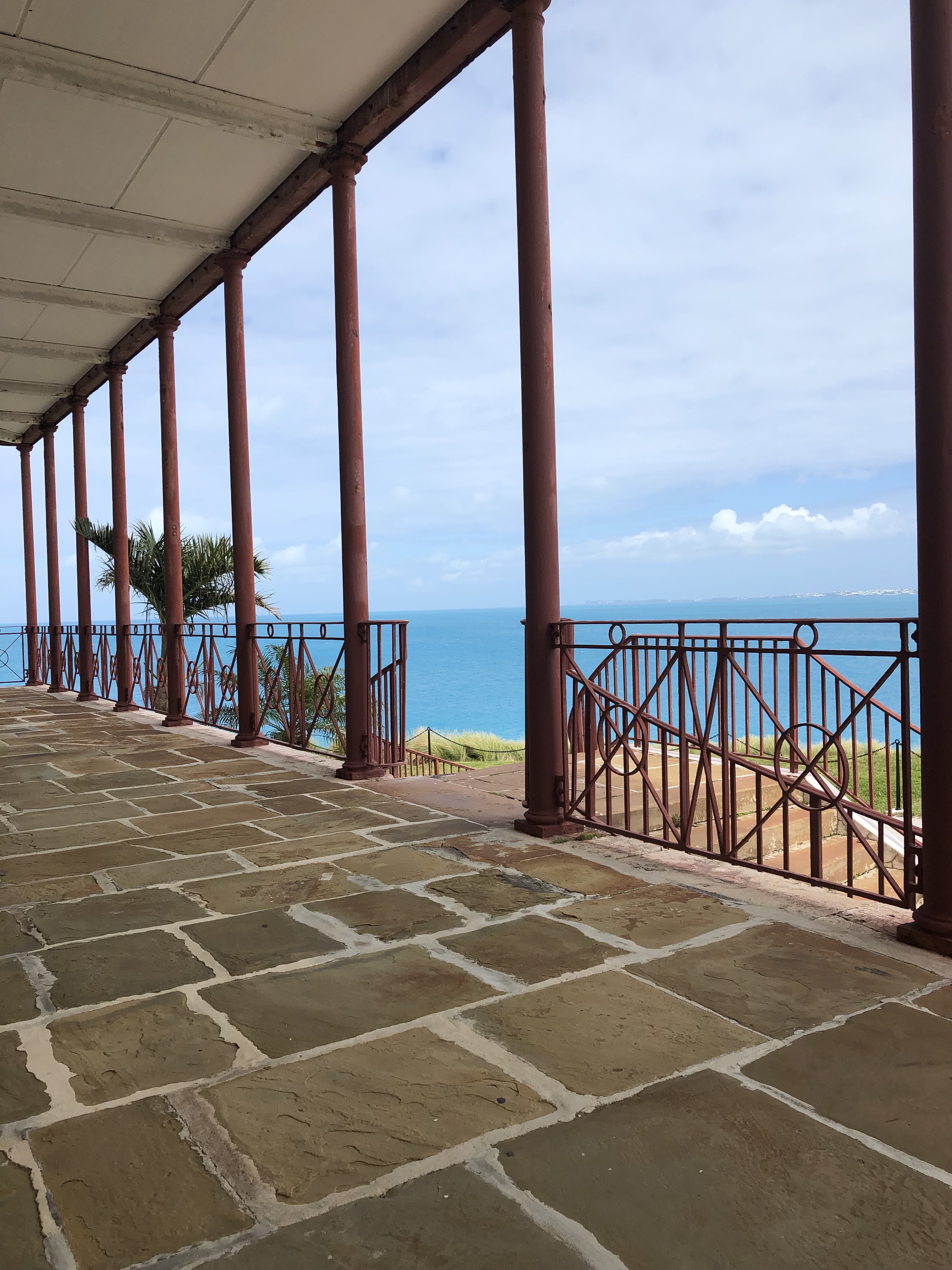
After a fish sandwich and a salad, we headed off for another circuit of the town, and since the next ferry wasn’t due for awhile, we took in the National Museum, located in the Dockyards. This encompasses one of the original forts build to defend the Royal Navy base in Bermuda, which the Dockyards served. Within the walls of the fort is the Harbour Master’s House, built in the 1830’s and fully restored in the 1990’s. The views from the wraparound veranda are spectacular.

After that somewhat dutiful nod to history, we took the ferry back and headed home for a quiet evening. The sun had been wonderful but tiring, after our winter hibernation in Toronto.

The next day, recharged, we wanted to explore the North Shore of the island. I also had an ulterior motive for heading north – I had read that one of the best little restaurants in Bermuda was a place called Art Mel’s Spicey Dicey, where they make what is reputedly the best fish sandwich on the island.

While I haven’t sampled enough to know if it really was the best, it was for sure the biggest sandwich I’ve ever eaten – a monster portion of delicious fried fish with chopped salad, tomatoes, and tartar sauce between two thick slices of gently cinnamoned raisin bread – yes, raisin bread. The combination shouldn’t work, but oh boy does it ever. When washed down by Bermuda’s own Barritts Ginger Beer, it’s a meal to keep you going for days.

After that lunch, eaten in the sun sitting on a church wall, we needed to keep walking to burn off the calories. The North Shore is relatively settled and residential compared to some of the beaches on the South Shore, so the walk along the North Shore Road gives you a glimpse into the lives of working Bermudians. Scooters buzz, kids are out playing, washing is flapping on the line, and people are busily making a living while you’re playing the dumb tourist. It’s a great reminder of the privilege that travel represents – not everyone can hop on a plane and swan off for a few days to take a break.

After winding our way to Spanish Point park and then back into Hamilton, our wandering ways were at an end. That North Shore walk was on our second last day, and on our last day I had a vital appointment to keep. My rotisserie baseball league was having its annual draft, and I spent what looked to be a gloriously sunny day sitting inside finalizing my research and chatting with my team partner on our draft picks. Ok, so not a walk, but a journey to greatness we hope. We won the league last year and we’d like to win it again this year.

31 years married! And I can get away with baseball while in Bermuda! That’s love.

We finished our trip with a stroll into town for dinner at Portofino. It’s a small place, but big on charm with wonderful staff, very good food, and a good little wine list – everything I like in a restaurant. We stayed till we were the last ones out, and wandered back to the flat along quiet streets accompanied by the now-familiar frog chirp chorus.

A walk in Bermuda became several walks, and each revealed a different aspect of the island – its lovely beaches, the often overlooked parks and trails, the frugal sightseeing ferry rides, the many great restaurants, and most of all the warmth of Bermudians who go out of their way to welcome visitors to their home.

A Walk in Bermuda, part 1

Recently my wife and I took a break and headed to Bermuda for a few days in the sun – escaping late winter is always sooooo tempting and we gave in this year.

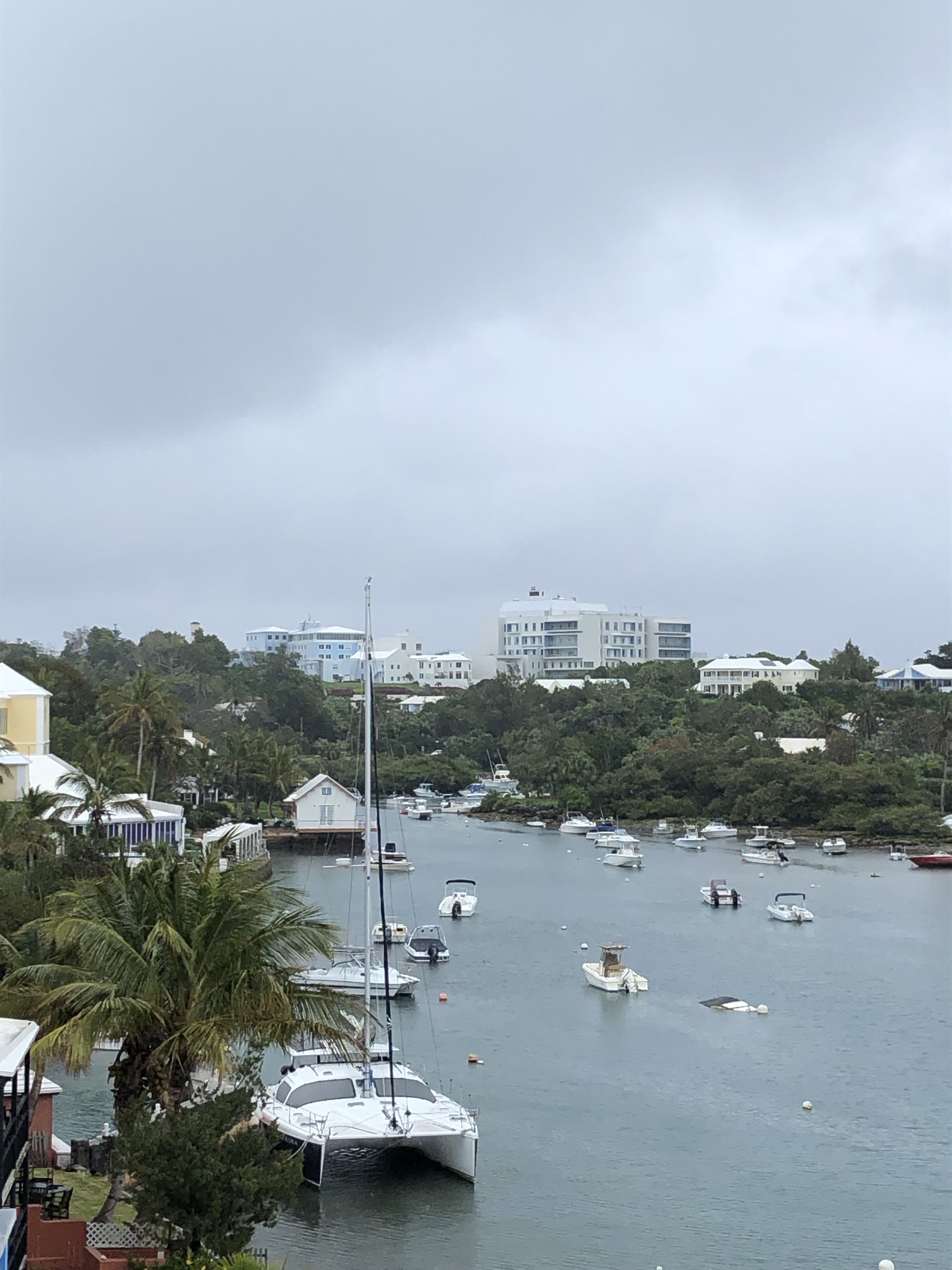
We’d never been, and after doing a bit of research decided to stay in Hamilton, the capital and the largest town. Bermuda is not a large island, so we thought by staying somewhere central we could explore in any direction, and that’s what we ended up doing. Our flat in Hamilton was lovely, with great views out over the harbour.

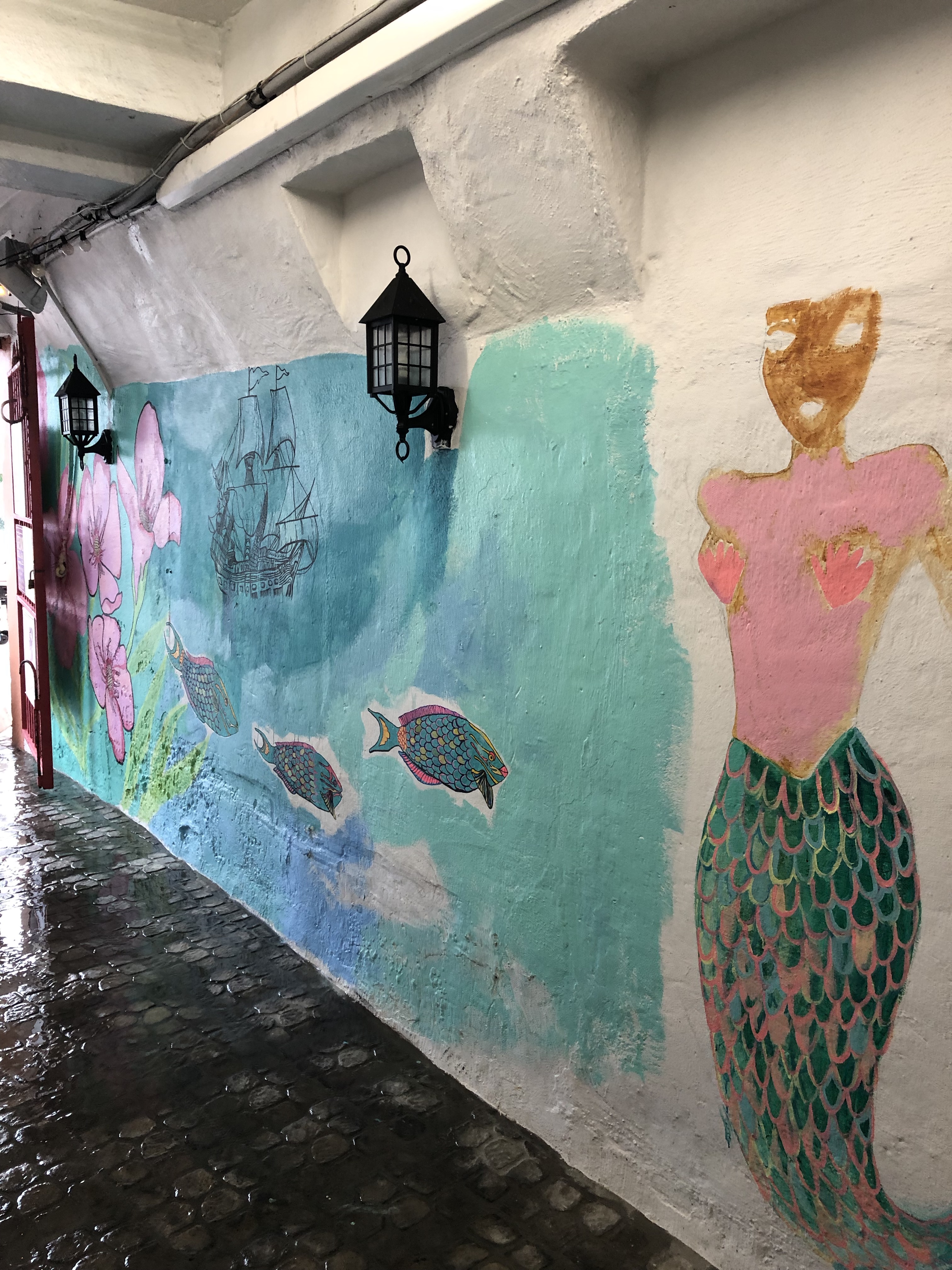
We arrived on a Wednesday in the rain, so our first wanderings about town were dampish, to say the least. It chucked it for stretches and then eased off to a misty sprinkle before resuming a pelting rain, combined with gusty blow-out-your-umbrella winds. On the plus side, it was warm by Toronto March weather standards – 18C can feel tropical if you’re fed up with winter. Despite the rain and clouds, we wandered about exploring Hamilton. It has its charms, and is compact enough to explore in just an hour or two. Little touches like this alley bring colour to the buildings:

We found a narrow alley called Washington Lane that led to a tucked-away shopping area, and nestled along the lane was La Trattoria restaurant. The pizza and wine went down very well and set us up for more exploring, plus the staff were charming – it’s a great place.

After more walks in the rain, and the discovery of a Waitrose grocery store that took us back to our days living in London, we headed back to our flat to make our plans for the next day, when the weather promised to be dry.

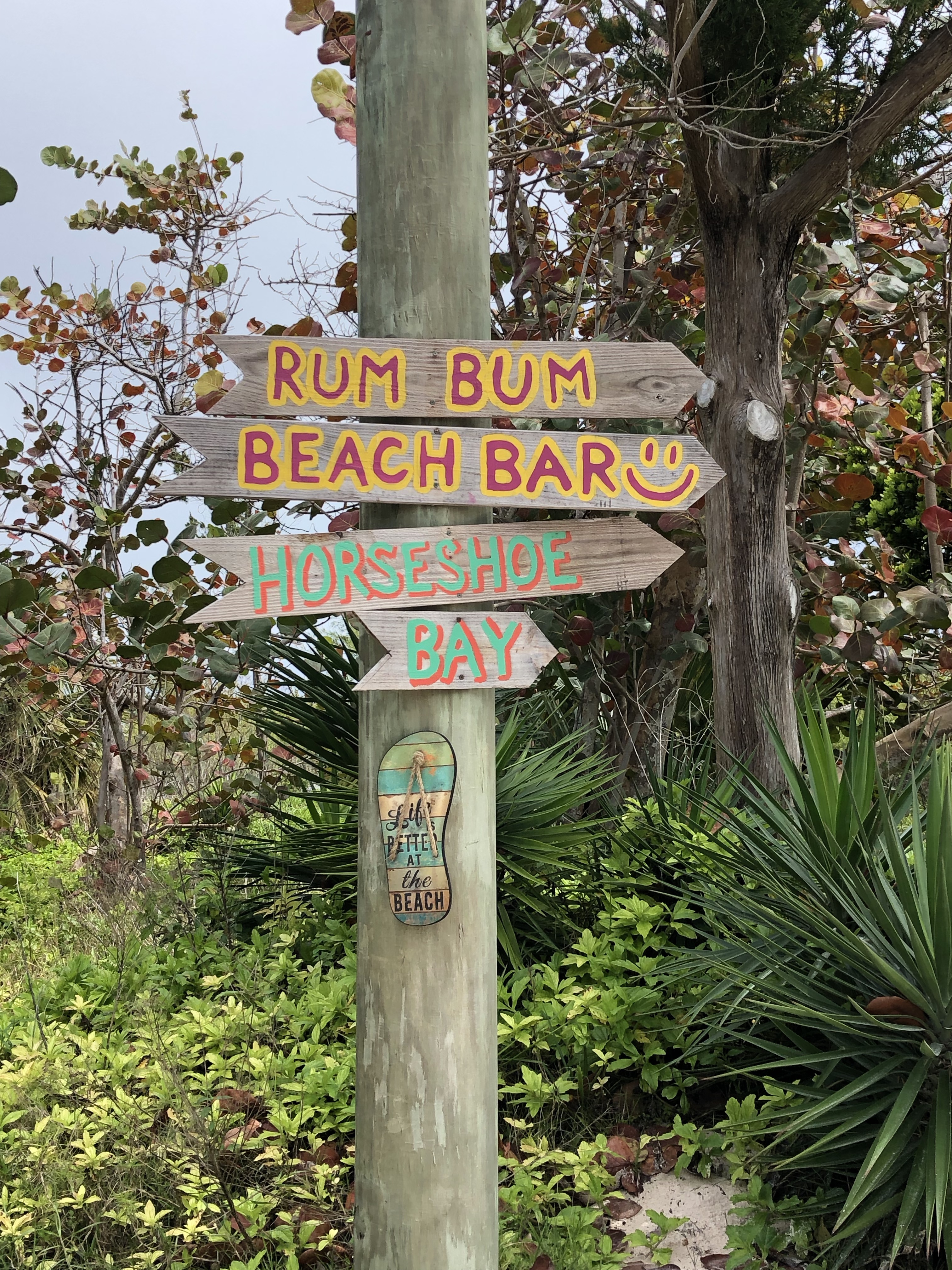
We woke to hazy sun and warmth, so we set out to explore the island. Our research pointed us to the Railway Trail, which stretches along the middle of much of the island, and we decided to walk most of that, fitting in a stop at Horseshoe Bay where there were a couple of restaurants, and then continuing round to the south-west to end up at Rockaway Bay to catch the ferry back to Hamilton.

While small, Bermuda has a surprising amount of traffic. Combined with roads that often have no hard shoulder or footpath, you find yourself sharing the road with buzzing scooters, motorcycles, cars, vans, trucks, and buses. Everyone is polite and defers to walkers, but it’s hardly peaceful. We were glad to get off the road and onto the Trail itself about a km outside of Hamilton.

Once we found it and headed south, we were in a different world. Stretches of the trail are enveloped in trees and others go through cuts through the limestone spine of the island, with stone walls draped in ferns, vines, flowers, and mosses. Parts of the trail reminded us of walks in France or in England, while other stretches brought Florida to mind.

Our mid-day goal was Horseshoe Bay on the south side of the island. On the map, it looked like just an hour’s walk.

In reality, the up and down hills, the road traffic, and the stops to take in the view meant that it was well over two hours before we walked down off the Trail onto the beach at the bay. The journey was worth it for the view, the sound of the surf, and the salt tang in the air.

The walk and the sun and that salty tang were making us hungry, and the wind was whipping sand in our faces, so we headed back towards the trail to find lunch at the Gulfstream restaurant. It felt so summery to sit outside and enjoy a glass of wine and some delicious salads. I needed an espresso to fortify myself for the afternoon’s walking.

South from Horseshoe Bay, the Trail slides by the Gibbs Hill Lighthouse, and we thought we’d take in that landmark. I’ve mentioned the hills, and Bermuda’s central spine has several that rise nearly 100m above sea level. The Lighthouse is on top of one of them, and rises 5 stories so we made the spiralling climb up the 195 steps to take in the view from the top. Unfortunately the strong winds and the narrow platform made my wife very nervous and as she’s the photographer I took a quick snap and then headed back down.

After a dizzying descent we tumbled down the hillside path to rejoin the Trail, and then kept wandering south before bending along the south west hook of the island. That led us to Rockaway Bay, which we hit just in time to catch the 4:30 ferry back to Hamilton. We’d timed it well, because it started to splat a bit with rain on the way. The views and scenery from the ferry are great – it’s an inexpensive way to see much of the island from the perspective of the Great Sound.

By the time we landed at the ferry terminal in Hamilton and walked back to our flat, we were shocked to see that our Fitbits said we’d done about 18 km on our walk. Since Bermuda is only about 15 km long, and we’d started in the middle, we had thought we’d done about 10 km tops – no wonder we were knackered. It was only proper, then, to end our day in style at the Huckleberry restaurant in the Rosedon Hotel. The walk up the drive let us know what we were in for.

We took a table on the veranda and thoroughly devoured a wonderful meal – it’s well worth a visit if you are in Bermuda. Our night ended with a stroll back to the flat along quiet streets, serenaded by the chirps of frogs and gentle breezes plying palms.

Walks Past – May 2013, Paris

Eglise Saint Sulpice

My birthday is in May, and our anniversary is in April. In 2013, we were going to celebrate both our 25th wedding anniversary and my 50th birthday, so we decided to cash in some airline miles and visit Paris in the spring time. Cliches be damned.

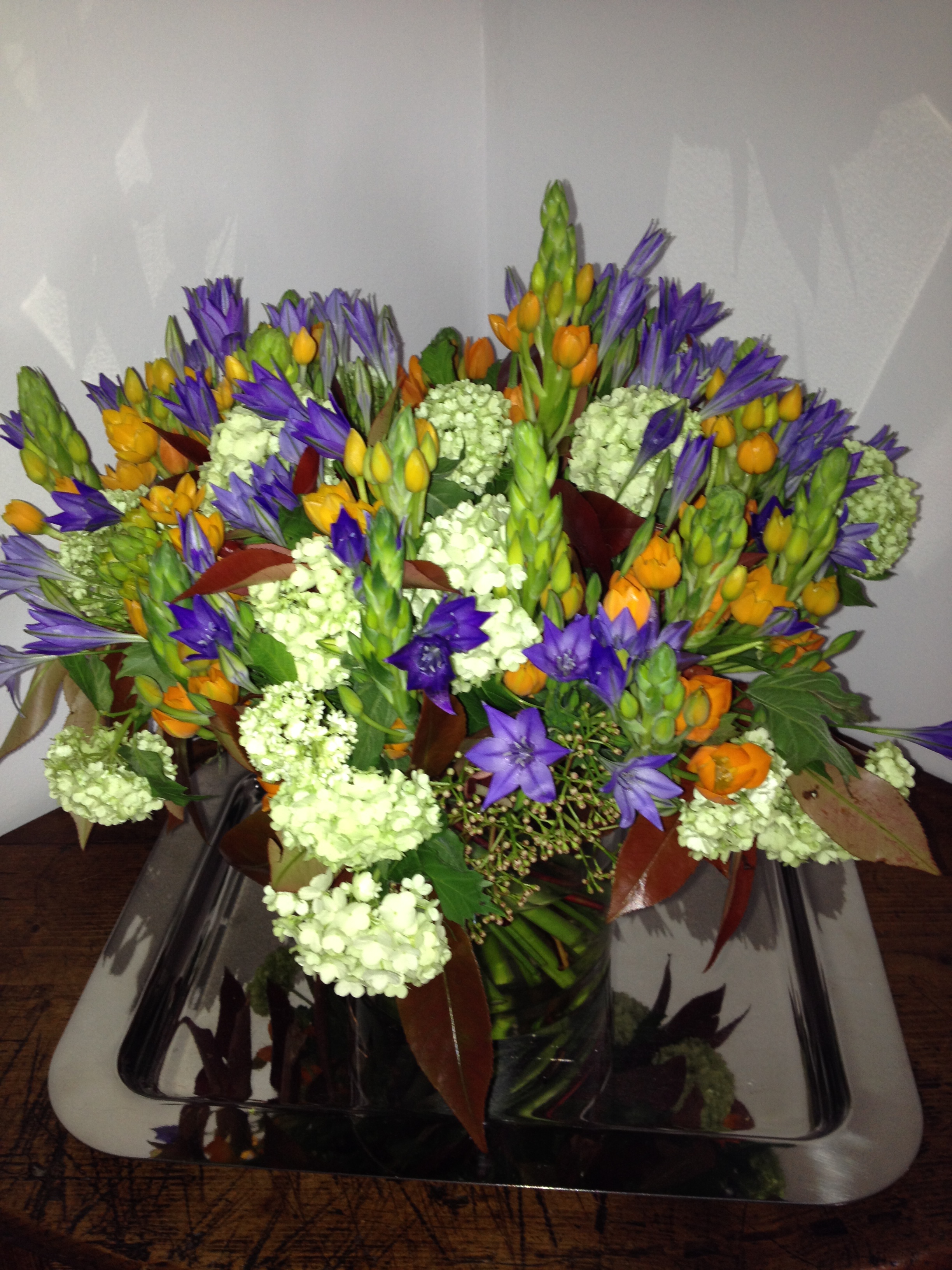
We stayed a a lovely boutique hotel called the Louis II in the St. Germain district on the Left Bank, in the 6th Arrondissement. We had stayed there once before years earlier and had been charmed by it then, and were charmed again upon arrival. We’d let them know it was our anniversary and there were flowers in the room to greet us.

Les Fleurs de Hotel Louis II

Tucked centrally and cozily onto the Rue Saint Sulpice near the cathedral and the Odeon metro station, staffed well, and full of nooks and crannies stuffed with comfy furniture, along with a claustrophobic elevator, it’s a place that we remember fondly.

We arrived on a Thursday morning, jet-lagged and feeling horrible. Since it was early, the concierge suggested a walk about the neighbourhood while our room was made up, and recommended lunch at a little cafe near the St. Germain market. With that stroll, we plunged into Paris for 4 fantastic days of walking, browsing, shopping, wandering, hand-holding, and falling in love in Paris and with Paris.

Day 1 – Saint Sulpice and St. Germain.

We staggered up Rue Saint Sulpice to lunch near Rue de Rennes. Neither my wife nor I can sleep much on airplanes, so having had just a couple of hours on our flight, we were feeling shattered. Nevertheless we were hungry too, and the weather wasn’t bad, so the idea of lunch and getting the feel of the neighbourhood had some appeal. Our meal was lovely – a very Parisienne cafe (I think it was Café du Métro) which provided cheerful bustle, simple wine, delicious food, and strong dark French coffee which went a long way towards raising our spirits. Nevertheless we were glad to find our way back to our hotel, check in, and take a long nap to set ourselves up for dinner, another stroll, and our plans for the next day.

Day 2 – a tour of round inner Paris – the 1st, 2nd, 3rd, and 4th Arrondissements.

We set off in the morning and meandered through back streets past the street cleaners down to the Seine, crossing on the Pont Neuf where we stopped for a quick photo op,

Pensive on Pont Neuf

and then kept going, aiming for the area in the 1st Arrondissement known as Les Halles. While packed with older buildings that evoke the history of Paris, it was in spring 2013 a giant building site. That, unfortunately, rather took away the charm, so we kept going past that square to Rue Etienne Marcel and then turned right into the 2nd Arrondissement. We had never toured the Right Bank before, so wandering through the back streets, window-shopping and following our nose generally to the east, we ended up in the Marais neighbourhood, in the 3rd Arrondissement near Place des Vosges.

Somewhere in the 3rd, we found a dress shop where I convinced my wife to buy a perfect summery dress that took me back to warm evenings with her in Greece on our original honeymoon – gorgeous then and gorgeous now. That purchased, we moseyed on until we found a cheerfully busy North African restaurant with an outdoor table to enjoy couscous and wine for lunch. The Marais neighbourhood is packed with shops and restaurants like that, and we made a note to ourselves to spend more time there the next time we are in Paris.

After lunch we kept wandering, by now realizing we were headed into the 4th Arrondissement on a clockwise tour of inner Paris, and landed on Boulevard Henri IV, which we followed towards the Seine. We stopped for a coffee in the City Park at Square Henri Galli, and then crossed the Pont de Sully onto Île Saint-Louis. This somewhat overlooked island neighbour to the larger Île de la Cité is chock-a-block with shops and restaurants including a fantastic place called Chocolat de Neuville Paris.

We took our time navigating and absorbing the feel of the ancient narrow cobbled streets before crossing the Pont Saint-Louis onto Île de la Cité. This island is the home of Notre Dame, the iconic postcard photo op for tourists in Paris.

Feeling contrarian, we skipped the tourist hordes posing for selfies in front of the cathedral, and instead wandered the back streets across the island to cross the Seine again to the Left Bank, and end back at our hotel. It was an idyllic day of sightseeing – a Friday in early May so the tourist invasion wasn’t yet oppressive, yet we basked in sunshine, and the warming weather delivered outdoor cafes, spring flowers, and the best of spring menus.

After such a long day, we had to end with a great meal and we found it at a little family run place somewhere behind the Eglise Saint Sulpice. Unfortunately I don’t think it’s there any more, at least in that form, having been replaced I think by a fancier eatery called Le Bon Saint Pourçain. While it looks lovely based on their website, it’s a bit upscale compared to what I remember. When we visited, there was a dining-with-the-family charm – the parents were behind the bar and the daughter served as front-of-house. We gorged on the specials of the day, drank the wine they recommended, and soaked up the homey atmosphere to end what was actually my birthday with the warm glow of a Paris spring evening.

Day 3 – the 5th, a farmer’s market, the Botanical Gardens, and the Panthéon. We were a bit foot sore, so we thought we’d start off gently and wander down to the farmer’s market at Place Maubert on the Boulevard Saint Germain, a few blocks from our hotel. Exploring that was a visit to the countryside – cheeses and sausage for nibbling, some olives, fresh fruit, and bread for a picnic, and some herbes des Provence to bring home.

From there we walked down to the path along riverside through the Jardin Tino-Rossi and then into the Jardin des Plantes, or the Botanical Gardens. This is a place unto itself within Paris – those green-thumbed will want to spend an entire day there and we nearly did, exploring, sight-seeing, flower-spotting, and picnicking in the sun.

From the Jardin it was uphill towards the Panthéon, a 19th-century neo-classical monument to many of the literary and cultural heroes of France – Voltaire, Rousseau, Dumas, and many others. You inhale history as you wander, with sights on nearly every corner. You also get a lovely view over Paris – it’s easy to forget that Paris has high ground on both the Left and Right Banks overlooking the valley through which the Seine runs, and the from the Panthéon you can keep climbing to the Montparnasse heights. Looking back, we should have done that, but sore feet won out and persuaded us that a nap before dinner was the sensible option.

After such a wonderful sunny day (and a restorative kip), we had to have a wonderful sunny dinner, and we found it at La Mediterranée, a long-time favourite of Paris. This restaurant specializes in Mediterranean seafood, and our meal was a blast from the past, reminding us of the times we had spent in the south of France drinking pastis and eating olives. It was magical, and the walk back to the hotel through the Jardin Luxembourg was equally romantic.

Day 4 – the 5th and 6th Arrondissements and the Musée d’Orsay. By now we were on our last full day in Paris, and we wanted to take in some culture. Our goal was the Musée d’Orsay, of which we’d heard much though never visited. It lived up to the advance billing we’d received as one of the world’s great collections of modern art, housing paintings and sculpture by Matisse, Rodin, Degas, and many others. That day was sunny, actually hot day, and the queue to get in on a Sunday was daunting, but we studied the sculpture in the courtyard as we inched our way in, and once inside we agreed that it was very much worth the wait. The building itself is stunning, having been originally a Belle Epoque rail station – all wrought iron and glass – and now transformed into a stunning setting for the extensive collections. And what art! We were captivated by many pieces, but our favourites were in the gallery devoted to Edgar Degas – his sculptures are so expressive and fluid, the sense of graceful movement is overpowering.

After that sensory overload, we toodled back along the Boulevard Saint Germain, and stopped for a lunch/coffee at one of the most famous cafes in the city, Café de Flore. Sitting outside on a Sunday, people-watching and sipping coffee, is pure Paris. OK, it’s true that Jean-Paul Sartes and Simone de Beauvior have long departed the city, and few people smoke Gauliouse cigarettes any more, but you can still evoke the 1950’s and pretend you’re brooding and deep when in fact you’re in your 50’s and happy to be alive in the sun in the City of Light.

That night, our final one in Paris, called for a memorable send-off. We found it in a charming restaurant near the Cathedral Saint Sulpice, which we’d stumbled upon in our wanderings a couple of days earlier. Looking back now, I can’t remember exactly where it was. What I do recall is the setting – outdoors on a soft May evening with the glow of a heat lamp, a few candles, a bottle of wine, and a perfect ending to our 2nd honeymoon.

The wine we had on our last night in Paris

World’s most boring 5K walk

Today features my nomination for the most boring 5K walk in the world.

It started with a business trip to Portland Maine. That itself was fine, And even when I got to the airport it went well, sailing through security and getting to the gate in plenty of time. I was in the queue to board, and just about to start down the ramp to the plane when there was an ominous squawk on the gate agent’s radio – “hold boarding”.

And thus began my tedious walk. After an hour and a half it was clear that I wasn’t getting out on that flight and the best one I could make left me with another 5 hours to occupy.

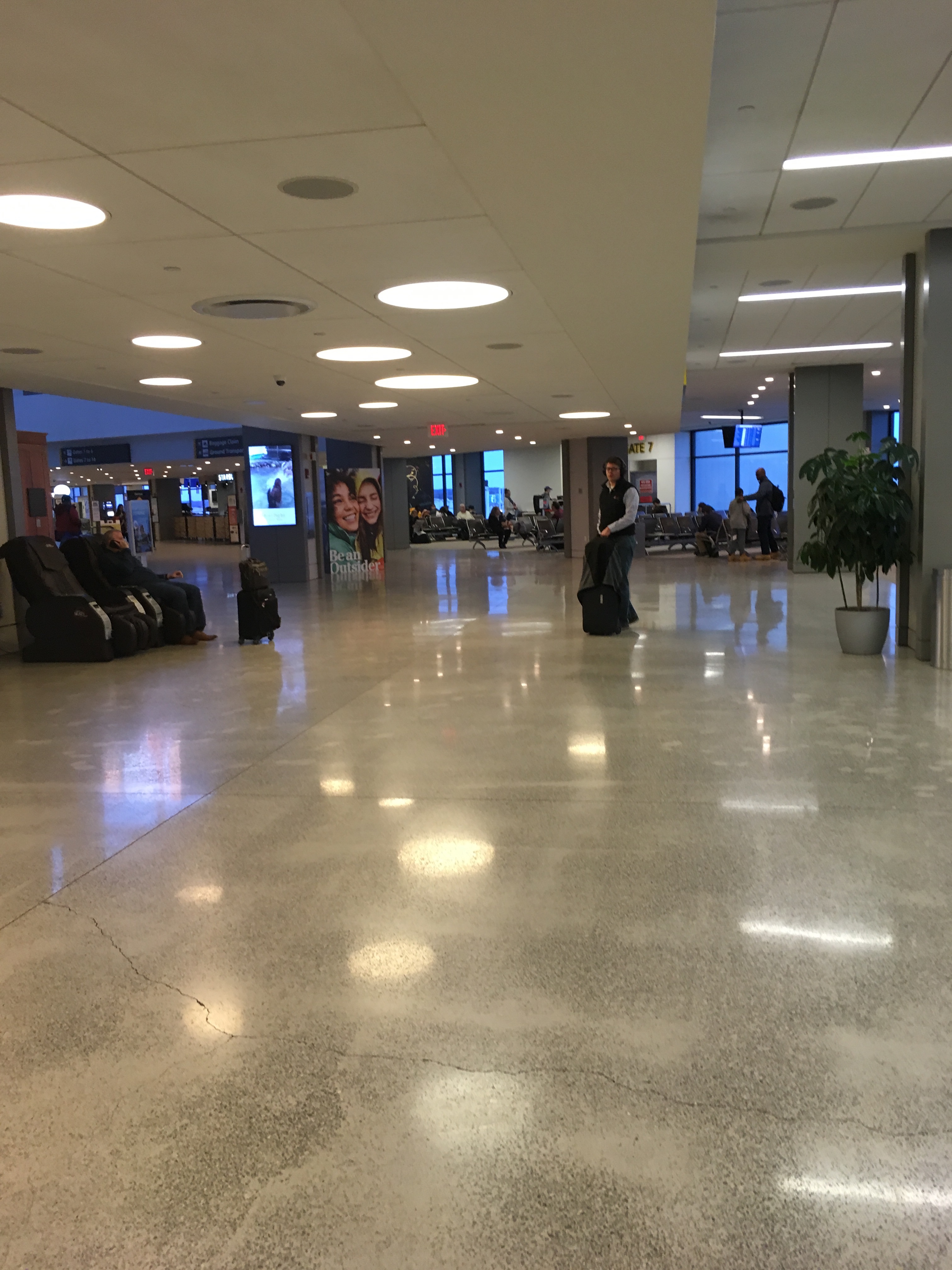
And slowly, slowly, pacing back and forth around the terminal I managed to clock off 5K worth of tedium. Hello tourist tat shop; hello Burger King; hello vibrating massage chairs in the middle of the terminal that no one sits in; hello guy pacing up and down in the opposite direction; and on and on.

Eventually I stepped off the time and got out. I did get a more exciting 5 min speed walk at my connecting city to catch my homeward bound flight, small consolation for a wasted day.
But at least I achieved my 60 min of walking activity for the day, which goes to prove that walkers will walk, wherever and whenever they can.

Walk Sounds – the Birds

I suffer from hearing loss and tinnitus, the result of a misspent youth listening to loud music and working around machinery without ear protection. This is why I don’t often listen to music when walking – to hear the music I have to turn up the volume while wearing ear buds so that when I take them off my tinnitus is worsened for a few hours.

On the plus side, by not listening to music while walking I can hear the sounds around me, especially birds. I was out on the weekend for a walk through the neighbourhood, and I heard the distinct call of a cardinal.

Male Northern Cardinal - Manhasset, NY 04.jpg
By Chris HachmannOwn work, CC BY-SA 4.0, Link

That sound was early for the time of year (yeah spring!), and it got me thinking about the sounds of walking and the birds I’ve heard over the past year on my treks about the city. Though by no means a bird-watcher, I am a list maker, and I wondered how many I could check off.

With the help of a great site called All About Birds and another one called Toronto Wildlife, I was able to listen to recordings of birds and put my finger on what I had heard. Here are some of the birds I hear most often when walking about Toronto.

  1. Northern Cardinal
  2. Blue Jay
  3. Black-Capped Chickadee
  4. Canada Goose
  5. Mallard Duck
  6. Red-Winged Blackbird
  7. Red-Tailed Hawk
  8. Mourning Dove
  9. Song Sparrow
  10. American Robin
  11. Herring Gull
  12. American Crow
  13. Rock Pigeon
  14. Hairy Woodpecker
  15. Baltimore Oriole
  16. Pileated Woodpecker
  17. Winter Wren
  18. European Starling
  19. House Finch

There are of course many more species that reside at least part of the year in the City, and were I a birdwatcher I’m sure I’d try to add them all to my collection of noted spottings. But I’m not and I don’t.

What’s more important to me is the simple appreciation of the sounds I hear whilst walking. In a post called Walkers vs Runners, I said that walkers are introspective. That’s true, though when I’m too introspective I become conscious of the tinnitus that I’ve learned to tune out most of the time – that constant buzz and ringing sound becomes intrusive and breaks the flow of thoughts. Walking and listening to the natural sounds around me lets me focus on other aural impressions, so even though I’m hard of hearing, the song of a cardinal reaches in to tap my shoulder and say, “spring is near, spring is near”.

Thanks cardinal.

Early Spring Walks

Out for a walk today, it occurred to me that there is a special character to walks in early spring. The thought hit me quite literally, when the raw biting east wind slapped my face and chilled my ears. That’s it – the wind.

March, as the saying goes, comes in like a lion and goes out like a lamb. Here in Toronto it’s usually a pretty cold lion. When you get a snowy winter as we’ve had, that snow has to melt, and melt makes moisture which dampens the air so that what would be a brisk breeze on a sunny day becomes a bone-chiller despite the sun.

I’ve just finished a book called Where the Wild Winds Are, by Nicholas Hunt. He’s a travel writer who set out to follow the path of some of the famous winds of Europe, such as the Mistral. That put the idea of winds and walking in my mind. Despite the kick from the east wind today, we don’t have a famous wind here in Toronto. The prevailing winds are from the west, while east winds signal changes in weather and often storms. North winds come year round as fronts move through, and southerly winds happen often enough as well. We don’t have a Hogtown Hoot, or a Toronto Torrent, or a Blue Blast. We just have relatively tame, boring winds that change direction fairly often and change temperature with the seasons.

Still, that snippy east wind today did remind that it’s March and March means winter’s end and warm climes to come. March means school breaks, and the return of baseball, and thawed out barbecues. And of course, March means spring and flowers and birds and trees in leaf. March is a transitory month – a window and a promise of the season to come, and yet also a reminder and kicker to the season we’re leaving. March means change.

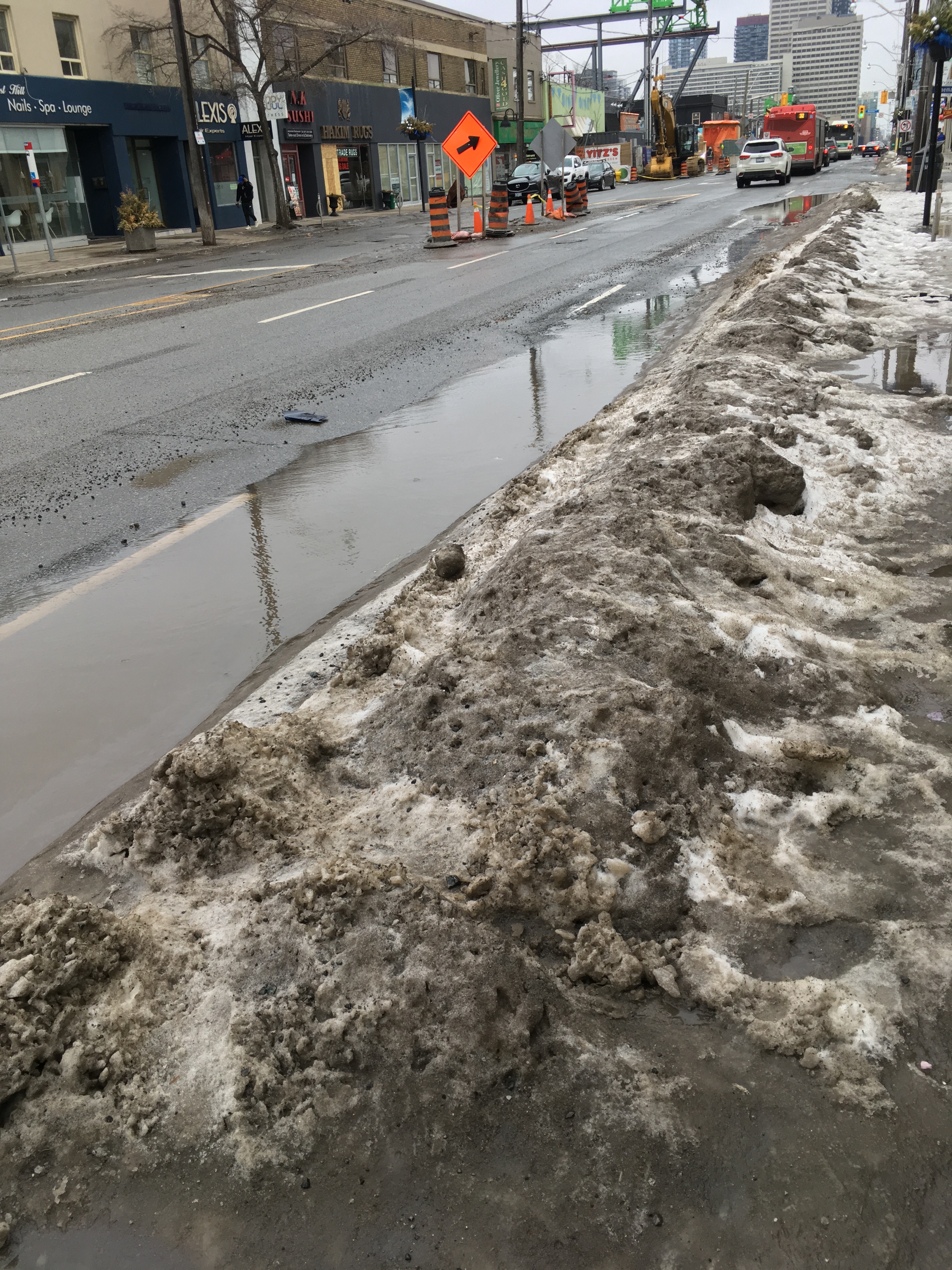
March also means walking is depressing and cheering at the same time. Depressing because the melt-off reveals the crud and garbage that has been hidden in snow banks, and the snow by the roads has become grey-black ice – the result of accumulated car exhaust that makes you realize you’re breathing that in as you walk.

March roadside loveliness – Eglinton West near Avenue Road
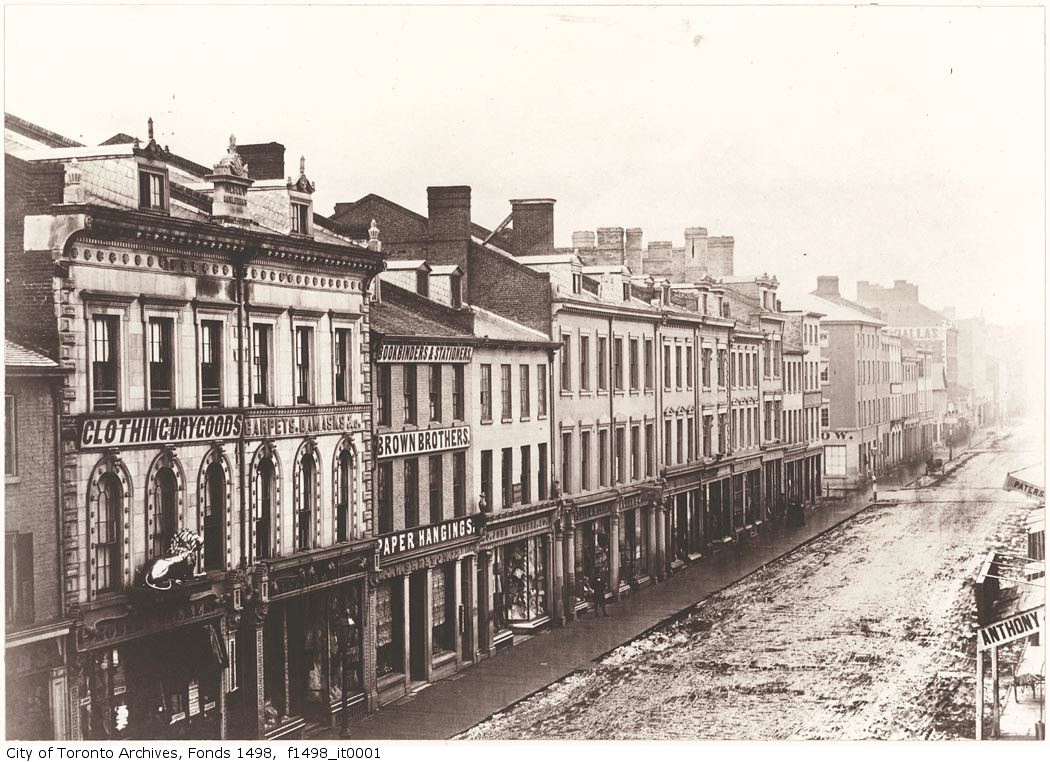
Nothing changes – Toronto, about 1856 – must be about March, you can see the puddles and bits of snow on the edge of the road

And yet cheering because when the sun is out, and early season birds are singing, you feel the promise of warmer days to come. Sometimes that chill breeze swings around to the south and becomes a warm breath. Then people are bouncier, cheerier, positively bursting for spring – you get the early shorts-wearers even if the temperature is 0C, and teenagers toss winter clothes aside and head out in T-shirts to show off pale arms.

March is often a tough month for walking, because the ground is melting and muddy, with water and slush everywhere combined with hidden icy patches. Sidewalks are often still narrowed by snow banks, and park trails aren’t cleared yet. The wicked gust that chills your walk also lifts the moisture and dries the ground, slowly but inexorably.

So in March, I try to get out as much as I can, but it’s a chore more than a fun walk. I just tell myself that April is around the corner and then May will bring greens, reds, and yellows to replace the browns and greys of winter and early spring, so I grin and bear it, put my head down, and march past the lion.

Walks Past – Don River Trails, May 2018

In the spring of 2018, I was settling into semi-retirement – actually more retirement than semi. I spent my time walking, doing the shopping, cooking, and catching up on my reading. I was also mapping out some longer walks to explore Toronto, and decided to take 2 days and hike the trails along the East and West Don Rivers.

In the past I’d walked south along the East and West Don and the Lower Don, from Sunnybrook Park down to the lake. I had never, however, gone up the East or West Don north from Sunnybrook Park. Looking at a map, the first challenge was picking routes – there are no trails along both branches of the river for several inaccessible stretches due to private ownership of land. That meant I had to plan how to get around these while walking as much as I could through the public parks that surround the river, especially north of Sheppard Avenue. The East and West Don rivers actually extend north of the city proper, but this walk was about trails in the City so I wasn’t going north of Steeles.

As a result, I decided to go north up the East Don jumping off from the Betty Sutherland Trail south of Sheppard and hiking on up past Finch Avenue to the Finch Hydro Corridor park, which runs east-west for 20+ km across the top of Toronto between Finch and Steeles Ave. From the East Don at the Hydro Corridor park, I would go west over to Yonge Street and then subway home. That way, the next day I could subway back to Finch and pick up where I’d left off to go west on the Hydro Corridor to connect with the West Don River at G. Ross Lord Park and walk down that back to the residential area around Armour Heights (Wilson Avenue and Avenue Road). By splitting it up, it meant I’d walk around 20-23 km each day and around 45 km in total.

Once I had decided on the route, I just had to wait for a couple of nice days, and I found them May 23-24. Preparation was simple – a lunch, some water, and a light jacket each day. My walk took me through a series of Toronto parks:

Part of the fun of this walk was that it covered a gorgeous pair of spring days – sunny skies and low 20’s, perfect for walking. We had a bit of a late spring that year, so the early flowers and spring wildlife were still in full form – walking through marshy areas and listening to the chirping frogs and calling birds was a highlight.

It was also a chance to explore parks that I had never visited, especially to the west of Yonge. G. Ross Lord and Earl Bales parks, in particular, are huge and varied in terrain – meadows, forests, hills, flats, lakes, ponds, marshes, and rivers. They are great examples of the City of Toronto’s Parks Department boast, that we live in a “city within a park”. G. Ross Lord is worth a day all by itself – if you like cricket, it has several pitches plus training facilities that let you play or watch to learn more about the game.

The other side of the coin for a walk like this was the sense of frustration that fabulous resources like the Don river valleys are inaccessible in many places because of private development, especially golf courses – the Rosedale Golf Club, Don Valley Golf Course, Flemingdon Park Golf Club, and Donalda Golf Club all block the opportunity for continuous trails along the East and West Don rivers.

These golf courses date back prior to WW2, when the lands north of Lawrence Avenue were being developed residentially and there were still many areas of farmland up to Steeles Avenue. Wealthy golf clubs could buy land in the river valleys that wasn’t suitable for houses, and yet be conveniently located within city limits.

These clubs today sit on highly valuable land, and even though golf seems to be declining in popularity it would be naive to think that the City of Toronto could easily afford to buy them for public use, with so many competing demands on the tax payer’s purse. Still, since one of those golf courses is actually owned by the City (the Don Valley Golf Course), it would be great if the West Don Trail could be extended through it to connect Earl Bales Park with Jolly Miller Park at Hoggs Hollow.

After that, it’s a stretch I know, but perhaps the private golf clubs could be persuaded to open trail access through their properties to complete the chain of trails through the many public parks along the East and West Don. I’m all for respecting property rights, and I’m not saying they’d have to sell the land – just provide a right of way for a trail along the river through their property. Surely course designers can figure out how to allow play while providing mixed use trails.

Despite the frustration, walking the Don in all its forms is one of the highlights of trail walking in Toronto. For many years, the Don was either ignored and industrialized, or segregated and cut-off from public use. It’s only in the past couple of decades that Toronto has woken up to the fact that we have a tremendous resource available to us, and that combined with the Humber river system to the west and the Rouge River to the east, we have a chance to see what the land looked like before the city took shape. Walking Toronto along these trails really means you’re not walking in the “city” so much as walking through the forests that are the lungs of the city.

Turtle day!

If you have chance, walk at least part of the Don. It’s as much a part of the City’s history as any of the perhaps more famous parts like Mount Pleasant Cemetery, Casa Lima, or the Brickworks, and we take it far too much for granted. Hike it, bike it, walk it, stroll it, or run it but one way or the other use it.

Walks Past – February 2007, London

In early 2007, I had to fly to London for business meetings, so I timed it to arrive on a Saturday to give time to shake off the jet lag before meetings started on the Monday.

That Sunday turned out to be gloriously warm for the time of year and it called for a good walk. I was staying in Holborn, on Great Queen Street, and that central location meant that I could explore in any direction. I decided to revisit our old neighbourhood in Kensington where we had lived in the late 1990s.

Setting out early on a Sunday morning and walking through Covent Garden and on through Leicester Square to Picadilly gave me a chance to revel in moral superiority – you pass many a bar that had been crowded the night before, and many a staggering thick-headed reveller just headed home. The tourists were out as they always are in central London, and our years living in the city gave me that sense of being a Londoner with the right to look down my nose at them.

Walking on a sunny day is most fun when it’s relaxed and meandering. I followed no particular plan, other than generally wandering west, and after awhile I found myself at Marble Arch having travelled up Regent Street and along Oxford Street. From Marble Arch I decided to go south through Hyde Park and aim for Knightsbridge Road and then west onto Brompton Road to pass Harrods. By then I knew I was getting anxious to see our old place, so I kept going along Brompton past the V&A and along Cromwell Road. West from there took me to Gloucester Road where I turned north and walked up to Kynance Mews.

Entering that little street brought a rush of wonderful memories – the house looked just the same, pale yellow paint and the planters out front. I stood for a moment to take it in, and then moved on, feeling self-conscious for having stood staring.

I kept going through the Mews and meandered north and west through the back streets of Kensington past Kensington Square and up to Kensington High Street. Lunch was a sandwich from Marks & Spencer – those were always a guilty pleasure. You have to try the cheese & pickle or the egg salad to know what I mean.

From the High Street, I started back east towards Kensington Gardens and on into Hyde Park to walk along the Serpentine. There were a benches for resting and basking in February sun, young couples with strollers, older ladies with dogs, and early spring flowers poking through. It was magical. We had moved to London in January 1997 and that year had featured an unseasonably warm winter. We thought it was normal to see daffodils so early and only with the return of a regular winter the following year did we learn that a more typical January in London was grey, wet, dreary, and cold.

That February day was bittersweet – we had toyed with the idea of staying in London but eventually grew homesick after a few years. And yet, the moment we arrived back to Toronto (on July 1, Canada Day, no less) we kicked ourselves and wanted to return. We missed London terribly for years afterwards, and only the arrival of our son a few years later settled us back into Toronto. Wandering Kensington on a sunny winter’s day brought back that homesickness, but this time for London.

After a proper wallow in melancholy, it was time to keep wandering, and my steps took me back to Marble Arch and on to Oxford Street. By then it was getting late and dark, so I went into Selfridges to raid the food hall for a takeaway feast and a nice bottle of wine, and closed my day in style watching snooker on the telly back at the hotel.

You can’t go home again. I learned that twice, once returning to Toronto from London, and again that day. Walks can create memories, and sometimes they can unleash them.

Walk Journal – Feb 18, 2019

Where: Yonge Street from the Lake to Eglinton

Duration: about 2 hours

Weather: Sunny and -4C, with a chilly north wind

Yonge Street runs from Lake Ontario north through middle of Toronto and continues onwards north of the city to Barrie on Lake Simcoe, more than 100 km in total. The portion within the City of Toronto is roughly 18km long, and I decided to walk a chunk of that, from the start of Yonge down at the harbour north to Eglinton Avenue. To shorten the trip, I took the subway to Union Station and then walked south along York Street to get to Queens Quay and the official start of Yonge, right at lake.

Looking south over the harbour at the bottom of Yonge Street

From there, I headed straight north all the way up to Eglinton, about 7.5km or so.

Looking north straight up Yonge from Queens Quay

Yonge is to Toronto what Broadway is to Manhattan – it connects the city north to south, and it forms the centre not just of the city but of much of its history. It’s the main east-west dividing line, with many streets having East and West sections based on Yonge. It’s also a cultural divide – you’re an east-end person or a west-end person, and often you hardly cross Yonge but stay in your respective half of the city.

As you go north from the lake, you travel through time. Some of the oldest parts of the city are along Yonge, and some of the newest as well if you all the way up to Steeles. If you are standing at Queens Quay, you would have been under water a 100 or so years ago. About a km north of what is today’s lakefront is Front Street, and it’s called “Front” because it was at the lake’s edge when the City was laid out back in the early 1800’s. Decades of construction have built not only the tall buildings which line Yonge today, it’s also created excavated soil used to backfill the harbour to create new land. In 1900, my walk would have been shorter than it is today.

At Yonge & Front, there is the Hockey Hall of Fame housed in a former Bank of Montreal branch that’s reputedly haunted by the spirit of a teller who worked there.

The Hockey Hall of Fame at the NW corner of Yonge & Front.

Continuing north, you start to pass the subway stations to measure your progress – King, Queen, Dundas, and onwards north. Between Queen and Dundas is the Eaton Centre, which reminded me of the years when I worked for the Eaton’s department store chain in their headquarters at Yonge & Dundas back in the late 1980’s. That store is long gone, replaced by a Nordstrom’s, but the shops of the Eaton Centre are still there, and the corner still has a preacher on his soap box sermoning, a few hot dog vendors, and a drummer guy pounding away. What is new is Dundas Square, the plaza the city decided to build because that corner has long been a focal point for celebrations – when the Toronto Bluejays won the World Series in 1992 and 1993, the intersection was closed for a spontaneous street party.

Dundas Square – desperately channelling Times Square and coming up short

Keep going north from Dundas and the stretch of Yonge up to Bloor is a bit grittier and shabbier than the rest of Yonge. It’s been like that for decades – there were head shops, strip clubs, and dive bars here from the 70’s and despite repeated attempts to “clean up Yonge” it’s still resisting gentrification. And yet gentrification is a tidal wave that broaches no resistance, evidenced by the scaffolded caves you must pass through along the way, where yet more condominiums are shooting up – I think I went through at least 5-6 of these along the way.

The cave-lined streets formed from the scaffolding around yet another construction site along Yonge

Once you get north of Bloor, you pass through Rosedale, one of the wealthiest areas of Toronto. The shops, bars, and restaurants reflect that upscale feel. It’s all very familiar to me though, because we lived on Yonge north of Davenport for several years in the mid-1990s. There used to be a series of shops known locally as the 5 Thieves – a butcher, a fishmonger, a greengrocer, a cheesemonger, and a bakery. This was Rosedale’s local market, and while the shops weren’t much to look at from the outside, their products were top end and well out of our price range back then. Today there are 3 Thieves left, and the shops are cleaned up, but the tradition of quality continues. You can often spot local chefs picking up things as you browse.

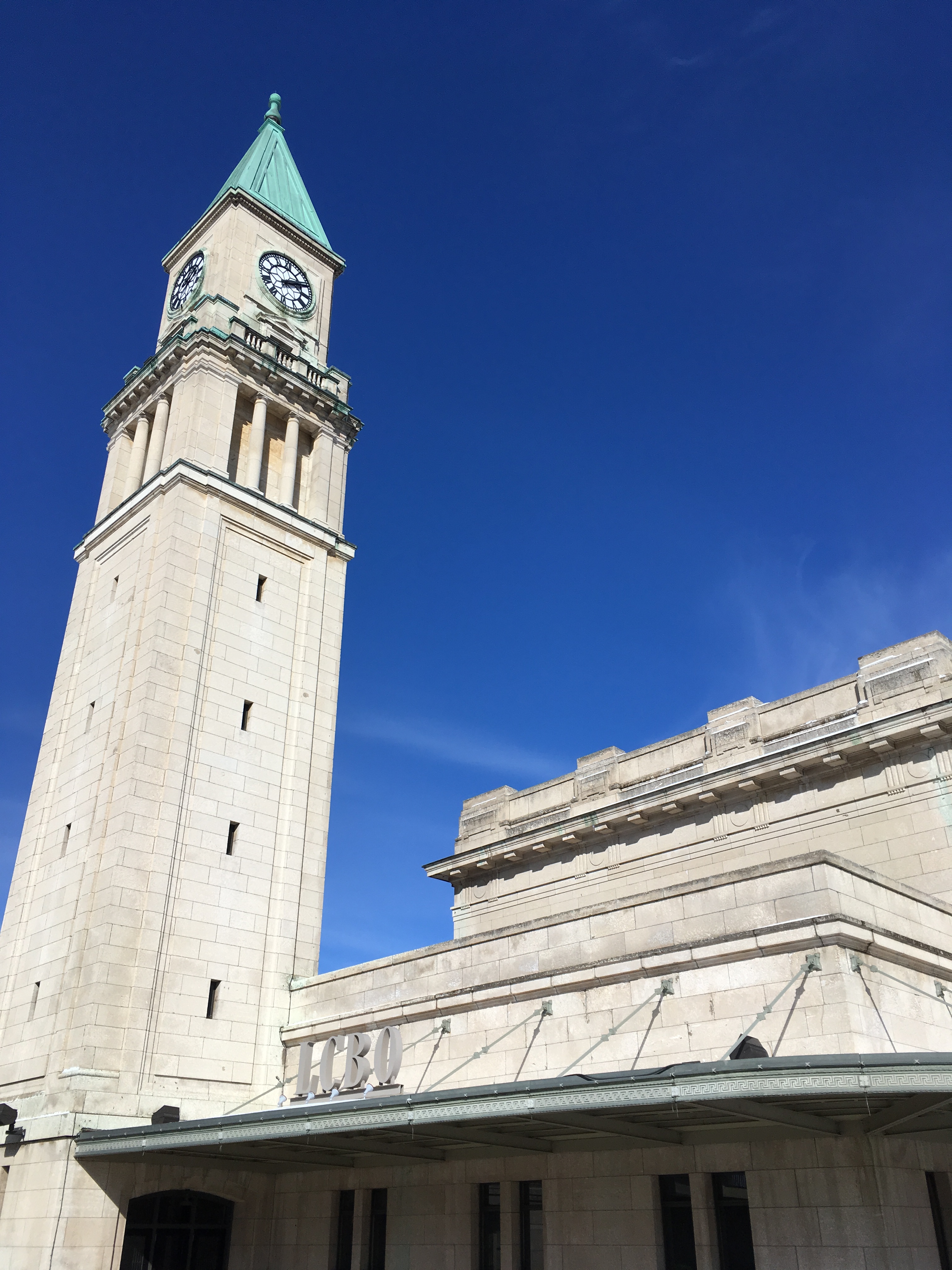
Just north of the Thieves, you pass one of the flagship stores in the LCBO chain, the former Summerhill Canadian Pacific Rail station. It was built in 1916 and yet only lasted as a train station until 1930. It sat empty for years until a tasteful renovation turned it into a retail outlet in the early 2000’s, complete with the former ticket windows and mosaic tiled floor.

The former Summerhill CN Rail station, now an LCBO outlet

Continuing up the street, you notice that while you have been climbing continuously since the lake, you’ve come to a section where Yonge rises more steeply between Summerhill Ave and Rosehill Ave. This slope occurs because thousands of years ago, at the end of the last ice age, this was the shoreline of a much larger lake called Lake Iroquois that later shrank to what is today Lake Ontario. This slope runs east-west roughly north of Davenport for several km, and is the height of land which gives Casa Loma its views and provides the excuse for the Baldwin Steps.

Crossing St. Clair Ave and continuing north, you pass the entrance to Mount Pleasant Cemetery. It’s one of my favourite walking areas in the city, an oasis for reflection and calm. I always think of my friend Paul when I pass here. Cheers mate.

Just past the cemetery entrance, Yonge Street dips between Heath Street and Merton Street – that’s because you are passing through what was once a ravine formed by Mud Creek. That dip means that, for my son, his route to school near St. Clair is uphill in both directions from our home.

When you arrive at Davisville, you enter our former neighbourhood. We lived in the area for 13 years and the shopkeepers are old friends who wave as I keep going north. Visit Carlo the Pasta Guy (as we called him) at Pasta Pantry for homemade sauces and pastas, and Carlo Celebre (the Cheese Guy) at La Salumeria for sandwiches, cheeses, salamis and much, much more. Together they kept my son in pasta and cheese, no mean feat.

From there it’s only a few more blocks to Yonge and Eglinton. My first apartment was just a block from here, back in the mid 1980’s, and then the area was known as Young and Eligible. My soon-to-be-wife and I had an early date a place called Daiquiri’s on the corner of Yonge & Eg. Today that bar is gone, replaced by the inevitable condo, and the intersection itself is, to be blunt, a mess – Yonge & Inexplicable. The Eglinton Crosstown rail link will, supposedly, someday, with luck, we think, I hope, finally be finished. Until then, the intersection is a vast construction zone.

Yonge & Eglinton, not so much Young and Eligible as Yonge & Restless-to-be-Finished

Thinking about it, in walking Yonge today I walked through 40+ years of personal history. In the late 1970’s my family visited Toronto for the first time in my life, and as a teenager from hicksville southern Ontario, Yonge was an explosion of commerce, colour, and chaos. In the 1980’s, Yonge and Eg was my backyard and local neighbourhood. In the 1990’s that was Yonge & Davenport. In the 2000’s and 2010’s, home meant Yonge & Davisville. I worked at 200 Yonge Street for years, rode then and ride now the Yonge subway line, and have continued to shop up and down Yonge. It’s all there, on one long messy stretch of road.

On my walking bucket list, I have a plan to walk the length of Yonge Street, from the lake to Barrie. Today was just a small taste of that. It’s still the heart of the city, and it’s still gritty and slushy on a February day when a wind from the north will freeze your cheeks – but walk it. Yonge is the backbone of Toronto – east and west of Yonge are the neighbourhoods where Toronto lives, but Yonge is how the city travels, where the city shops, and where it celebrates..