Words for Walking

If the Inuit have many words for snow, do walkers have many words for walking? The language of perambulation is as diverse as our destinations. The English language words we use are fascinating, at least to me.

  • Walk – the generic term, the workaday getting around, to and fro with some purpose. Workers walk, but the leisure class rambles, ambles, and strolls.
  • Ramble – walking with purpose to get somewhere over through the countryside. One rambles through brambles perhaps but never through boroughs.
  • Amble – relaxed walking, carefree, and without pretence. Not to be confused with strolling – one ambles on one’s own on a sunny day, whereas one strolls arm in arm on a summer evening
  • Rove – walking as searching, looking for and looking at. Dogs rove with their noses, people rove with their eyes.
  • Trot – a gait that’s almost walking, but not quite running, to cover ground quickly. Is trotting walking at all?
  • Shamble – shambolic ambling, shuffling in a disorganized way. Drunks and hobos shamble.
  • Stroll – relaxed friendly ambling, often with others, often after a meal, in congenial surroundings. In Italy there is La Passegiatta, in France La Promenade, the art of conscious see-and-be-seen stylish strolling.
  • Stride – walking with a purpose, with conviction, with confidence. No one strides meekly.
  • Meander – purposeless roving, ambling over distance to somewhere or other but you’re not quite sure and don’t really mind where you end up.
  • Wander – similar to meandering though with an implication of being lost, this is walking to find one’s way, perhaps literally or perhaps metaphorically
  • Glide – graceful striding to make an impression on others, over short distances. I defy anyone to glide more than a few meters.
  • Slog – walking as toil, carrying baggage physical or metaphorical, always uphill regardless of the slope, always painful and slow.
  • Trudge – heavy walking, through mud and slush and snow and sand with feet of lead and the destination always a few hundred meters further on. Trudges become slogs if they carry on.
  • Galumph – wild heavy footed teenager in boots clumping up and down stairs and through hallways and along sidewalks, careless of others while immersed in a phone or in conversation with friends.
  • Hike – the art of getting somewhere, walking purposefully and confidently to a destination. Lost hikers meander, tired ones trudge, happy ones stride early in the journey.
  • Shuffle – meek and tired and resigned to one’s fate upon reaching one’s destination
  • Skip – playful walking, carefree and light and breezy. Sometimes one skips metaphorically when striding with an upbeat mood and a smile, and sometimes one skips literally with rhythm and and a hop.
  • Limp – painful walking that favours one foot or the other (or heaven forbid both), as at the end of a hike when the blisters have formed.
  • Trek – hiking over long distances and over mixed or rough terrain.

Did you notice something about that list?  Look at the words that designate purposefulness – walk, hike, trek, stride.  By contrast, look at the words that have an aimlessness or casualness to them – amble, ramble, meander, shuffle. 

The purposeful words are one syllable and have hard consonants  – for example the percussive “k” sound in hike or trek, or the “t” sound in trudge.  Their pronunciation lends itself to rhythm and beat – they march – and they are short words, economical of energy. 

The words that lack that purposefulness, by contrast, have softer consonants – for example the “m” sound in ramble or amble or meander or the “f” sound in shuffle.  They are less urgent, having multiple syllables, and take their time being pronounced.

Thus sub-consciously, when we use these words, we are reinforcing their meaning by the way we pronounce them, using short, percussive words for purposeful walking and longer, softer words when we are not in a hurry.

Interestingly, words such as glide or stroll or rove have both characteristics together, being one syllable yet containing soft consonants such as the “l” or “v” sounds.  In meaning they indicate a more casual, studied purposefulness than words such as hike or trek. 

Language is a road much travelled yet much ignored, used and abused by all of us each day, and filled with potholes and bumps like the streets we travel.  And like the paths we choose to walk, the words we choose to describe our walks reveal our intentions and impressions in layers of meaning.

Walk Journal – Dec. 30, 2018

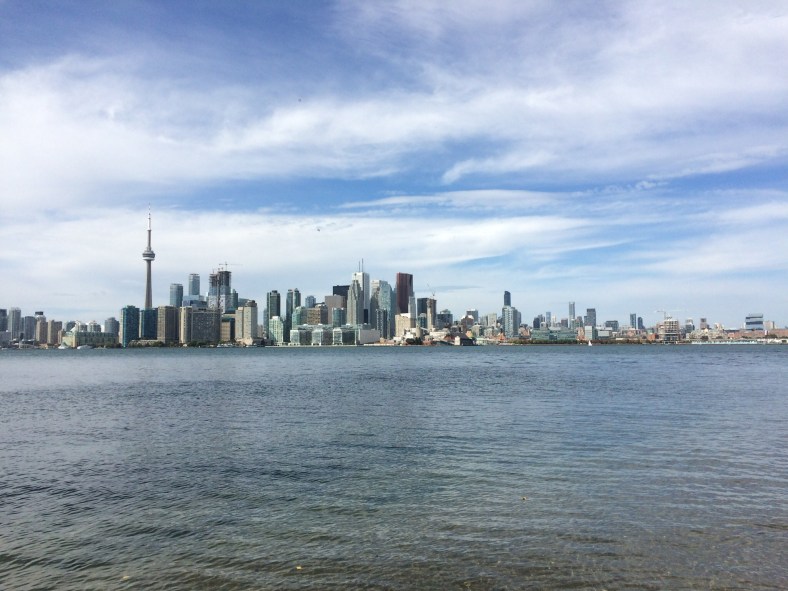
Location: Toronto – Corktown to the Beaches and back

Weather: 1C, grey skies, snow on the ground

Duration: about 2:45 hours, 14.5k

Today my wife and I decided to walk through the Beaches neighbourhood, so to make it longer we drove to Corktown Common and parked there. Then we walked along Eastern Ave to Broadview and then up to Queen and from there walked east through Riverside and Leslieville to the Beaches. After a nice brunch pitstop at the Sunset Grill, we kept going east on Queen to Silver Birch Ave to get down to Balmy Beach. From there, turned back west and walked along the boardwalk and the Waterfront Trail to Ashbridge’s Bay, then back up to Queen to keep going west all the way back to the Lower Don River Trail, and so back to Corktown.

If you know Toronto, you’ll recognize those neighbourhoods. For those out of town, this combined revitalized ex-industrial lands (Corktown Common), gentrified, already-past-hipster-and-on-to-Starbucks blocks (Riverside and Leslieville) and 1-kid-2-dogs ex-hippy Beaches. We’ve been going for walks in the Beaches for years – in fact the day before she went into labour, my wife and I went for a walk there after eating some spicy food in order to get things going.

It’s changed and yet it’s the same – the houses, the vibe, the people. The sound of the day for me was the rattle of sticks and pucks from the outdoor ice rink at Beaches Park, closely followed by the crunch of wet snow underfoot and the churn of small waves on gravelly shores. It was grey but it was lovely, calm, and a reminder of one of the things I love about Toronto, it’s park and trail system.

For a few years in a row when our son was younger, we’d go out to the Beaches and walk the boardwalk on New Year’s Day. This year we went a bit earlier, and now that he’s older he didn’t come with us. But watching the other young parents with kids brought back memories. Walks are often contemplative, and that was today.

Why I Walk

Thanks for joining me!  It seemed like a good time to start a blog to record what I see and think and learn on my rambles – something about the year end and New Years and new beginnings I guess.  

It was also because I read a personal essay in the Toronto Globe and Mail by a guy whose mid life crisis involved buying a 50 year old city transit bus, just because he always wanted to drive one.  In my case, my mid life crisis was more about being out of shape, unhealthy, and getting chest pains just walking up the stairs.

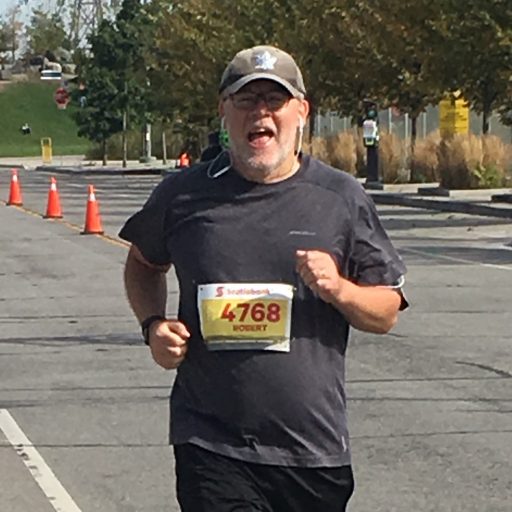
That led in late 2016 to a full set of cardio tests, a stern talking-to from my doctor, and more importantly from my wife and son.  Since then, I’ve shed 35 lbs (15 kg) and gone from being winded after 20 minutes to finishing a marathon (and not even in last place!).  Now I’m setting goals for my walking – the Camino de Santiago perhaps, or John O’Groats to Land’s End.  Maybe it’s a quest, or perhaps just a mad journey.  Anyway …

Recently I was explaining that quest to someone and was asked the why question.  My reply was something like this: Because when you walk you experience and absorb the landscape as you pass through it.  All of your senses are engaged – you see your surroundings up close, you hear the birds and the wind in the trees, you smell the flowers and the rivers, you feel the ground under your feet, you taste your sweat and the air.  And when you walk sometimes your conscious thoughts fade out and you settle into a mechanical zone, and then other times your thoughts flow in a stream of consciousness of inner dialogue and plans and meanderings.  It’s introspective and immersive simultaneously.

Life is short.  Start walking.

Walk Journal – Dec 28, 2018

Location: Toronto

Weather: Grey but dry, 8C

Duration: 90 minutes

Today was a city walk to shake off the calories after a few days of holiday feasting. It was a walk around my extended mid-town neighbourhood, ranging across upper Forest Hill from Avenue Road west along Briar Hill to Bathurst, then back east along Lytton all the way to Yonge, then further east on Blythwood to Bayview and down to Broadway to come home.

Not much to report to be honest – the weather was warm for December but that’s about the extent of the excitement. Lots of people walking dogs, some others out shopping along Eglinton and Yonge streets, and the usual construction mess on Eg for the Crosstown Link.

Except it ended in my first blog post. Hope to have something more interesting soon.

Walkablog

Blog posts are a labour of love for me, and yet there is a cost to running this site and organizing my walks.If you’d like to help with that, I’d really appreciate something for my tip jar.The Buy Me a Coffee service allows patrons like you to fund writers like me.  If that sounds like a worthy idea to you, then go ahead – keep buying me coffees.Thank You Very Much to everyone who has contributed already!

*****

This is a blog about walking, rambling, hiking, trekking, and getting around. I walk, therefore I have sore feet.

It’s more of a journal than a travelog, and tells my story as I experience it walking. I hope it inspires you to get out and walk about your city.